TEHRAN, July 19 — The Islamic Revolutionary Guard Corps operates as a multi-service primary force within Iran’s armed structure, but its reach extends far beyond conventional military boundaries. Established in May 1979 by Ruhollah Khomeini in the aftermath of the Iranian Revolution, the IRGC — known domestically as Sepah or Pasdaran — was created as an ideological militia tasked with safeguarding the Islamic Republic.
Its constitutional mandate runs three-pronged: preventing foreign interference, thwarting coups by the traditional military known as Artesh, and crushing what the system designates as “deviant movements” that harm the ideological legacy of the revolution.
Five service branches, expansive footprint
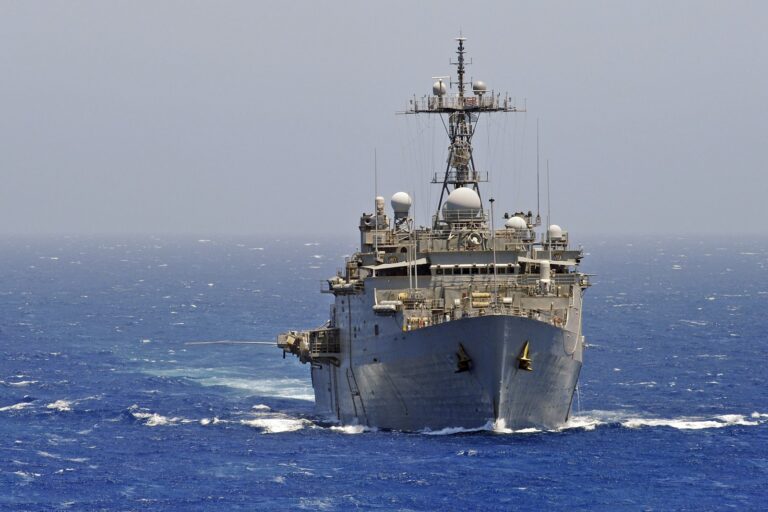
The IRGC comprises five service branches. The Ground Forces focus on internal order but have shifted in recent years toward expeditionary warfare. The Navy exercises operational control over the Persian Gulf, functioning as a de facto coast guard.
The Aerospace Force manages Iran’s ballistic missile program and doubles as the country’s space force. The Quds Force specializes in unconventional warfare, military intelligence, and clandestine operations — arming, training, advising, and at times commanding pro-Iranian non-state actors including Hezbollah and the Houthis.
The Basij functions as a volunteer militia. The IRGC reports to a commander-in-chief appointed by and answerable to Iran’s Supreme Leader. As of 2024, the force fields approximately 125,000 personnel, with the Basij volunteer militia adding roughly 90,000 active members.
Within Iran, the IRGC operates its own media arm, Sepah News.
Designated terrorist organization by multiple states
The IRGC has been designated as a terrorist organization by a broad coalition of nations. The list includes Albania, Argentina, Australia, Bahrain, Bosnia and Herzegovina, Canada, Costa Rica, the Dominican Republic, Ecuador, the European Union, Honduras, Iceland, Israel, Liechtenstein, Moldova, Montenegro, North Macedonia, Paraguay, Saudi Arabia, Serbia, Sweden, Trinidad and Tobago, Ukraine, and the United States. Originating as a radical ideological militia, the IRGC has expanded into nearly every aspect of Iranian politics, economics — including energy and food industries — and society.
The trajectory of that expansion has drawn recurring descriptions from major news organizations. In 2010, BBC News described the IRGC as a “business empire.” In 2019, Reuters called it “an industrial empire with political clout.” By 2026, Reuters portrayed it as a “state-within-a-state.” The IRGC’s political influence grew significantly under former president Mahmoud Ahmadinejad, particularly during the 2009 presidential election and the suppression of post-election protests.
Western analysts have since argued that the IRGC has surpassed Iran’s ruling clerical class in political power, a shift with implications for both domestic governance and foreign policy. The record shows an organization that, four and a half decades after its founding, operates as a parallel center of authority within the Islamic Republic — wielding military force, economic control, and political leverage in ways that continue to shape Iran’s behavior on the world stage.