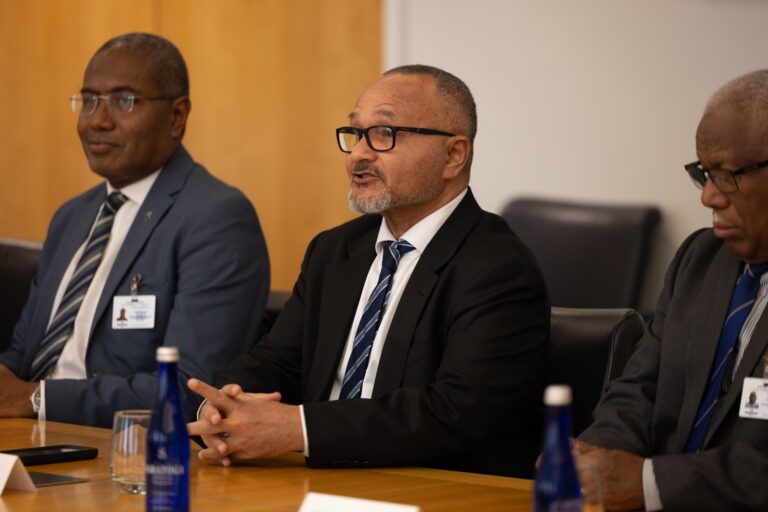
GENEVA, November 16, 2026 — The United States and Russia are expected to oppose the launch of negotiations on a new binding treaty for autonomous weapons as the Convention on Conventional Weapons Review Conference opens in Geneva today. The move effectively blocks a legal protocol that humanitarian groups argue is essential to protect civilians from rapidly advancing AI military systems.
The Strategic Impasse
The opposition from Washington and Moscow reflects a shared strategic calculus: both powers view legal restrictions on autonomous weapons as a constraint on their technological edge. According to the UN Group of Governmental Experts (GGE), there is no generally agreed-upon definition of lethal autonomous weapon systems among different countries, a definitional vacuum that major military powers have historically exploited to maintain freedom of action. As of 2025, most military drones and robots are not truly autonomous and still require human control, but the trajectory is shifting fast. The US Department of Defense defines an autonomous weapon system as one that, after activation, can select and engage targets without further human intervention — a standard that mirrors the International Committee of the Red Cross (ICRC) definition but leaves wide room for interpretation on what constitutes “activation” and “intervention.”
The Holding Pattern
The GGE concluded its decade-long mandate this year with a final report that reiterates existing International Humanitarian Law but establishes no new binding restrictions. Analysts at the Lieber Institute West Point characterize the GGE as a “holding pattern” that absorbed moral panic and bought time for states to understand the principles of AI-enabled weapons through technical ground truth rather than science-fiction hype. The UN Secretary-General called on world leaders in 2023 to launch negotiations for a new legally binding instrument, yet the consensus-based CCW framework allows any single state to block progress. That mechanism has preserved the status quo while the technology has matured.
The Data Advantage
While diplomats debate definitions, the battlefield is generating the data that will define the next generation of autonomous systems. Ukraine has opened its “Avenger Labs” database — a trove of nearly five years of battlefield video, audio, and text — to allied defense companies for AI training. Approximately 30 Ukrainian defense companies are currently using the war database to develop AI weapons, and twelve British defense companies have reached the first agreement to access this data. Ukraine provides the data at no charge but requires companies to license any resulting software back to the Ukrainian military. This arrangement signals a new calculus in defense partnerships: access to real-world combat data is becoming a strategic currency as valuable as the weapons themselves.
Definitional Deadlock
The lack of consensus on what constitutes “autonomous” control remains the central obstacle. The GGE made progress in its September 2026 meeting, agreeing that a lethal autonomous weapon system can be characterized as a combination of one or more sensors and effectors, but the characterization stops short of a binding definition. France maintains that a human must remain in the decision-making loop and bans “lethal autonomous weapons systems” while permitting “partially autonomous” systems known as PLAWS. The US refers to “appropriate levels of human judgement,” a formulation critics say is deliberately elastic. Rear Admiral Vincent Sebastien of the French defence ministry’s Agency for Defence Artificial Intelligence described the human role as ensured through “appropriate control by a military commander — a concept that varies in scope depending on the system’s criticality and the operational context.”
The Humanitarian Warning
The ICRC and leading rights organizations argue that current conflicts demonstrate no civilian benefit from the absence of regulation. ICRC President Mirjana Spoljaric stated that autonomous weapons cannot be allowed to develop and proliferate without international rules and meaningful human control, warning that future generations will judge whether leaders acted to prevent a world where machines autonomously kill humans. Human Rights Watch and Amnesty International contend that the failure to act at this Review Conference will leave civilians dangerously exposed. They note that autonomous weapons systems are no longer hypothetical, with reports growing that they are already being tested, integrated, and deployed. The organizations urged states to adopt a one-year mandate to negotiate a new protocol prohibiting certain autonomous weapons systems and regulating others.
The Path Forward
The Review Conference, running from November 16 to 20, will consider the GGE’s final report setting out “elements for an instrument” that could serve as the basis for negotiations. Analysts doubt that CCW discussions will keep pace with the fast-changing nature of AI-enhanced drones. Jean-Marc Rickli of the Geneva Centre for Security Policy said the agenda in Geneva is “very narrow” and fails to encompass the full range of issues surrounding AI on the battlefield, particularly in target generation where AI use is expanding rapidly. Without a mandate to negotiate a treaty, discussions will continue to stall even as research, development, and operational deployment expand. The conference opens today.
Sources
- Lethal autonomous weapon
- How the UN Bought Time for the World to Understand Autonomous Weapons – Lieber Institute West Point
- ICRC president: States must act to ensure the future of warfare is not handed over to machines
- 'A moral red line'? World on cusp of autonomous weapons revolution
- A.I. Weapons Need Data for Their Training. Ukraine Has a Lot to Offer.
- Global Treaty Needed to Combat Autonomous Weapons Threat
Photo: Torbjorn Toby Jorgensen (CC BY-SA 2.0)