HONIARA, November 16, 2026 — The Solomon Islands opposition has accused Australia of “chequebook diplomacy” after Prime Minister Matthew Wale funnelled budget support from Canberra into constituency funds for government MPs.
The Pacific Aid Race: How Regional Powers Compete for Influence
In the Pacific, foreign aid and infrastructure grants have become tools for regional powers to secure geopolitical influence. The Solomon Islands, strategically located in Melanesia with a population of 828,857, is at the center of this aid race. Australia, a key player in the region, has been accused of using its aid to sway local politics.
Australia’s Grants and Local Politics
According to the ABC, multiple Solomon Islands parliamentarians received “discretionary grants” of up to $SBD1 million (about $180,000) per MP from a bank account labelled AusAID, though it belongs to the Solomon Islands government. These funds, part of a larger $SBD200 million ($35 million) package announced by Australian Prime Minister Anthony Albanese, were intended for cyclone recovery and energy shock impacts. However, the opposition claims this is a tactic to secure influence, especially as the two nations finalize a high-profile treaty.
Regional Aid Strategies
Australia is not alone in using aid to build influence. China and Taiwan have historically funnelled money into constituency development funds (CDFs) in the Solomon Islands to shore up political coalitions. The Korea International Cooperation Agency (KOICA) recently provided US$1 million for health services, addressing challenges in the country’s dispersed geography. These investments highlight how aid is often tied to strategic interests.
Geopolitical Significance
The Solomon Islands’ location makes it a focal point for regional powers. Its history, from World War II battles to its independence in 1978, underscores its strategic importance. Today, as climate resilience becomes a priority, highlighted at COP31, the country’s vulnerability to rising sea levels adds another layer to its geopolitical relevance.
Responses and Implications
Australia denies wrongdoing, stating its aid aligns with partner countries’ priorities. However, the accusations raise questions about the ethics of aid practices and their impact on local politics. For families across the region, these geopolitical maneuvers mean their lives become bargaining chips in a larger game of influence. As the Pacific aid race continues, the focus must remain on what it means for people, closer to home.
The next scheduled treaty signing between Australia and the Solomon Islands will be a key moment to watch, as it may reveal the true extent of these aid strategies’ impact on regional dynamics.
Sources
- Solomon Islands opposition accuses Australia of 'chequebook diplomacy'
- Solomon Islands
- Solomon Islands receives boats, ambulances and vehicles to strengthen access to health services – Solomon Islands
- COP31 Side Event – WVSI Intergenerational Dialogue
- There and Back Again: A Solomon Islands Tale
- “Not enough to talk together – we have to work together”: SINTEF joins Nepal and Solomon Islands on the climate frontline at COP31 – SINTEF
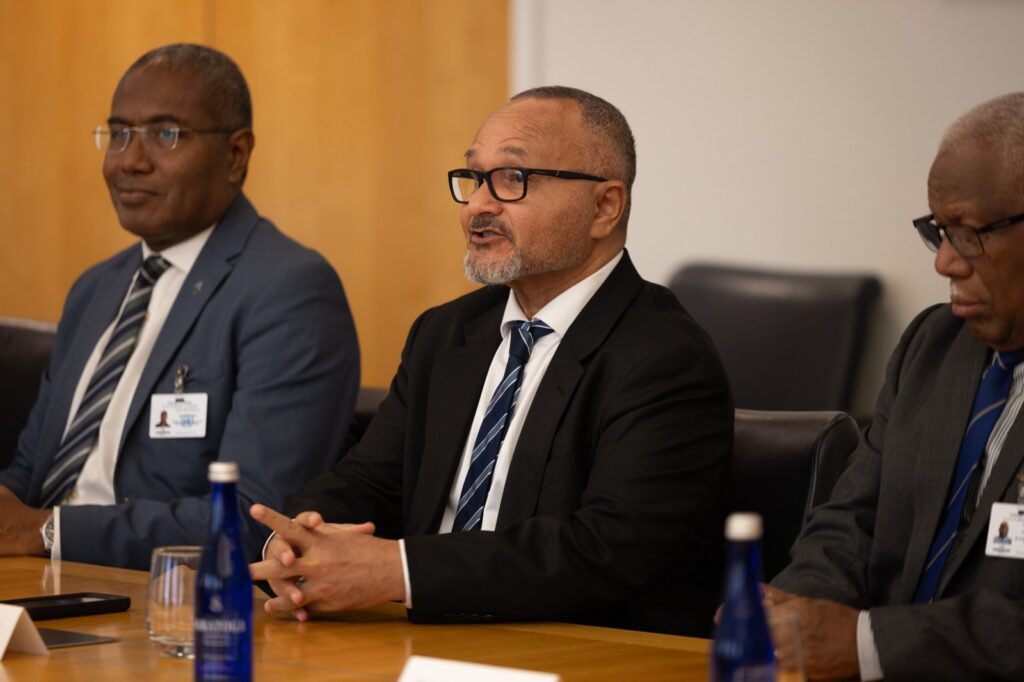
Photo: Andrew Kelly/DFAT (CC BY 4.0)