
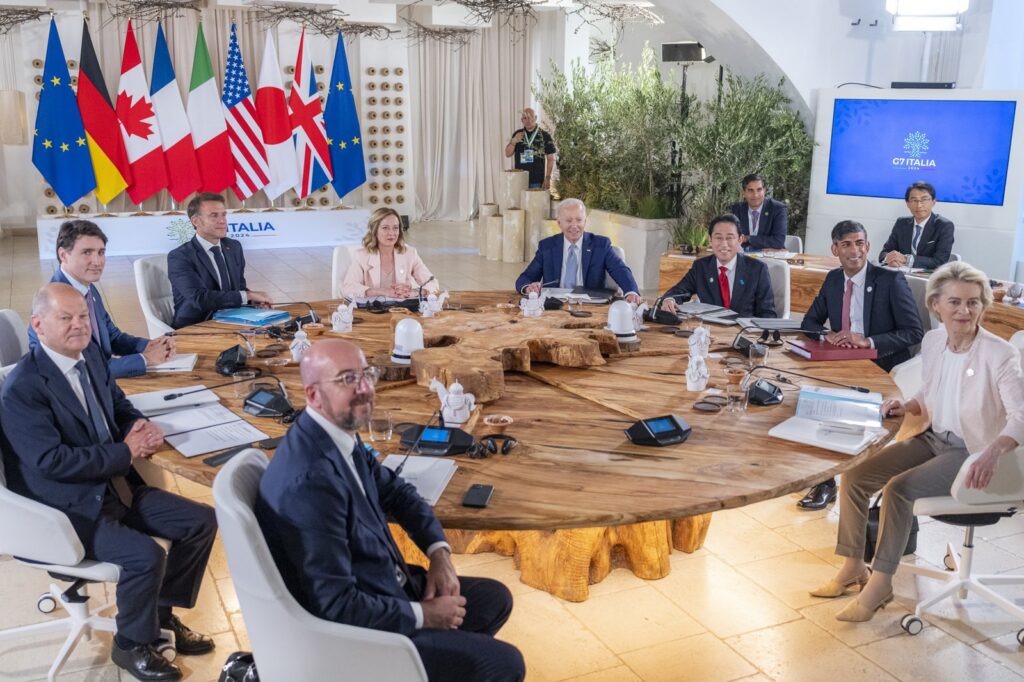
PARIS, November 9, 2026 — Foreign ministers from the Group of Seven industrialized democracies have begun two days of talks in Paris, grappling with multiple unresolved global crises amid questions about how U.S. President Donald Trump will approach foreign policy after his Republican Party’s heavy losses in the midterm elections. Against this backdrop, the question arises as to what extent the G7 is still capable of setting a unified global agenda in the face of increasing fragmentation among its member states.
History And Evolution Of The G7
The G7 originated from an ad hoc gathering of finance ministers in 1973, and has since become a formal, high-profile venue for discussing and coordinating solutions to major global issues, especially in the areas of trade, security, economics, and climate change. The group has no permanent secretariat or office and is not based on a treaty, with its presidency rotating annually among the member states. This flexible structure allows the presiding state to set the group’s priorities and host the summit, with France holding the presidency for 2026.
Membership And Global Influence
The G7 consists of Canada, France, Germany, Italy, Japan, the United Kingdom, and the United States, with the European Union as a non-enumerated member. The group has significant international influence, having catalyzed or spearheaded several major global initiatives, including efforts to combat the HIV/AIDS pandemic, provide financial aid to developing countries, and address climate change through the 2015 Paris Agreement. The G7 countries have a combined population of about 780 million people, accounting for around half of worldwide nominal net wealth, 44% of world nominal GDP, and 28% of world GDP by purchasing power parity.
Challenges To A Unified Agenda
Despite its influence, the G7 faces challenges in maintaining a unified agenda due to domestic political volatility and shifting global landscapes. The group’s ability to coordinate solutions to global issues is being tested by the Russia-Ukraine war, the Iran conflict, energy security, and artificial intelligence, among other crises. The rotating presidency and lack of a formal treaty can make it difficult for the group to maintain a consistent approach, especially when member states have differing priorities and interests.
Current Challenges And The Way Forward
As the G7 ministers meet in Paris, discussions are expected to cover the Russia-Ukraine war, the Iran conflict, energy security, and artificial intelligence. The talks come amid questions about how U.S. President Donald Trump will approach foreign policy after the Republican Party’s losses in the midterm elections. The G7’s ability to navigate these challenges and maintain a unified agenda will depend on its ability to balance the interests of its member states while addressing the pressing global issues. As Secretary of State Marco Rubio noted, the group’s discussions will focus on finding common ground and advancing shared interests, despite the challenges posed by domestic political shifts and global uncertainties. The G7’s role as a coordinator of major advanced economies in a fragmented world remains crucial, and its ability to adapt to changing circumstances will be essential in addressing the complex global challenges ahead.
Sources
- G7
- I took an art-themed pilgrimage around Canada
- Rubio will discuss Iran, Ukraine, AI and more with G7 allies in France
- Church's ‘Dedicate’ Series Now Streaming on Prime Video
- Opposition steps up criticism of Takaichi for skipping last month’s G7 meeting
- Cowboys Position Group Report Card Following Win Over Colts
Photo: The White House (Public domain)




