The United States military is preparing to sustain its own operations for 90 days without civilian support as strategic rivals test the durability of the nation’s power infrastructure. Pentagon chief spokesperson Sean Parnell has acknowledged that reliance on standard municipal grids represents an “intolerable risk” for national defense. This planning effort, centered on the FORTRESS initiative, reflects a strategic recalibration as the US military currently manages commitments in Ukraine and the Middle East.
Grid Fragility in Multi-Front Conflict
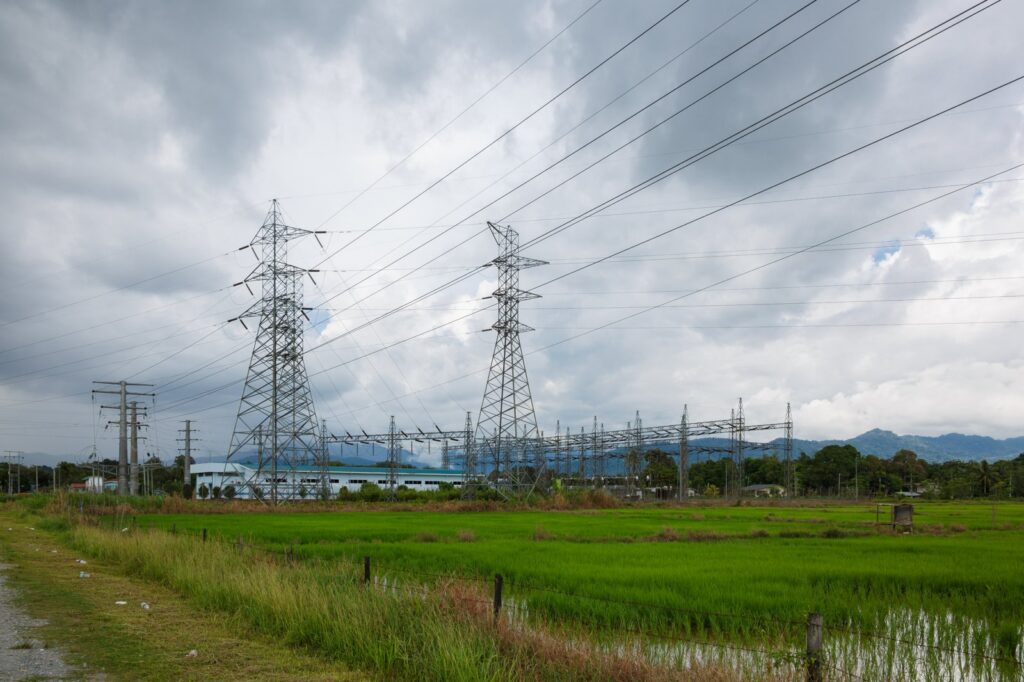
The modern electrical grid functions as a synchronized network linking power stations, substations, and transmission lines to deliver electricity across regions. As grids have integrated computer technology to manage flow and demand, they have introduced new cyber vulnerabilities alongside physical risks. Historical context shows that in multi-front conflict environments, adversaries target energy nodes to degrade an opponent’s ability to command and control forces. The grid’s dependence on synchronized alternating current means a disruption at one point can create cascading failures across wide areas, particularly when infrastructure is already strained by simultaneous global commitments.
Pentagon’s Independent Operations Plan
The FORTRESS initiative aims to ensure every major continental US military installation can sustain essential operations—electricity, water, fuel, and communications—independently for at least 90 days. Portable nuclear reactors, large-scale battery storage, and microgrids are central to this architecture. Microgrids can disconnect from the main network through a process known as islanding, allowing bases to operate autonomously when the civilian grid is compromised. Parnell framed this capability as a necessary insurance policy, noting that the assumption that two oceans would protect the homeland is antiquated in an era of hypersonic and cyber threats.
Federal Grid Investment
The Department of Energy has committed $5.25 billion through the SPARK initiative to reconductor or rebuild more than 1,500 miles of transmission lines and deploy Grid-Enhancing Technologies across nearly 21,000 miles. These projects are intended to make over 23 gigawatts of additional electricity capacity available for approximately 100 million Americans. The funding forms part of a broader $10.5 billion GRIP program authorized over five years to strengthen grid resilience and deploy advanced transmission technologies that can increase the usable capacity of existing assets in real time.
Global Electrification and Emerging Threats
While the United States focuses on hardening its domestic infrastructure, global data highlights stark disparities. In 2017, approximately 840 million people—mostly in Africa—lacked access to grid electricity, a figure down from 1.2 billion in 2010. The vulnerability of the US grid is not merely a domestic concern; it intersects with the broader geopolitical calculus of energy security. As the nation navigates two major conflicts while modernizing its network, the convergence of cyber threats, physical attacks, and aging assets presents a persistent risk to the continuity of both military and civilian operations.
Microgrid Resilience and Islanding Capability
Microgrids represent a critical component of the military’s strategy to achieve energy independence from civilian infrastructure. Defined as local grids capable of disconnecting from the main network through a process known as islanding, these systems allow bases to operate autonomously using distributed generators and local resources when the primary grid is compromised. Unlike traditional backup generators, microgrids can sustain operations indefinitely by integrating portable nuclear reactors and large-scale battery storage, ensuring that essential functions such as communications, water purification, and logistics remain functional during prolonged disruptions. This architectural shift transforms installations from passive consumers into active energy islands, a necessity given the Pentagon’s acknowledgment that reliance on standard municipal grids is an “intolerable risk.”
The technical feasibility of islanding relies on the microgrid’s ability to synchronize its frequency and voltage with local generation sources before electrically separating from the wider network. This capability is particularly vital in multi-front conflict scenarios where adversaries may target energy nodes to degrade an opponent’s command and control functions. By deploying microgrids powered by advanced energy storage and generation, the Department of Defense ensures that a disruption at one point on the civilian grid does not cascade into a total loss of military operational capacity, thereby preserving the continuity of command structures essential for national defense.
Cyber Threats and Grid Interdependencies
As the US military pivots toward energy independence, the civilian grid’s digital infrastructure presents a parallel vulnerability. Modern grids rely on supervisory control and data acquisition (SCADA) systems to manage electricity flow in real time; these industrial control systems have become prime targets for cyber adversaries seeking to induce physical damage or widespread blackouts. Intelligence assessments indicate that state and non-state actors are developing capabilities to infiltrate grid management software, potentially manipulating switchgear or disrupting frequency regulation. Unlike a physical breach, a cyber intrusion can propagate silently across interconnected control rooms, triggering protective relays and cascading outages before operators can isolate affected segments. The convergence of aging physical assets and increasingly sophisticated cyber tools means that a single intrusion event could exploit synchronization dependencies, plunging regions into darkness and complicating the military’s ability to execute its FORTRESS objectives during a multi-front conflict.
Compounding this risk is the tight interdependence between critical civilian sectors and military logistics. Fuel supply chains, water treatment facilities, and communication networks all draw operational data and power from the same grid that the FORTRESS initiative seeks to shield. A successful cyberattack targeting grid management systems could ripple through these sectors, delaying the delivery of fuel to forward operating bases or disrupting the communications necessary for command and control. Parnell’s assertion that “power is combat now” underscores the reality that cyber-induced grid failure is not merely an infrastructure issue but a direct threat to operational readiness. As the Pentagon accelerates microgrid deployment to achieve islanding capability, securing the broader grid’s cyber ecosystem becomes essential to prevent adversaries from exploiting the very interdependencies the military aims to decouple.
Sources
- Pentagon preparing 'doomsday plan' for conflict that could wipe out power grid
- Electrical grid
- Speed to Power through Accelerated Reconductoring and other Key Advanced Transmission Technology Upgrades (SPARK)
Photo: CEphoto, Uwe Aranas (CC BY-SA 3.0)