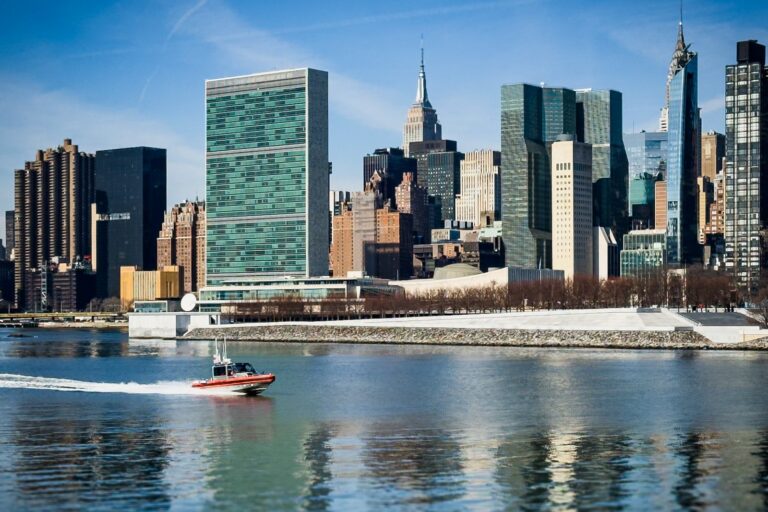
António Guterres urged reporters in New York to “connect the dots” between street protests and global turmoil. He stated that legitimate grievances of protestors regarding food, fuel, and rising interest rates cannot be overlooked. Guterres warned that conflicts are intensifying and expanding like an “El Niño of war,” disrupting lives thousands of kilometers away. Deliberate attacks on civilian infrastructure in the Middle East, Ukraine, and Sudan disrupt energy markets and supply chains. The Secretary-General noted that some countries can absorb higher prices while others must choose between food and heat. War feeds and exploits existing inequalities within an economic system that forces the least to absorb the greatest shocks. Guterres insisted the answer cannot be an ever-widening circle of confrontation, specifically highlighting tensions in Yemen. The UN succession race remains deadlocked as Security Council straw polls failed to produce consensus among veto powers. Lana Nusseibeh was formally nominated by the UAE, but the next secretary-general’s term is scheduled to start Jan 1, 2027.
Living Costs Drive Frustration In Europe And Beyond
Public discontent has surged across Europe as households grapple with the rising cost of living. In recent weeks, protesters have taken to the streets in France and Italy, expressing anger over unaffordable basics. António Guterres, addressing reporters in New York, acknowledged that pressures are building over the price of food, fuel, and other essentials. He noted that interest rates have climbed for both people and countries, further squeezing household budgets. For young people, the promise of a better future is slipping further out of reach. While the UN chief stressed that violence and criminal activities during protests must be condemned, he emphasized that the legitimate grievances driving people into the streets must not be overlooked. The connection between daily financial strain and broader global instability is becoming increasingly difficult to ignore.
‘El Niño of War’ Spreads Conflict Consequences Globally
Guterres warned that conflicts are intensifying and expanding, likening the phenomenon to the El Niño climate pattern that disrupts weather patterns far from its origin. He described an “El Niño of war,” where conflict in one region travels farther and faster, upending lives thousands of kilometers away. The Secretary-General pointed to the Middle East, Ukraine, and Sudan, where civilian infrastructure including homes, hospitals, and energy facilities are deliberately targeted. These attacks disrupt energy markets, shipping routes, and supply chains, creating ripples across the global economy. He stated that these shocks are hitting a world already profoundly unequal. While some nations can absorb higher prices, others are forced to choose between food and heat. The war in Ukraine and ongoing crises in the Middle East and Sudan are not isolated; their consequences are traveling across borders, affecting economies and lives far from the battle zones.
Inequality Forces Vulnerable Nations to Absorb Shocks
The UN chief highlighted that the global economic system forces those with the least to absorb the greatest shocks. Guterres noted that while some countries can borrow more cheaply to protect their people, others must choose between paying off debt and investing in health, education, and the future. War does not create all these inequalities, but it feeds and exploits them, exposing the fundamental unfairness of the current system. He warned that the consequences of conflict are magnified for vulnerable nations already struggling to cope. The Secretary-General’s remarks underscore how deeply interconnected the global economy has become, and how conflict in one part of the world can cripple the ability of distant countries to feed and fuel their populations. The humanitarian impact is severe, adding to regional tensions and increasing displacement.
Diplomatic Deadlock Marks UN Succession Race
The process to select Guterres’s successor remains stalled. The Security Council straw polls have failed to produce consensus among the five veto-wielding powers. Lana Nusseibeh was formally nominated by the United Arab Emirates, joining a field of candidates that includes Rebeca Grynspan, Rafael Grossi, and others. The race is further complicated by the fact that each leading candidate has received at least two “discourage” votes from permanent members. The United States has indicated its displeasure with the current frontrunners, contributing to the deadlock. With the next secretary-general’s term scheduled to start on January 1, 2027, little time remains for the Council to reach agreement. The succession race highlights the same geopolitical divisions that Guterres warned are fueling global instability, proving that diplomatic breakdowns are not limited to conflict zones but are affecting the highest levels of international governance.
The UN Chief Calls for Restraint in Yemen
António Guterres voiced specific concern over the escalating situation in Yemen, highlighting the city of Taiz as a focal point of intensifying conflict. Referring to the broader “El Niño of war” dynamic, the Secretary-General warned that continued Houthi attacks against civilian targets in Saudi Arabia are exacerbating regional instability. He appealed for restraint and political dialogue to mitigate the humanitarian crisis, noting that the violence is inflicting immense suffering on civilians and adding to displacement and humanitarian needs. Guterres emphasized that the answer cannot be an ever-widening circle of confrontation, particularly in the Middle East, where the conflict’s ripple effects threaten to further disrupt already fragile global systems.
Turning to the Occupied Palestinian Territory, Guterres noted that Israel is still severely restricting the flow of humanitarian aid, a measure he said is deepening the already catastrophic conditions for the civilian population. He called for unimpeded access to deliver life-saving assistance, stressing that the blockade compounds the suffering of a population already pushed to the brink. The Secretary-General’s appeal underscores the interconnected nature of today’s crises, where localized conflicts in regions like Yemen and the Middle East have outsized consequences for global peace and security, reinforcing his warning that war feeds and exploits existing inequalities across the international community.
Sources
- António Guterres
- ‘Connect the dots’ between street protests and global turmoil, urges Guterres
- United Arab Emirates Nominates Lana Nusseibeh To Succeed António Guterres As UN Secretary-General: 20 outlets compared | NewsCord
Photo: Jdforrester (CC BY 4.0)