
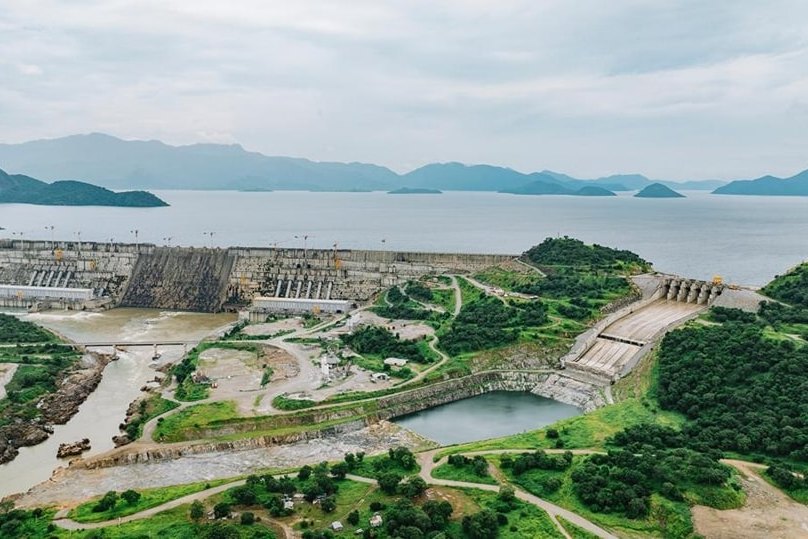
On September 9, 2025, Ethiopia formally opened the Grand Ethiopian Renaissance Dam. Egypt and Sudan had spent years in talks that never produced the binding agreement Cairo wanted. Al Jazeera, reviewing the aftermath in August 2026, called the dam a “nearly $5bn project” funded largely by Ethiopia itself.
The numbers are large. ArchDaily describes a wall 1.8 kilometers long and 175 meters tall, holding back a reservoir called Lake Nigat that can store 74 billion cubic meters of water. Thirteen Francis turbines sit in two powerhouses, and recent literature lists the installed capacity at 5,150 MW. The dam was meant to double Ethiopia’s electricity generation.
Why Cairo calls it a threat
Egypt never accepted the project. When Ethiopia announced it had begun filling the reservoir in 2020, Brookings reported, Cairo called the move “an existential threat” and said the dam would hurt its water supplies. Egypt had insisted the reservoir not be filled without a legally binding agreement, and it wanted a deal on the filling timetable and on how the dam would be run in droughts.
It took the fight to the United Nations. On June 19, 2020, Egyptian authorities asked the Security Council to step in after three-way talks failed. Last September, Al Jazeera noted, Egypt went back to the Council and argued that the dam’s inauguration and operation broke Ethiopia’s international obligations.
Sudan in the middle
Sudan’s position has shifted. Brookings said Khartoum first opposed construction, then warmed to it. Al Jazeera adds that Sudan could gain from steadier river flows and Ethiopian electricity. But the worry about its own dams has not gone away. Brookings pointed to fears that the way the GERD is run could threaten their safety, and ArchDaily names Sudan’s Roseires Dam as particularly exposed because of its closeness to the GERD.
Talks that stalled
African Union-backed negotiations, chaired by South Africa’s President Cyril Ramaphosa, settled many issues, according to Brookings. They stayed stuck on how to handle drought. Ethiopia built the dam anyway.
Al Jazeera drew a blunt lesson from that outcome: “diplomatic pressure could raise international attention but could not prevent Ethiopia from completing the project.” Egypt’s strategy, the outlet said, has moved from trying to stop the dam toward shaping the design and operation of Ethiopia’s future projects on the river. Egypt itself still expresses concern that Ethiopia’s “unilateral operations” could cut the flow it relies on.
Sources
- After GERD, can Egypt shape Ethiopia's next Nile dams? (Al Jazeera)
- The controversy over the Grand Ethiopian Renaissance Dam (Brookings Institution)
- Dammed Between Energy and Water Scarcity: The Grand Ethiopian Renaissance Dam and the Nile (ArchDaily)




