
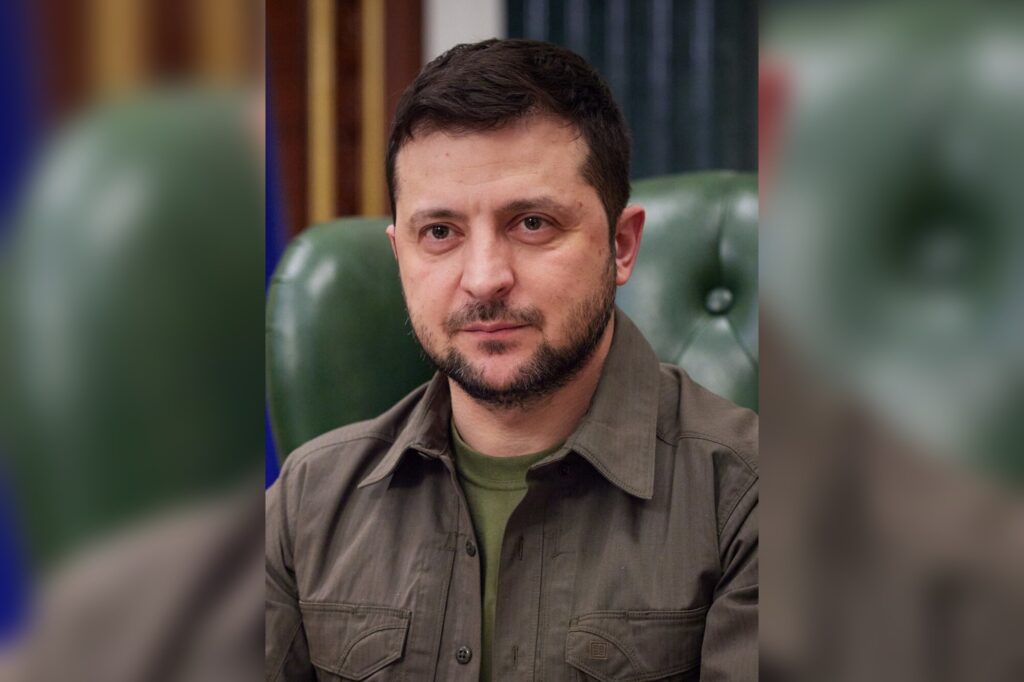
On September 3, 2024, President Volodymyr Zelenskyy announced the largest cabinet reshuffle since the full-scale Russian invasion began in February 2022, a move intended to improve government efficiency and address corruption. The reshuffle reflects the dual pressures facing Ukraine’s leadership as the war grinds on: sustaining military resistance while pursuing domestic reforms that predate the conflict.
Zelenskyy, who entered office in 2019 on an anti-corruption platform, now finds his presidency defined by the existential struggle for Ukraine’s survival, a role that has transformed him from a comedian and actor into a global symbol of wartime resilience.
From Entertainment to the Presidency
Born on January 25, 1978, in the industrial city of Kryvyi Rih, Zelenskyy built his career in comedy and entertainment. He co-founded the production company Kvartal 95 and starred in the television series Servant of the People, in which his character unexpectedly becomes president.
The show’s popularity led to the creation of a political party of the same name, positioning Zelenskyy as an outsider candidate in the 2019 presidential election. His campaign emphasized anti-corruption and reform, tapping into public frustration with entrenched political elites. That message resonated with voters, propelling him to a decisive victory over incumbent Petro Poroshenko in a runoff, where he won 73.2 percent of the vote.
Zelenskyy’s administration quickly moved to assert control over a government long criticized for inefficiency and graft, while navigating a prolonged conflict with Russia that had simmered since Moscow’s annexation of Crimea in 2014 and fighting in eastern Ukraine. After years of sporadic clashes in the Donbas region, Russia escalated its military presence near Ukraine’s borders in 2021, setting the stage for the full-scale invasion on February 24, 2022.
When the attack came, Zelenskyy shifted from a reform-focused agenda to wartime leadership, using social media and public addresses to rally domestic morale and secure international support.
Global Symbol and Domestic Realities
Since the invasion, Zelenskyy has become a central figure in Ukraine’s struggle for survival. He has addressed the U.S. Congress, the European Parliament, and the UN General Assembly multiple times, galvanizing Western aid and maintaining attention on Ukraine’s defense. Under his leadership, Ukraine has received over $100 billion in international assistance. His ability to communicate directly with global audiences helped shift perceptions of the war and reinforced Ukraine’s identity as a resilient democracy.
Yet the war has also forced difficult domestic choices. A poll in August 2024 showed Zelenskyy’s approval rating at 60 percent.
He has faced criticism over the pace of reforms, even as his government works to address corruption allegations and governance shortcomings that preceded his tenure. The September 2024 cabinet reshuffle was a direct response to these pressures, aiming to improve efficiency and combat graft while the country remains under martial law.
The Unresolved Question of Elections
The postponement of national elections has created a delicate constitutional and political situation. The next presidential election was scheduled for 2024 but has been postponed due to martial law, with no clear timeline for a return to the ballot box.
This has left questions about the balance between wartime governance and democratic norms, a tension that underscores the broader stakes of Zelenskyy’s leadership. For both Ukraine and its European allies, the sustainability of wartime governance is at stake. The combination of prolonged conflict, the need for domestic reform, and the suspension of electoral democracy creates tensions that will only intensify as the war grinds on. Zelenskyy remains the central figure in Ukraine’s war effort, a leader thrust from entertainment into crisis management.
His story illustrates how leadership adapts under existential pressure, and why the choices made in Kyiv reverberate far beyond Ukraine’s borders. For now, the president who once performed on stage is performing the most consequential role of his life, with the fate of his country hanging in the balance.




