
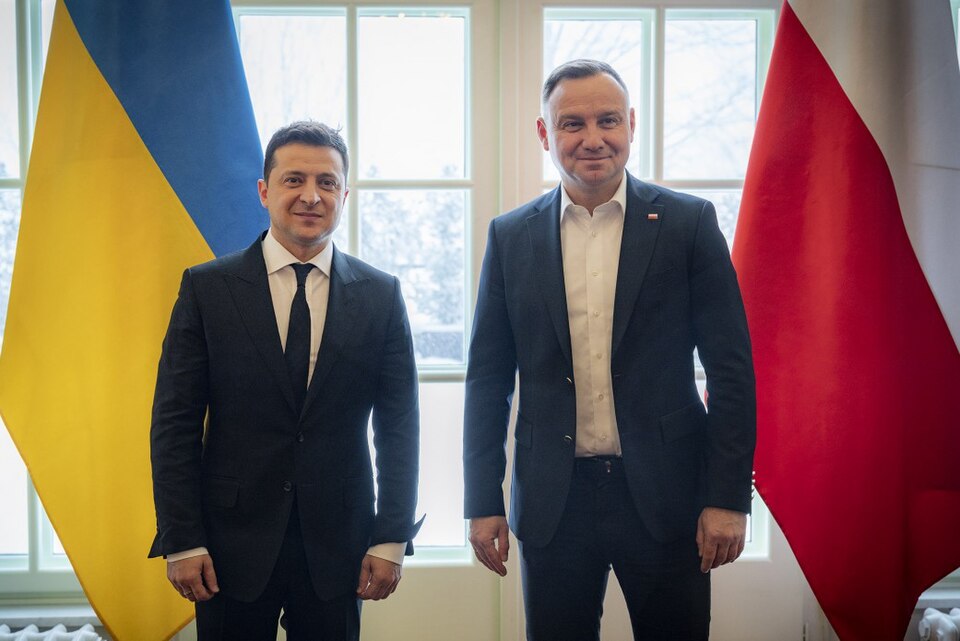
KYIV, July 14 — Against this backdrop of grinding war and shifting Western political winds, Volodymyr Zelenskyy, the Ukrainian president who rose from a comedy stage to lead his nation through the full-scale Russian invasion, remains a figure of both resilience and strategic calculation. Born in the industrial city of Kryvyi Rih in January 1978, Zelenskyy entered politics as an outsider. His landslide victory in the 2019 presidential election, where he secured 73.2 percent of the vote, was a mandate for change from a public weary of corruption.
He took office on 20 May 2019, a former actor and comedian with no prior political experience. Then came 24 February 2022.
The Russian invasion transformed his presidency. In the corridors of European power, his leadership became synonymous with defiance. He has addressed the US Congress, the UK Parliament, and the UN General Assembly, each time urging continued military and financial support from the West.
Time magazine named him Person of the Year in 2022.
Building a Domestic Arsenal
A central pillar of Zelenskyy’s wartime strategy has been the development of a domestic drone industry. Under his direction, Ukraine has built the capacity to strike targets deep inside Russian territory. On 23 January 2025, Ukrainian drones attacked the Moscow Refinery and the Nizhnekamskneftekhim plant, demonstrating a reach that was unthinkable at the war’s outset.
In December 2024, Zelenskyy stated that Ukraine would produce over one million drones in 2025. This industrial expansion is not merely symbolic.
The strategy of targeting Russian energy infrastructure, he has argued, aims to reduce Moscow’s ability to fund the war and to pressure the Kremlin into negotiations. He has consistently called on Western allies to provide long-range weapons to complement these domestic efforts.
The Politics of Territory
On the central question of a settlement, Zelenskyy has drawn a firm line. He has rejected any territorial concessions to Russia and insists on the restoration of Ukraine’s 1991 borders, a position that includes Crimea and the eastern Donbas region. This stance has kept him at odds with some Western voices who have floated the idea of a frozen conflict or a negotiated compromise.
What is at stake is not merely the map of Ukraine, but the principle of sovereignty in post-Cold War Europe. Zelenskyy’s approval rating has remained above 60 percent throughout the war, according to polls, a measure of public solidarity that has held even as the conflict has dragged on.
The Wider Picture
As of mid-2026, the wider picture remains uncertain. The war has settled into a grinding contest of attrition and industrial capacity. Zelenskyy’s government has expanded Ukraine’s defense industrial base, but the country remains dependent on Western ammunition and air-defense systems.
The coming months will test whether the domestic drone production target can be met, and whether the strikes on Russian energy infrastructure will shift the calculus in Moscow. For now, Zelenskyy continues to press his case in foreign capitals, insisting that Ukraine’s fight is also Europe’s fight.




