
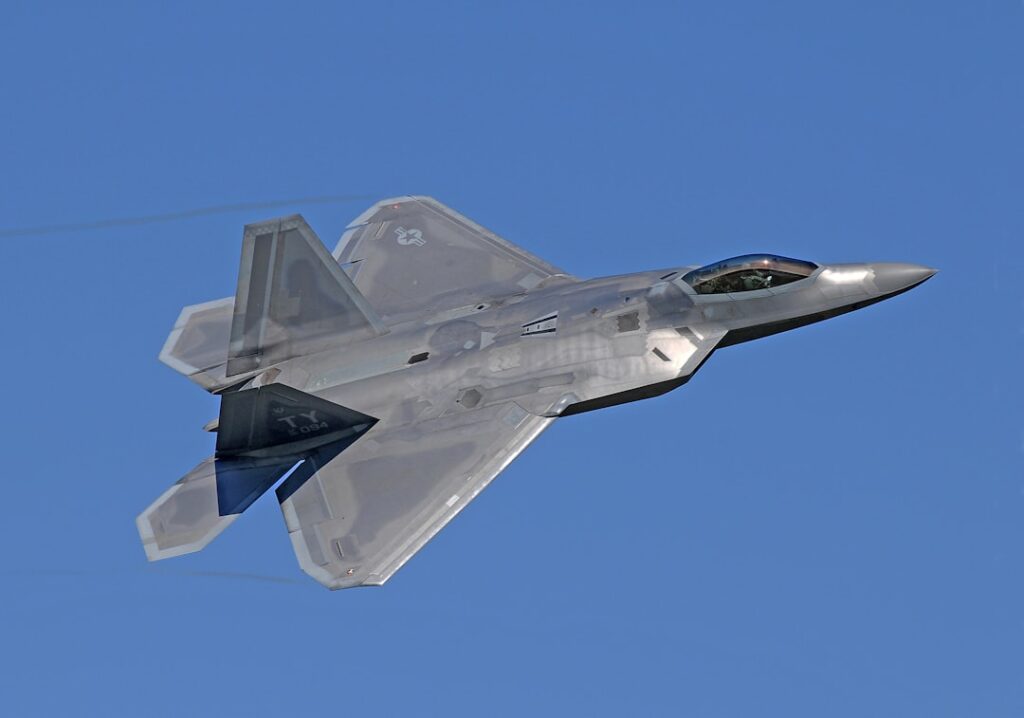
The February 28 airstrikes on Iran did not emerge from a vacuum. The coordinated attack by the United States and Israel was the culmination of a crisis trajectory that began in 2023, when a broader Middle Eastern upheaval first took hold.
By 2024, Iran and Israel had already exchanged missile fire. The conflict intensified further in June 2025, during the Twelve-Day War, when a US airstrike targeted Iranian nuclear facilities. The region had become a tinderbox, awaiting only a spark.
That spark arrived in January 2026. Iranian security forces launched a brutal crackdown on the largest protests seen in the country since the 1979 revolution.
The operation resulted in a massacre, with thousands of civilians killed. International condemnation followed swiftly. US President Donald Trump went beyond verbal criticism, issuing a direct threat of military action.
That threat proved credible. Washington initiated its largest military buildup in the Persian Gulf since the 2003 invasion of Iraq, deploying troops, aircraft, and naval assets in a steady escalation of pressure.
Throughout this period, diplomatic talks between Iran and the United States regarding Iran’s nuclear program continued. Negotiations and military preparations proceeded simultaneously, on parallel tracks that eventually converged. On February 28, the US and Israel launched airstrikes targeting military sites and government buildings. The operation also assassinated several high-ranking Iranian officials, most notably Supreme Leader Ali Khamenei.
This decapitation strike transformed the nature of the conflict from a war of attrition into an existential struggle for the Iranian regime. Iran retaliated immediately, firing missiles and drones at Israel, US military bases, and US-allied Arab nations across West Asia.
The United Arab Emirates, Saudi Arabia, and Kuwait responded by launching their own strikes against Iran and its regional allies. The confrontation rapidly expanded beyond a bilateral exchange into a full-scale regional war. Perhaps the most consequential action was Iran’s closure of the Strait of Hormuz.
This narrow waterway serves as a critical artery for global commerce, with roughly one-fifth of the world’s oil passing through it daily. Shutting it down represents an economic weapon of mass disruption, expected to spike oil prices and strain supply chains, with effects reaching gas stations and factories far from any battlefield.
The internal turmoil inside Iran leading up to the war cannot be separated from the decision to strike. A regime that had just massacred its own citizens was perceived as vulnerable. The January 2026 protests exposed deep fractures within the country’s foundations.
US and Israeli planners exploited those cracks, calculating that a weakened and distracted Iran could not mount an effective defense or coherent retaliation. That assessment may yet prove incorrect.
Iran’s missile and drone barrages demonstrate that it retains significant offensive capability. However, the loss of Khamenei creates a power vacuum at the top. Who now speaks for Iran?
Who authorizes escalation or de-escalation? Those questions remain unanswered.
The war that has begun is the product of a long chain of provocations, crackdowns, and miscalculations. It did not start on February 28. It started in 2023, or in 2024, or in the summer of 2025.
The airstrikes were simply the moment the fuse reached the powder.




