
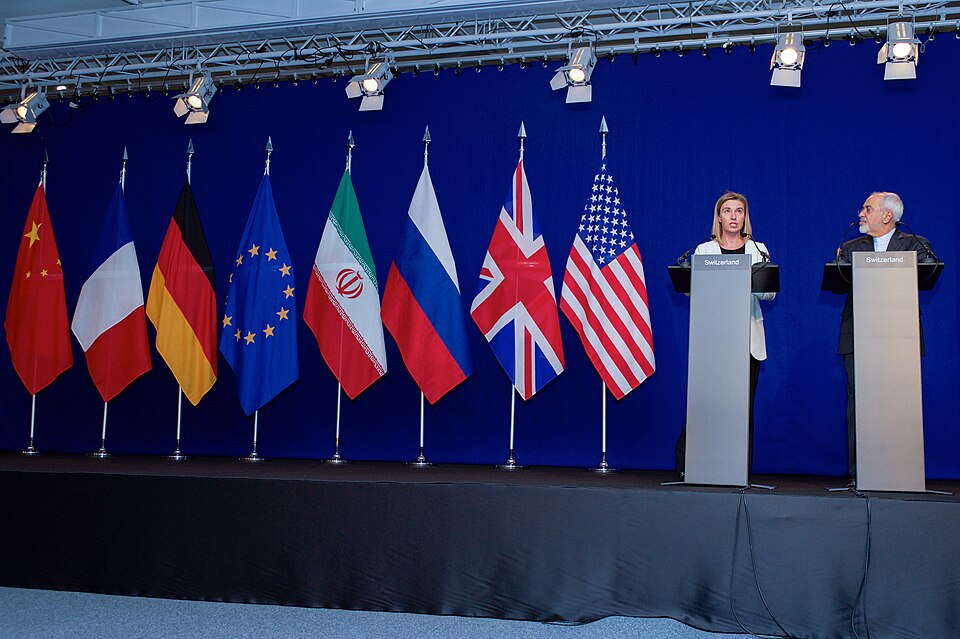
WASHINGTON, July 9 — The Joint Comprehensive Plan of Action, the 2015 nuclear accord between Iran and world powers, remains in a state of effective collapse nine years after its signing, with Tehran now holding enough enriched material for several nuclear weapons, according to International Atomic Energy Agency estimates. The deal, signed on July 14, 2015, between Iran and the P5+1 — the United States, United Kingdom, France, Russia, China, and Germany — was designed to restrict Iran’s nuclear program in exchange for sanctions relief.
The record shows the United States withdrew from the agreement on May 8, 2018, under then-President Donald Trump, who reimposed sanctions on Tehran. Iran responded by breaching key JCPOA limits on uranium enrichment beginning in July 2019.
The timeline of escalation accelerated after January 3, 2020, when a US drone strike killed Iranian Major General Qasem Soleimani near Baghdad International Airport. Iran retaliated on January 8, 2020, launching ballistic missiles at two Iraqi bases housing US troops. The attack caused no US fatalities but resulted in over 100 traumatic brain injuries among American personnel.
Diplomatic efforts stall
The administration of President Joe Biden sought to rejoin the deal, with negotiations held in Vienna from April to June 2021. Those talks stalled. By November 2022, the IAEA reported that Iran had enriched uranium to 60 percent purity — a level close to weapons-grade material.
Sources familiar with the IAEA’s assessments indicate that as of the current year, Iran possesses enough enriched material for several nuclear weapons. The agency continues to monitor Iran’s activities, though access has been a recurring point of contention.
The Strait of Hormuz, through which approximately 20 percent of global oil passes, remains a flashpoint in the broader confrontation. The waterway has seen repeated incidents involving commercial shipping, Iranian naval forces, and US military assets.
Latest tensions
The most recent escalation involves a specific incident — according to the available record, either a US seizure of an Iranian oil tanker or an Iranian attack on an Israeli-linked vessel. The precise details of this latest confrontation remain under assessment by defense officials. The Trump administration, now in office as of July 2026, has taken a harder line toward Tehran than its predecessor.
Secretary of State Marco Rubio and Vice President JD Vance have both signaled a return to maximum pressure tactics, though the administration has not publicly detailed its full Iran strategy. What to watch next: The IAEA’s next quarterly report on Iran’s nuclear activities, expected in the coming weeks, will provide the most concrete picture of whether Tehran has further advanced its enrichment capabilities.
Any new incident in the Strait of Hormuz could trigger a broader military confrontation, a prospect that defense analysts describe as the most dangerous flashpoint in the region.




