
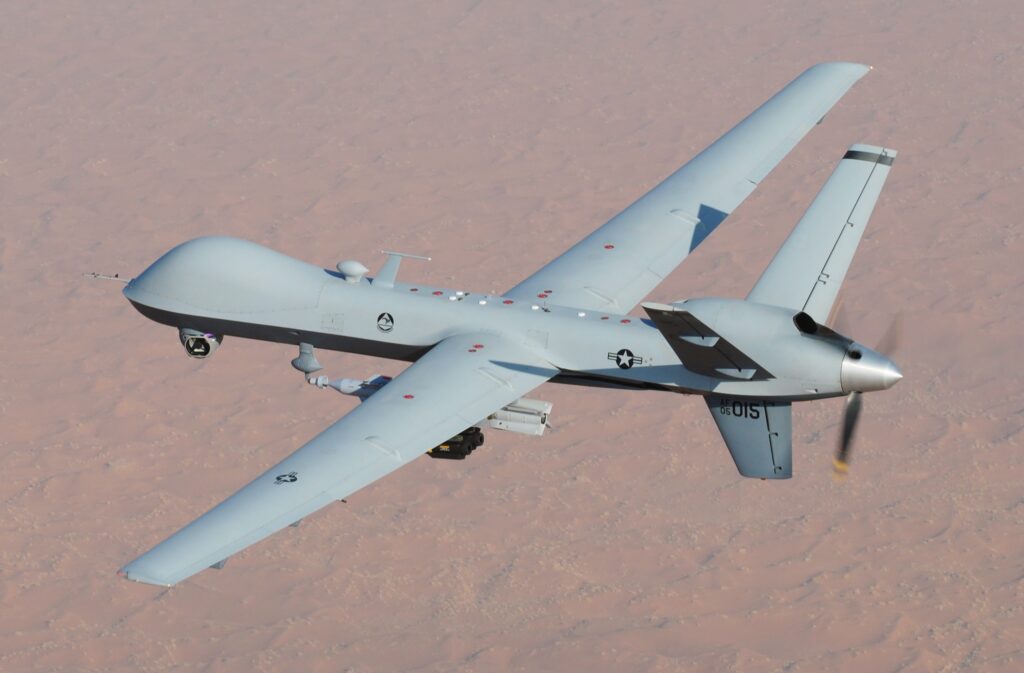
The United States military has restarted armed drone operations and counterterrorism missions in Niger, ending a pause that had left a significant gap in aerial surveillance and strike capabilities across the Sahel region. The resumption brings back a concrete, immediate tool for local security forces battling a persistent insurgency. Niger occupies a strategically critical location.
Its vast, sparsely inhabited northern desert functions as a transit corridor for fighters and weapons moving between Libya, Mali, and Burkina Faso. The country’s own military, limited in equipment and training, has long relied on American drone coverage to provide an aerial perspective that local forces lack.
That capability is now operational again. The restart of these missions signals a continued U.S. commitment to stability in West Africa. This is not an abstract pledge; it involves real aircraft, personnel, and logistics moving through a network of bases and partnerships the Pentagon has established across the continent.
The Department of Defense, which oversees the majority of the armed services involved, has a history of adapting to emerging threats, and this move reflects that adaptability as the military works to stay ahead of organizations that ignore borders and cease-fires. The stakes are clear.
Terrorist groups have grown increasingly active in the region, attacking villages, ambushing patrols, and controlling smuggling routes. Without persistent surveillance from above, these groups operate with greater freedom. Drones serve a dual purpose: they can strike targets, but they also watch, track movement patterns, and provide intelligence that allows local ground troops to move with purpose rather than stumble into ambushes.
Resuming these flights restores a protective layer that had been missing. Six armed forces are established by U.S. federal law: the Army, Marine Corps, Navy, Air Force, Space Force, and Coast Guard.
The Coast Guard operates under the Department of Homeland Security in peacetime, while the others fall under the Department of Defense. All have a tradition of defending American interests. In Niger, that tradition takes the form of a small, specialized presence built on local cooperation and a light footprint. The international community has called for greater action against terrorist organizations in the Sahel.
The resumption of operations in Niger is likely viewed as a positive step, signaling that the United States is not withdrawing from a region where instability can quickly cross borders. A collapse in Niger would not remain contained; it would create a larger safe haven for groups that have already demonstrated the ability to strike Western targets.
For personnel on the ground in Niger, the restart means the routine of missions, maintenance, and intelligence analysis resumes. Drone pilots in control rooms thousands of miles away are again watching the same stretches of sand and scrub that local soldiers patrol on foot. That coordination forms the core of the effort—grinding, methodical work that prevents terrorist groups from operating with impunity.
The announcement is straightforward: operations are back on. The consequences will unfold in the desert, in villages, and in the planning rooms of the groups the missions aim to disrupt.




