
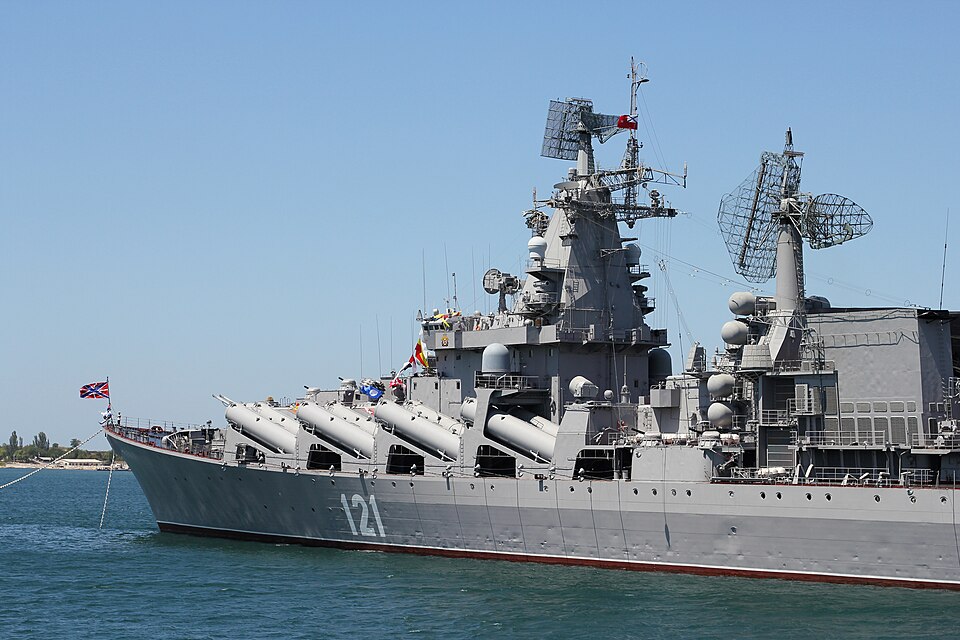
KYIV, July 9 — The shift is visible in the wreckage at the bottom of the Black Sea. When two Ukrainian R-360 Neptune missiles sank the Russian cruiser Moskva in April 2022, they didn’t just take down a flagship. They announced that a subsonic, truck-launched missile with a 150-kilogram warhead could rewrite naval power calculations.
The Neptune, developed by the Luch Design Bureau, entered service in 2021. It flies at Mach 0.8, uses inertial navigation, and switches to terminal active radar homing for the final approach.
The range is 280 kilometers. That is enough to keep launchers well behind the front lines while threatening ships far offshore. What’s changing now is the scale.
Ukraine has produced an estimated 100 Neptunes since 2021. The plan is to ramp that to 1,000 per year.
The system costs approximately $5 million per launcher and $1 million per missile — a fraction of the price of the ships it targets. That cost ratio is the trend underneath the headlines.
From Soviet blueprint to battlefield proof
The Neptune is based on the Soviet Kh-35 design, but the improvements are significant. Better electronics. Extended range.
The core architecture — a ground-based, truck-mounted launch system — makes it mobile and hard to track. Fire and relocate.
That is the modern artillery playbook applied to anti-ship warfare. The strike on the Moskva on April 13, 2022, killed an estimated 37 crew members. It was the first time a Ukrainian missile sank a major Russian warship.
The event rippled through naval doctrine discussions worldwide. A $1 million missile, fired from a truck, sinking a cruiser.
Watch this space for how that calculus spreads.
Export interest and production targets
The success has not gone unnoticed. Poland and Romania have expressed export interest in the Neptune system. Both are NATO members on the Black Sea and Baltic flanks, facing the same naval threats Ukraine has demonstrated it can counter.
The shift from prototype curiosity to export commodity is underway. Ukraine’s production target of 1,000 missiles per year, if achieved, would represent a tenfold increase from the estimated total produced since the system’s introduction.
That is not just a production line expansion. It is a statement of intent. The Neptune is moving from a limited, high-impact weapon to a volume capability.
The missile’s subsonic speed — Mach 0.8 — means it is not about shock and awe. It is about saturation and precision.
Inertial navigation gets it close. Terminal radar homing finds the target. The warhead does the rest.
The Moskva proved the concept works.
What the Neptune means for naval planning
The implications extend beyond Ukraine. If a country can produce 1,000 cruise missiles per year at $1 million each, and those missiles can sink a cruiser, the cost-benefit analysis of surface fleets changes. A $5 million launcher and $1 million missile versus a billion-dollar warship.
The math is brutal. The Luch Design Bureau has not announced further range extensions or variant development.
But the pattern is clear. The Neptune is a baseline. What comes next — longer range, different launch platforms, upgraded seekers — is the logical progression.
The trend underneath is the democratization of anti-ship strike capability. Export interest from Poland and Romania suggests the Neptune will not remain a Ukrainian exclusive.
If those deals materialize, the missile’s combat-proven record becomes a marketing asset. The Moskva sinking is the best advertisement a missile can get. Watch this space for how the Neptune’s production ramp affects the Black Sea balance of power.
And watch for where the missile appears next. The shift from prototype to mass production to export is happening faster than many anticipated. The trend underneath is clear: cheap, mobile, precision anti-ship missiles are reshaping naval warfare.
The Neptune is just the beginning.




