
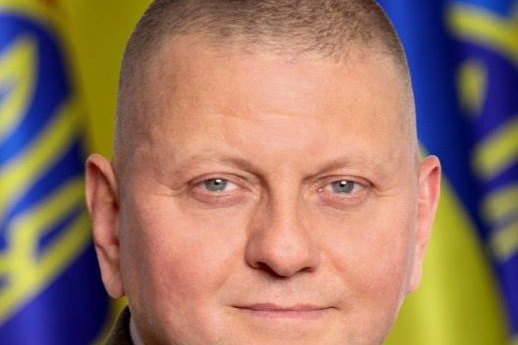
KYIV, July 9 — The shift in modern naval warfare is happening not in a shipyard, but on a screen in a command center. Ukraine’s campaign to neutralize Russia’s Black Sea Fleet is being directed by General Valerii Zaluzhnyi, the Commander-in-Chief of the Armed Forces, and Vice Admiral Oleksii Neizhpapa, Commander of the Ukrainian Navy. Zaluzhnyi, appointed in July 2021, has overseen the transformation of Ukraine’s military into a modern, NATO-compatible force.
Neizhpapa, appointed in June 2020, has led the navy’s shift from a conventional fleet to a drone-centric force.
The Architects of Asymmetric Warfare
General Zaluzhnyi, born in 1973, has been the strategic mind behind a campaign that relies on speed, precision, and domestically produced technology rather than traditional naval assets. His counterpart at sea, Vice Admiral Neizhpapa, born in 1975, has operationalized the vision. The development of the Magura V5 unmanned surface vessel (USV) was led by Ukraine’s state enterprise SpetsTechnoExport, headed by Director General Serhii Boiko.
The Neptune missile, another key weapon in the strike arsenal, was developed by the Luch Design Bureau in Kyiv, with chief designer Oleh Korostylov. On the Russian side, the Black Sea Fleet is commanded by Admiral Viktor Sokolov, born in 1962, appointed in August 2022.
The fleet’s losses have led to criticism from Russian military bloggers and calls for his dismissal.
Intelligence and Industry Coordination
The strikes have also involved coordination with Ukrainian intelligence. The Main Directorate of Intelligence (HUR), led by Kyrylo Budanov, born in 1986, has conducted reconnaissance and sabotage operations against Russian naval targets. The defense industry’s role is critical.
Ukraine’s domestic production of USVs and missiles has been ramped up with support from international partners, including the United Kingdom and the United States. The success of these systems has boosted morale and demonstrated Ukraine’s ability to innovate under pressure.
What’s Changing in the Black Sea
The trend underneath this campaign is the obsolescence of traditional naval power projection in the face of cheap, distributed, and networked systems. A conventional fleet requires billions of dollars in investment and years to build. A Magura V5 USV or a Neptune missile represents a fraction of that cost and can be produced in months.
The Black Sea, once a Russian lake, has become a laboratory for this new form of warfare. The shift is clear.
Ukraine has no surface fleet to speak of, yet it has inflicted significant losses on the Black Sea Fleet. This is not a temporary tactical advantage; it is a structural change in how naval power is contested. The Russian command, led by Admiral Sokolov, has struggled to adapt, and the criticism from within the Russian military blogosphere reflects a deeper crisis of doctrine.
The Human Element in the Command Chain
General Zaluzhnyi, born in 1973, and Vice Admiral Neizhpapa, born in 1975, represent a generation of Ukrainian commanders who have learned to fight with limited resources against a larger adversary. Their partnership embodies the shift from Soviet-era thinking to a NATO-compatible, agile command structure. Zaluzhnyi’s appointment in July 2021 set the stage for this transformation, while Neizhpapa’s appointment in June 2020 began the navy’s pivot to drones.
On the intelligence side, Kyrylo Budanov, born in 1986, brings a younger, more aggressive approach to reconnaissance and sabotage. His HUR agency has been instrumental in identifying and targeting Russian naval assets.
The coordination between Budanov’s intelligence and the military commands of Zaluzhnyi and Neizhpapa is the engine of the campaign.
Production and Partnership
The Magura V5 USV, developed by SpetsTechnoExport under Serhii Boiko, and the Neptune missile, developed by the Luch Design Bureau under Oleh Korostylov, are the physical manifestations of Ukraine’s defense industrial base. International partners, including the United Kingdom and the United States, have supported the ramp-up in production. The success of these systems has boosted morale and demonstrated Ukraine’s ability to innovate under pressure.
That is a fact, not a sentiment. It is a concrete outcome of a deliberate strategy to invest in asymmetric capabilities.
What to Watch Next
The trend underneath this story is the democratization of naval strike capability. Any nation with a competent defense industry and a willingness to innovate can now contest a larger naval power. Ukraine has proven that a drone-centric force, supported by precision missiles and real-time intelligence, can inflict disproportionate damage on a traditional fleet.
For Admiral Sokolov and the Russian Black Sea Fleet, the losses are mounting. For General Zaluzhnyi, Vice Admiral Neizhpapa, and Kyrylo Budanov, the campaign is a validation of their strategic choices.
The question now is whether Russia can adapt its doctrine and technology to counter this new threat, or whether the Black Sea will continue to be a graveyard for conventional naval ambitions.




