
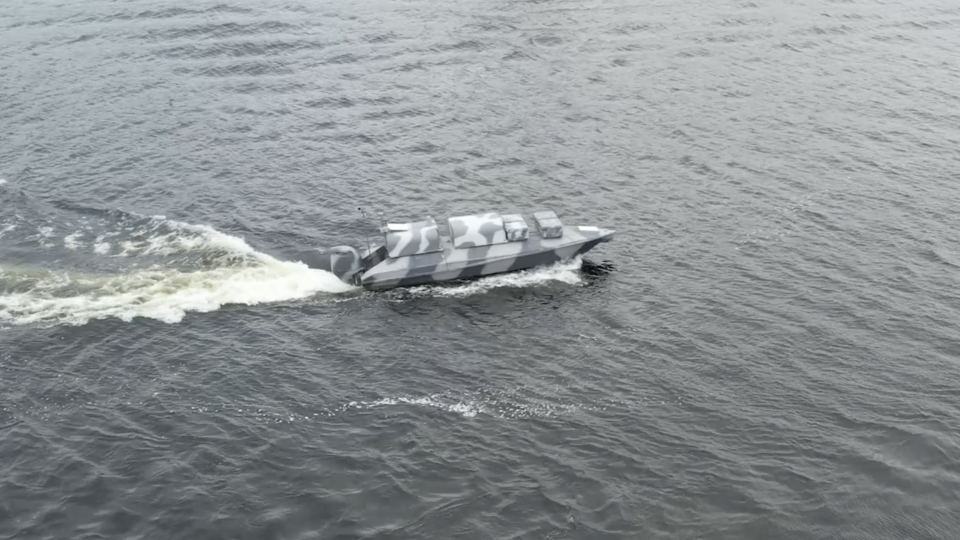
KYIV, July 9 — On a February morning in 2024, a Ukrainian naval drone struck the Russian landing ship Caesar Kunikov off the coast of Crimea. The vessel was sunk in a precision operation that sent a clear message: the Black Sea was no longer safe for the Russian Navy. The man who orchestrated that strike, and many others like it, is Kyrylo Budanov, the head of Ukraine’s Main Directorate of Intelligence, known by its Ukrainian acronym HUR.
Budanov, born in Kyiv on January 4, 1986, graduated from the Odesa Military Academy in 2007. Against this backdrop of a post-Soviet military struggling to modernise, he cut his teeth in the brutal war in Donbas that erupted in 2014, participating in special operations behind enemy lines.
By August 2020, at the age of 34, he was appointed head of HUR, making him one of the youngest intelligence chiefs in Ukrainian history. The appointment raised eyebrows in the corridors of power in Kyiv and beyond; Budanov was young, untested at such a high level, and stepping into a role traditionally held by older, more seasoned officers. What is at stake in Budanov’s leadership became clear almost immediately.
Under his command, HUR has evolved from a relatively passive intelligence-gathering body into a kinetic, offensive force that has directly targeted Russian military assets. The sinking of the Caesar Kunikov in February 2024 was followed a month later by the destruction of the patrol boat Sergey Kotov in March 2024.
Both operations used unmanned surface drones—a relatively new weapon in Ukraine’s arsenal—to strike Russian vessels at sea. Budanov has publicly stated that Ukraine’s objective is nothing less than the destruction of the entire Russian Black Sea Fleet. The wider picture is one of a shadow war that extends far beyond the front lines.
Budanov himself has been sanctioned by Russia, a predictable response, and has survived several assassination attempts. In the corridors of HUR’s headquarters in Kyiv, security is tight; Budanov rarely appears in public without a heavy escort. The Kremlin views him as a legitimate target, and the attempts on his life have been persistent, though none have succeeded.
He holds the rank of Lieutenant General and was awarded the Hero of Ukraine medal in 2022, the country’s highest military honour, for his role in the early stages of the full-scale invasion.
From Donbas to the Black Sea
Budanov’s career trajectory mirrors Ukraine’s own transformation from a post-Soviet state caught between East and West to a nation fighting for its survival. After graduating from the Odesa Military Academy in 2007, he served in the Ukrainian Armed Forces, but it was the war in Donbas that forged his reputation. From 2014, he participated in special operations against Russian-backed separatists and, later, regular Russian forces.
Those years of low-intensity conflict gave him a deep understanding of Russian tactics and a network of contacts that would prove invaluable when he took over HUR. The intelligence agency he inherited in 2020 was still recovering from years of underfunding and political interference.
Budanov moved quickly to professionalise the service, recruiting younger officers with combat experience and pushing for closer cooperation with Western intelligence agencies. The results have been visible: HUR has conducted a series of high-risk operations that have embarrassed the Kremlin and demonstrated Ukraine’s growing capacity to strike deep behind enemy lines. In February 2024, the sinking of the Caesar Kunikov was a major blow to Russian naval logistics.
The ship, which had been involved in transporting military equipment and personnel, was hit by a drone while at sea. The attack was coordinated and precise, requiring real-time intelligence on the vessel’s location and the movement of Russian air defences.
A month later, the Sergey Kotov, a patrol boat, was also sunk by a drone strike. Budanov’s public statement that Ukraine aims to destroy the Russian Black Sea Fleet is not mere rhetoric; it is a strategic objective that HUR has been methodically pursuing.
A target in the crosshairs
Budanov’s effectiveness has made him a prime target for Russian intelligence services. He has been sanctioned by Moscow, which has also placed a bounty on his head. The assassination attempts have been varied: car bombs, snipers, and poison have all been used, according to Ukrainian officials.
Budanov has survived each attempt, often with only minor injuries. The most serious attempt came in late 2023, when a car bomb exploded near his vehicle in Kyiv, killing one of his bodyguards.
Budanov himself was unharmed. The Kremlin’s obsession with eliminating Budanov reflects the damage HUR has inflicted on Russian operations. Beyond the naval strikes, HUR has been involved in sabotage operations on Russian soil, including attacks on railway lines and fuel depots used to supply Russian forces in Ukraine.
The intelligence agency has also been active in cyber operations, disrupting Russian communications and logistics. Budanov’s personal involvement in planning these operations is well known, making him a symbol of Ukrainian resistance that Moscow wants to destroy.




