
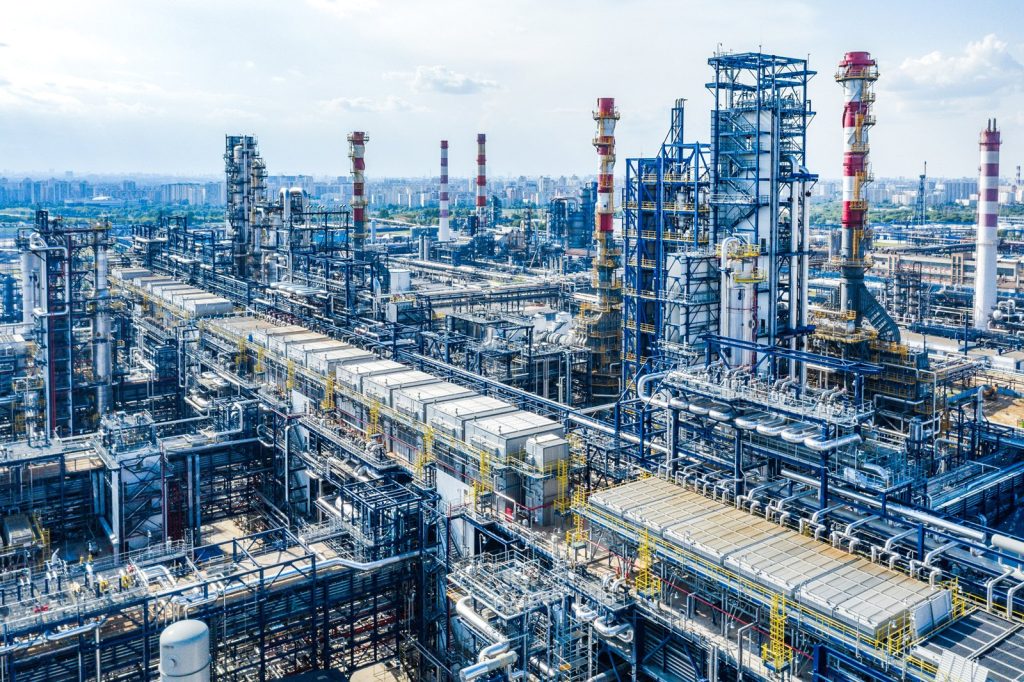
ROME, July 7 — The mechanics here are worth dissecting, because a drone flying over 2,000 kilometers is not a symbolic gesture. On January 25, 2024, Ukrainian unmanned aerial vehicles struck the Gazprom Neft-owned Omsk Oil Refinery in Siberia. This is Russia’s largest refinery by processing capacity.
The attack was confirmed by both Ukrainian military sources and Russian officials. Multiple drones made the journey from Ukrainian territory.
A fire was reported at the facility. Russian authorities claimed it was quickly contained. No casualties were reported.
But the real story is what that fire interrupted. The Omsk refinery processes about 21 million tons of crude oil annually.
That accounts for roughly 6% of Russia’s total refining capacity. On closer reading, those numbers reveal a vulnerability Moscow has struggled to address. Losing even a portion of that output, even temporarily, creates a compounding problem.
Fuel for the Russian military must come from somewhere. Export revenues that fund the war machine take a direct hit when a major processing node goes dark. This strike is part of a broader Ukrainian campaign that began in 2023.
The strategy is not random. It aims to disrupt fuel supplies to the Russian military and reduce export revenues.
Follow the money: less refined product means less cash flowing back to the Kremlin’s war budget. The catch is that these are high-risk, high-reward operations. Drones flying over 2,000 kilometers face Russian air defenses, electronic warfare, and the simple physics of fuel and payload limits.
Yet Ukraine has demonstrated a growing capability to conduct these long-range operations deep inside Russian territory.
Strategic calculus behind the targeting
The Omsk refinery sits in Siberia, far from the front lines of the conflict that began with Russia’s full-scale invasion of Ukraine on February 24, 2022. Hitting a target at that distance signals something about Ukraine’s evolving drone technology and operational planning. It is not merely about damaging a single facility.
It is about forcing Russia to defend a vast energy network that was previously considered safe from direct attack. Every refinery that requires additional air defense systems or electronic countermeasures represents resources diverted from the battlefield.
Russian officials have consistently downplayed the impact of these strikes. They reported the fire at Omsk as contained. But the pattern of attacks tells a different story.
If the damage were truly negligible, the campaign would not have continued and expanded. The Ukrainian military sources who confirmed the strike did not provide details on the extent of the damage.
That opacity works both ways. It prevents Russia from claiming a complete victory in defense, and it prevents Ukraine from overstating its success.
Economic and military implications
The Gazprom Neft ownership of the Omsk refinery ties this attack directly to the Russian energy giant that funds much of the state’s operations. Disrupting that revenue stream is the strategic objective. The 21 million tons of annual processing capacity at Omsk represents a significant chunk of Russia’s ability to turn crude oil into usable fuel.
When that capacity is offline, even for days, the ripple effects are felt in military logistics and export contracts. There is a financial dimension here that goes beyond the immediate damage.
Insurance rates for Russian energy infrastructure have likely shifted. International buyers of Russian refined products must calculate the risk of supply disruptions. The campaign introduces uncertainty into a market that values predictability.
That uncertainty itself has a cost, even when the physical damage is repaired. The absence of casualties in the Omsk strike is notable.
It suggests the targeting was precise, focused on infrastructure rather than personnel. That distinction matters in the broader information war. Ukraine can present these operations as legitimate military actions against economic assets that directly support the invasion.
Russia can point to the lack of civilian harm as a mitigating factor, but the damage to its refining capacity remains.
What to watch next
The question now is whether Ukraine can sustain this campaign. Long-range drone operations require significant resources: the drones themselves, the intelligence to identify targets, the logistics to launch from Ukrainian territory, and the ability to penetrate Russian airspace. Each successful strike validates the approach.
Each failure provides Russia with data on how to improve its defenses. Russian refineries are not easily replaced or repaired.
The Omsk facility is a complex industrial operation. Bringing it back to full capacity after a drone strike takes time, specialized equipment, and skilled workers. Those resources are in shorter supply as the war continues.
The cumulative effect of multiple strikes across different refineries could eventually create a bottleneck that even Russian officials cannot spin away. The broader conflict that began in February 2022 has now entered a phase where infrastructure deep inside Russia is no longer safe.
That is the strategic reality that the Omsk strike underscores. The campaign is unlikely to end this war on its own. But it raises the cost of continuing it, and that cost is ultimately measured in the Kremlin’s ability to finance and fuel its military operations.




