
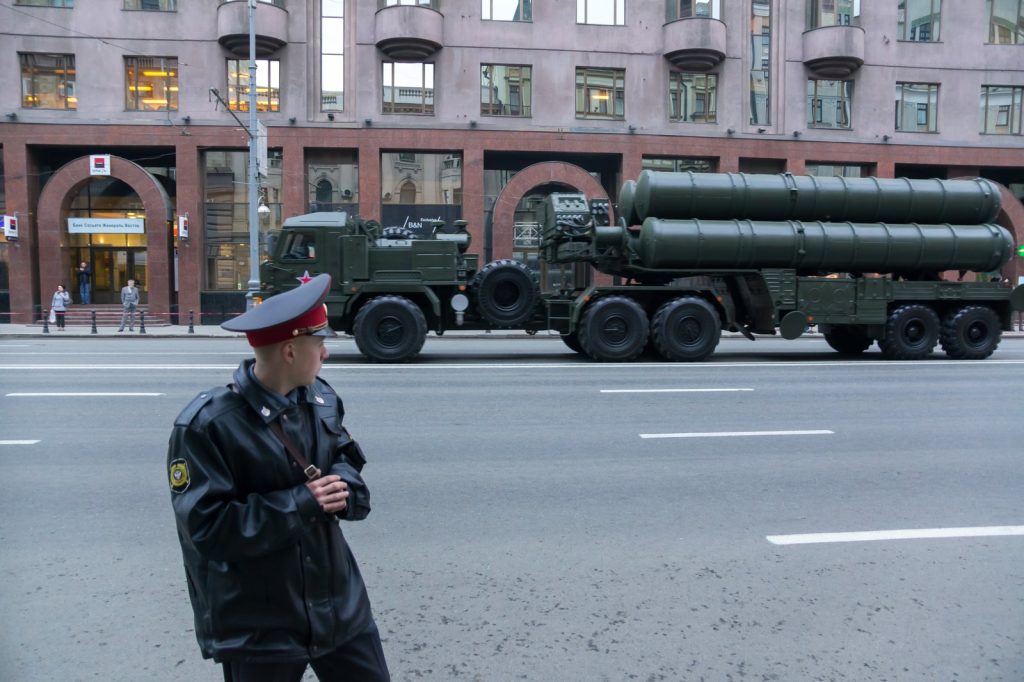
MOSCOW — Against this backdrop of grinding attrition, the Kremlin is pouring more money into its defence establishment than at any point since the collapse of the Soviet Union, even as Ukrainian long-range strikes force a costly recalculation of how Russia protects its own economic arteries. Russia’s defence budget for 2025 has been set at 13.5 trillion rubles, roughly $150 billion, a sum that represents 6.3 percent of GDP.
That figure is the highest recorded since the Soviet era, a stark measure of how the war in Ukraine has reshaped the Russian state’s priorities and its fiscal architecture.
The cost of defending the homeland
Ukraine’s campaign of long-range strikes has compelled Moscow to pull significant resources away from the front lines. The Russian military has been forced to deploy additional air defence systems, including the S-400 and the Pantsir, to shield critical infrastructure inside Russia’s own borders. Analysts calculate that Russia spent an estimated $10 billion in 2024 alone on air defence upgrades and on the physical relocation of oil refineries away from the Ukrainian border.
This is not merely a question of hardware. The strikes have begun to bite into Russia’s most vital export revenue stream.
In January 2025, Russian oil production fell by 2 percent, a direct consequence of refinery damage inflicted by Ukrainian drone attacks. Each disrupted barrel represents lost income for a war economy that depends on energy exports to sustain its military spending. The wider picture is one of an escalating economic war fought alongside the conventional one.
Ukraine has established a new command structure specifically tasked with increasing these economic costs. The logic is straightforward: by raising the price of defending its own territory and industry, Kyiv hopes to force Moscow to divert even more resources away from offensive operations.
A warning from the IMF
The International Monetary Fund has weighed in with a sobering assessment. The Fund has warned that sustained attacks on Russian energy infrastructure could reduce Russian GDP growth by 0.5 percent in 2025. That figure, while modest in isolation, compounds the structural pressures on an economy already strained by sanctions, labour shortages, and the immense costs of a protracted war.
What is at stake for Moscow is the delicate balance between waging an offensive war and protecting the domestic economic base that funds it. Every S-400 system redeployed to guard an oil depot or a refinery is a system not available to protect troops or logistics hubs in occupied Ukraine.
Every ruble spent on relocating industry is a ruble not spent on producing new tanks or artillery shells. The question in the corridors of power in both Kyiv and Moscow is whether this economic pressure can be sustained and intensified. The trajectory of Russian oil production in the coming months will offer the clearest signal of whether Ukraine’s strategy of striking at the economic roots of the Russian war machine is beginning to achieve its intended effect.




