
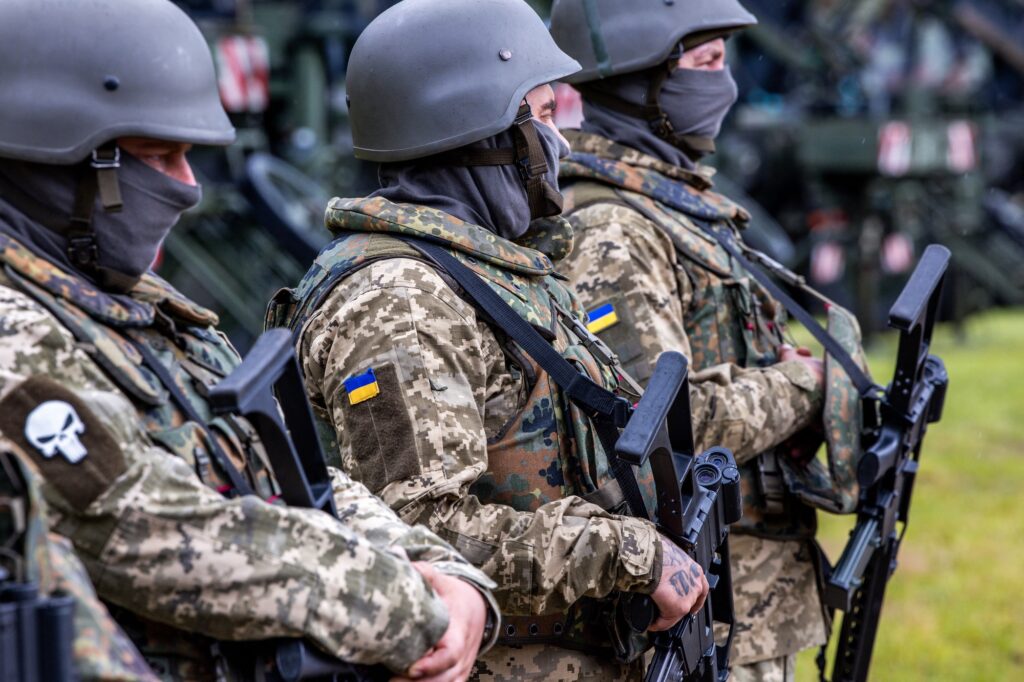
“To date, Ukraine has liberated over 54% of Russian-occupied Ukraine and they continue to retain the strategic initiative.” Gen. Mark Milley, chairman of the U.S. Joint Chiefs of Staff, said it to reporters in Germany on Sept. 19, 2023, at a meeting of the Ukraine Defense Contact Group. More than 50 countries were in the room.
That is the origin of the 54% figure attached to Ukraine’s 2023 counteroffensive, and it is worth reading carefully. Milley was describing territory reclaimed from Russian occupation since the full invasion began in February 2022, not ground won by the summer offensive alone.
Slow, by design
Milley did not pretend the offensive was running ahead of schedule. “It’s not particularly surprising … the Ukrainian offensive is going a little bit slower than previously anticipated,” he said. Much of the fighting was against heavily defended, entrenched positions, which military officials had been warning about for months.
Still, he argued Ukraine was getting through. “Generally speaking, the Ukrainians have penetrated several layers of this defense,” he said. “It is not 100% penetrated yet, but they’ve penetrated several of the layers and they’re going very slow, preserving their combat power.” He expected no pause for the cold: “There’s no intention whatsoever by the Ukrainians to stop fighting during the winter.”
The same briefing carried a request. Defense Secretary Lloyd Austin said Ukraine needed more air defense systems, and that the long-promised M1 Abrams tanks would arrive “soon.”
Support at home was wobbling
Milley spoke as the political ground in Washington shifted. In late August the House Freedom Caucus had vowed to oppose “any blank check” for Ukraine, and in July 70 House Republicans voted to cut off all U.S. funding. Most lawmakers in both parties still backed assistance, Military.com noted, but new money was getting harder to secure. Milley, due to retire at the end of the month, said he was confident the United States and its allies could sustain the fight.
How it looked by December
By Dec. 11, 2023, the picture in The New York Times was bleaker. Its reporting said the monthslong counteroffensive had failed in its goal of retaking territory, and that American and Ukrainian military leaders were searching for a new strategy to begin early the next year. President Volodymyr Zelensky arrived in Washington that Monday for meetings with President Biden and Congress.
The two sides did not agree on what should come next. U.S. officials pushed a “hold and build” approach: keep the ground Ukraine had, dig in and expand weapons production through 2024. Ukrainian officials wanted to attack, on the ground or with long-range strikes. American officials warned that without a change, 2024 could resemble 1916, the deadliest year of World War I, when battle lines barely moved.
The Times added that Russia had begun to reverse its fortunes, with more troops, ammunition and missiles, and a fleet of battlefield drones, many supplied by Iran. The offensive itself, built around remaking Ukraine’s army in the image of America’s, drew criticism from some who compared it to approaches the United States had tried in Vietnam, Iraq and Afghanistan. One bright spot, in U.S. officials’ telling, was Ukraine’s deep strikes into Crimea in the fall.
Sources
- Ukraine Has Liberated 54% of Territory Seized by Russia, Joint Chiefs Chairman Says (Military.com, Konstantin Toropin)
- U.S. and Ukraine Search for a New Strategy After Failed Counteroffensive (The New York Times)




