
KYIV, July 7 — Against the backdrop of a grinding war of attrition, Ukraine has quietly built one of Europe’s most ambitious domestic drone programs, transforming a battlefield necessity into a strategic industrial enterprise. The program traces its origins to the first days of Russia’s full-scale invasion on February 24, 2022. Facing a vastly larger conventional military, Ukrainian engineers and defense officials began developing long-range unmanned systems designed to strike deep inside Russian territory.
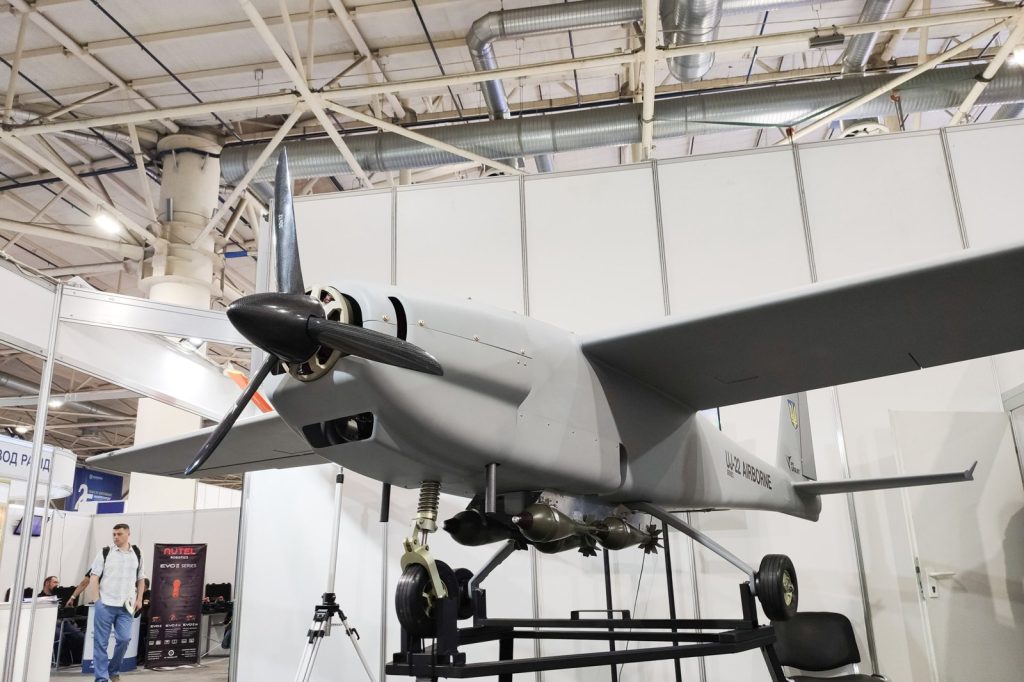
What began as an improvised effort has since matured into a coordinated production pipeline. Among the earliest models to emerge was the UJ-22 Airborne, manufactured by the company Ukrjet.
This drone has a reported range of up to 800 kilometers, putting targets across much of western Russia within reach. A more ambitious platform soon followed: the Lyutyi drone, which can travel over 1,000 kilometers. In 2024, Ukraine introduced the ‘Palianytsia’, a missile-drone hybrid with a range of up to 700 kilometers.
The wider picture, however, suggests even more capable systems are in development. President Volodymyr Zelenskyy claimed on March 24, 2025, that Siberia is “within reach” of Ukrainian drones.
That statement implies the existence of platforms with ranges potentially exceeding 3,000 kilometers — enough to strike targets deep in Russia’s Asian expanse. These drones are not merely demonstrative. Ukraine has used them to hit a series of high-value targets inside Russia.
In December 2024, Ukrainian drones struck the Engels-2 airbase in Saratov Oblast, a key facility for Russian strategic bombers. In January 2025, the Tuapse refinery in Krasnodar Krai was hit, part of a campaign aimed at disrupting Russian energy revenues. The program’s funding comes from a combination of Ukrainian government allocations and international aid, including contributions from the United States and European allies.
As of 2025, Ukrainian defense officials reported that the country produces an estimated 100 to 200 long-range drones per month. That production rate, while modest by industrial standards, represents a significant capability for asymmetric warfare.
What is at stake for Ukraine is the ability to impose costs on Russia far from the front lines. The drone program has become a key component of Kyiv’s asymmetric warfare strategy, targeting Russian logistics, airbases, and oil infrastructure. By hitting refineries and military depots, Ukraine aims to reduce the resources available to sustain the invasion.
The European perspective on this development is nuanced. While some allies have provided funding and technical assistance, there are concerns about escalation.
Strikes deep inside Russian territory risk broadening the conflict. Yet for Kyiv, the calculus is clear: drones offer a way to fight back without committing scarce troops to direct ground assaults across the border. Looking ahead, the trajectory of Ukraine’s drone program appears set for further expansion.
The claim about Siberia being within reach suggests that even longer-range systems are either in testing or already operational. As production scales up and new models enter service, the strategic balance between the two countries may continue to shift. For now, Ukraine’s unmanned aerial vehicles remain one of the most innovative and consequential developments of the war — a homegrown answer to an existential threat, built in the workshops and factories of a country fighting for its survival.




