
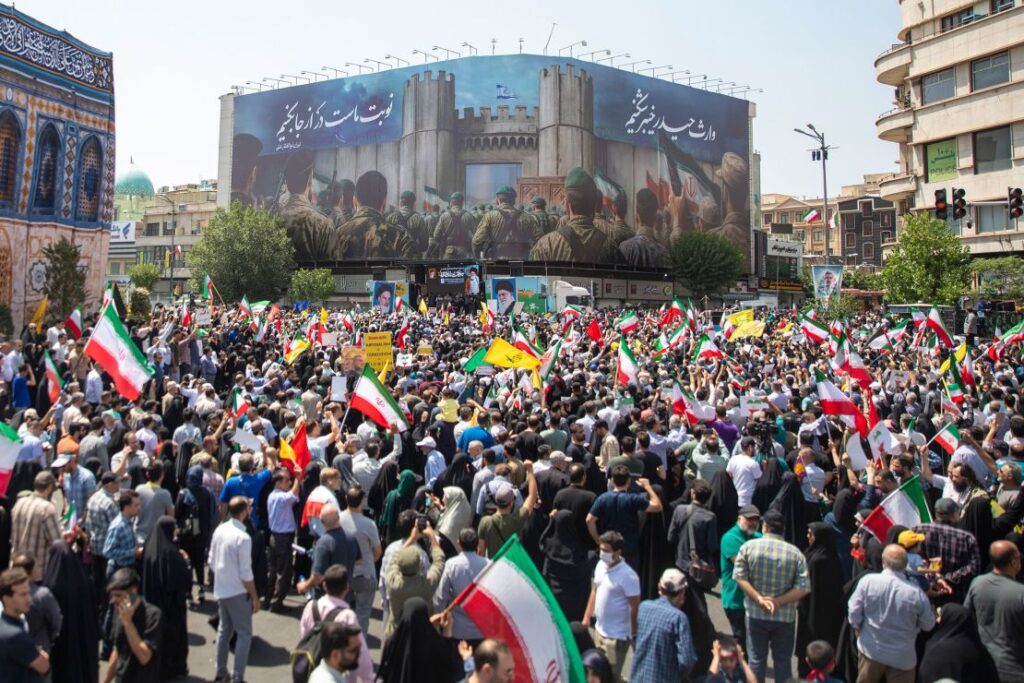
UNITED NATIONS, July 7 — The United States has called for an emergency meeting of the United Nations Security Council, a move likely aimed at condemning Iran and potentially paving the way for new sanctions. The request arrives at a time when Iran’s nuclear activities and regional military posture have heightened tensions in the Persian Gulf. The emergency session comes as ongoing nuclear talks in Vienna remain stalled since 2022.
Key sticking points have included the delisting of Iran’s Islamic Revolutionary Guard Corps (IRGC) as a foreign terrorist organization and the level of uranium enrichment Iran is permitted to maintain. According to the International Atomic Energy Agency (IAEA), Iran is currently enriching uranium to 60% purity.
That figure is close to the 90% threshold needed for weapons, a fact that has long concerned the international community. The United States has responded by deploying the USS Dwight D. Eisenhower carrier strike group to the region.
The United Kingdom has also sent HMS Defender. These naval assets signal a readiness to respond to potential escalation, which could include Iran using anti-ship missiles such as the Khalij Fars or deploying naval mines.
The IRGC’s designation as a terrorist organization by the U.S. further complicates any diplomatic path forward, as it restricts direct communication with a key pillar of Iran’s military and political structure.
Options for de-escalation remain, but narrow
Early findings from diplomatic observers suggest that de-escalation is still possible, though the window appears to be closing. One potential off-ramp would be for Iran to agree to a temporary ceasefire in its regional activities. Another would involve the U.S. offering sanctions relief, a step that could incentivize Iran to return to the negotiating table with more flexibility.
The IAEA Board of Governors also holds a significant card. It could refer Iran to the UN Security Council for non-compliance with its nuclear safeguards obligations.
Such a referral would likely trigger a new round of diplomatic pressure and potentially more sanctions. The U.S. has not ruled out military strikes on Iranian assets, a position that keeps the threat of direct conflict on the table.
Oil markets and the risk of broader conflict
The situation has also drawn the attention of global energy markets. Oil prices may stabilize if no further attacks occur in the region, but the risk of a broader conflict remains a persistent concern for traders and policymakers alike. Any escalation that disrupts shipping through the Strait of Hormuz could have immediate and severe consequences for global supply.
For patients and families watching these developments from afar, the encouraging part is that diplomatic channels are not entirely closed. The UN Security Council meeting itself provides a forum for dialogue, however tense.
The key question now is whether both sides will use that forum to de-escalate or to harden their positions further. As with any complex medical or geopolitical situation, the advice remains the same: talk to your doctor—or in this case, your elected representatives and informed analysts—before drawing conclusions. The situation is fluid, and early findings should be treated with cautious optimism rather than alarm.




