
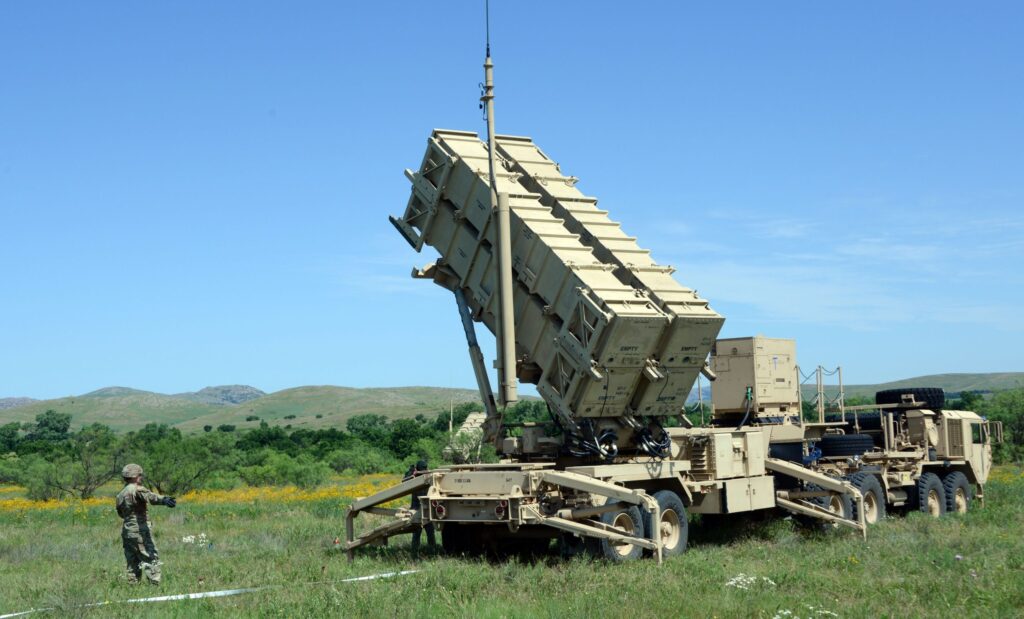
Ukraine’s ambition to domestically produce advanced Western air defense systems, including the Patriot missile platform, marks a pivotal shift in its long-term military strategy amid Russia’s ongoing invasion. While the idea has gained formal traction, turning it into reality will require overcoming a series of technical, legal, and logistical hurdles that could span several years.
The Patriot system, a cornerstone of modern air defense, is not merely another weapon in the arsenal—it is a complex network of radars, command-and-control units, and guided interceptors designed to detect, track, and destroy incoming threats at long range. For Ukraine, which has relied on Patriot batteries provided by the United States and other allies to shield its cities and critical infrastructure from Russian missile and drone strikes, the push for domestic manufacturing represents more than industrial self-sufficiency. It is a strategic imperative to reduce vulnerability to shifting Western defense priorities and the finite availability of foreign-supplied interceptors.
From Battlefield Need to Factory Floor: The Scale of the Challenge
Establishing domestic production of the Patriot system in Ukraine would require a comprehensive industrial transformation. The process begins with securing two critical approvals from the U.S. Department of Defense: a Technical Assistance Agreement and a Manufacturing License Agreement.
These legal frameworks govern the transfer of sensitive technology, technical data, and manufacturing know-how—elements that are tightly controlled under U.S. export regulations. Once approved, Ukraine would need to either construct new facilities or retrofit existing ones to meet the system’s exacting standards for precision, materials, and environmental controls. Equally demanding would be the creation of a domestic supply chain capable of producing components that currently come from U.S. and allied sources.
Even seemingly minor parts—circuit boards, composite materials, guidance systems—must meet exact specifications to ensure interoperability and combat reliability. Ukraine’s defense industry, consolidated under the state-owned Ukroboronprom conglomerate, has decades of experience producing and maintaining Soviet-era weapons systems.
However, those capabilities do not directly translate to modern Western platforms like the Patriot. Soviet systems relied on analog electronics and standardized manufacturing, whereas the Patriot integrates digital radar, advanced computing, and networked battle management. Transitioning to such a system demands not only new infrastructure but also a workforce trained in high-precision manufacturing, quality control, and systems integration.
The learning curve is steep, and the margin for error is nil in combat conditions. International precedent offers a sobering timeline.
Japan’s program to domestically produce the PAC-3 variant of the Patriot began in 2015 and took between three and five years to reach full operational output. While Ukraine’s defense ecosystem is smaller and less industrialized than Japan’s, the technical and regulatory barriers remain comparable. The U.S. has co-production agreements with several allies, but each case reflects a deliberate, phased approach—one that balances national security concerns with alliance commitments. For Ukraine, the stakes are existential: every Patriot launcher and interceptor delivered today is a lifeline, but every one manufactured domestically tomorrow would be a permanent asset.
Funding, Politics, and the War’s Unrelenting Pace
Beyond the technical challenges, the financial and political dimensions add layers of complexity. Any U.S.-backed co-production initiative in Ukraine would require explicit Congressional approval, as it would involve direct funding and oversight.
The next U.S. budget cycle begins in October 2025, meaning that even if bipartisan support materializes quickly, dedicated funds would not be available until late 2026 at the earliest. This timeline does not account for potential legislative delays, amendments, or competing defense priorities—such as replenishing U.S. stockpiles or supporting other allies. Ukraine’s Minister of Strategic Industries, Oleksandr Kamyshin, has publicly stated the goal of producing all types of ammunition domestically by 2025.
While this target reflects a bold vision, it does not currently extend to complex systems like the Patriot. The minister’s timeline underscores the urgency driving Ukraine’s defense industrial expansion, yet it also highlights the gap between aspiration and capability.
Domestic production of such advanced systems is not a short-term solution for the current war, but a long-term hedge against future uncertainty. In the meantime, Ukraine continues to rely on Patriot systems provided by Western partners, each deployment a calculated risk balanced against immediate battlefield needs. The broader context is one of incremental progress.
Ukraine is already expanding its domestic defense production, focusing on artillery shells, drones, and light armored vehicles. These efforts aim to reduce dependence on foreign supplies and shorten logistics chains under fire.
The logic behind producing its own advanced air defenses is compelling: fewer supply chain vulnerabilities, faster repair cycles, and greater control over production schedules. Yet the road from concept to conveyor belt is long, measured not in months, but in years. And in a war where every day brings new destruction, the luxury of patience is in short supply.




