
TEHRAN, July 8 — The long, fractious history between the United States and Iran has entered another chapter. As President Donald Trump’s administration charts its course for the second half of 2026, the relationship remains defined by decades of mutual distrust, punctuated by moments of outright hostility. Think of it like a decades-old family feud, but one fought with sanctions, drones, and proxy armies instead of angry letters.
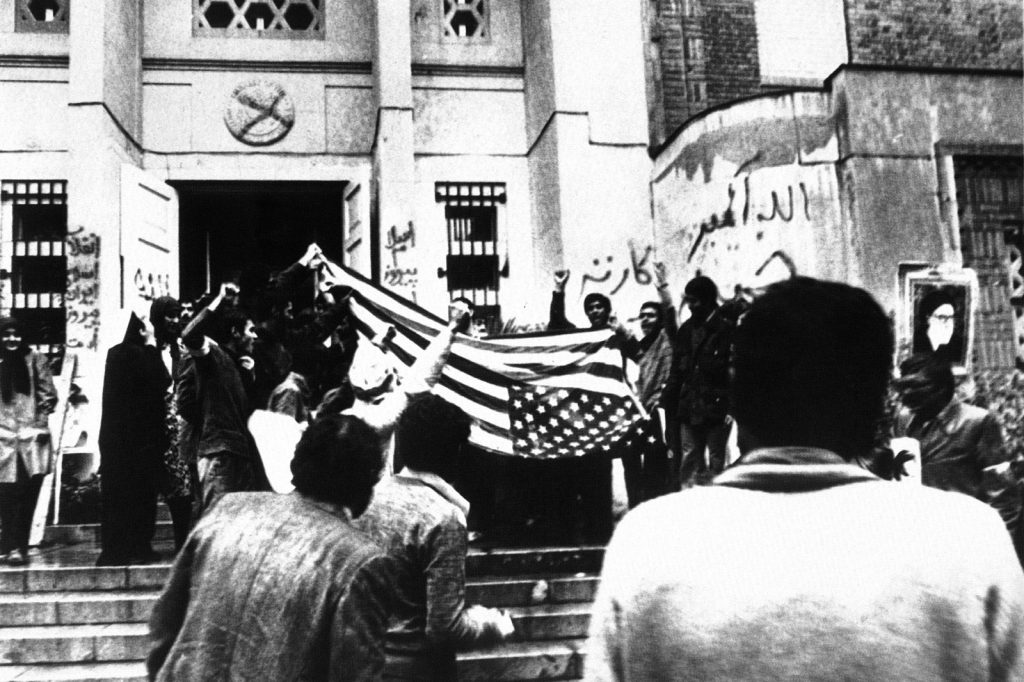
The original rupture came with the 1979 Iranian Revolution and the Iran hostage crisis, where 52 American diplomats and citizens were held captive for 444 days. The U.S. formally severed diplomatic ties with Iran on April 7, 1980, and the two nations have not had an embassy in each other’s capitals since.
That foundational break set the stage for everything that followed. In 1983, the U.S. Embassy bombing in Beirut was linked to Hezbollah, an Iran-backed militant group. It was a stark early demonstration of Iran’s willingness to use proxies to strike American targets.
The Nuclear Deal and Its Collapse
For years, the central issue in U.S.-Iran relations was Iran’s nuclear program. The breakthrough came on July 14, 2015, with the signing of the Joint Comprehensive Plan of Action, or JCPOA. Under that deal, Iran agreed to significantly limit its nuclear enrichment activities in exchange for sweeping relief from international economic sanctions.
The practical upshot for ordinary Iranians was a brief period of economic hope. For the U.S. and its allies, the deal represented a verifiable, if temporary, brake on Iran’s path to a nuclear weapon.
But the arrangement was always fragile. President Trump, during his first term, was a vocal critic of the JCPOA, arguing it did not address Iran’s ballistic missile program or its support for regional militias. On May 8, 2018, he followed through on that criticism, withdrawing the United States from the agreement and reimposing crippling sanctions on Tehran.
That decision, in plain terms, reset the clock on the nuclear standoff.
The Escalation Ladder
The tensions did not stay diplomatic. On January 3, 2020, a U.S. drone strike killed Iranian General Qasem Soleimani, the head of Iran’s elite Quds Force, as he arrived at Baghdad International Airport. Soleimani was no ordinary general; he was the architect of Iran’s network of proxy forces across the Middle East, from Hezbollah in Lebanon to militias in Iraq and Yemen.
The strike was a dramatic, high-risk move that the Trump administration defended as a necessary blow against an active threat. Iran responded five days later.
On January 8, 2020, it launched a ballistic missile attack on U.S. forces stationed at al-Asad Airbase in Iraq. Over 100 U.S. service members were injured from the blasts. No American lives were lost in that attack, but it was the most direct military strike by a state against U.S. forces in years.
The practical upshot was clear: both sides had taken shots that could have spiraled into a full-blown war, but both also blinked. The conflict remained contained, but the underlying animosity was deeper than ever.
A Plot on American Soil
The hostility has extended even to former U.S. officials. In 2022, the U.S. Department of Justice charged an Iranian intelligence officer with plotting to assassinate John Bolton, who served as National Security Advisor under President Trump. The plot, which was foiled by the FBI, was a chilling reminder that Iran’s reach, in the view of American prosecutors, extends into the homeland.
This is the backdrop against which the current administration is operating. President Trump, now in his second term, has maintained a policy of “maximum pressure” on Iran, combining harsh economic sanctions with a military posture designed to deter aggression.
What to Watch Next
The key question for the remainder of 2026 is whether the Trump administration will seek a new diplomatic framework with Iran or continue to rely on pressure alone. Iran’s nuclear program, which accelerated after the U.S. left the JCPOA, is now at a point where experts say its breakout time — the time needed to produce enough fissile material for a single weapon — is measured in weeks, not months. There are also the simmering conflicts in the region.
Iran-backed Houthi rebels in Yemen continue to attack Red Sea shipping, while Hezbollah remains a potent force on Israel’s northern border. Any miscalculation in these theaters could draw the U.S. into a broader confrontation.
For now, the relationship remains frozen in a pattern familiar since 1979: no direct talks, deep suspicion, and the constant threat of escalation. The practical upshot for the average American is that Iran will remain a central foreign policy challenge for the foreseeable future — one with no easy off-ramp in sight.




