
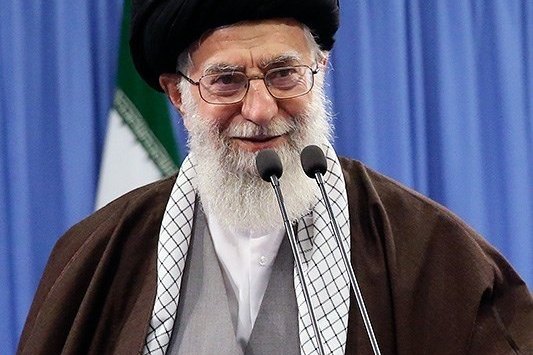
For more than three and a half decades, Ayatollah Ali Khamenei has held the position of Supreme Leader of Iran, the country’s highest political and religious authority with final say over state policy. Born April 19, 1939, in the northeastern city of Mashhad, Khamenei succeeded Ruhollah Khomeini, the founder of the Islamic Republic, in 1989.
His rise to the top came after years spent in opposition to the monarchy, during which he faced arrest and exile before becoming a key figure in the 1979 revolution. Prior to assuming the leadership, Khamenei served as president through the lengthy war with Iraq and built close ties to the Revolutionary Guard. The constitution was changed to allow a mid-ranking cleric to hold the supreme post he then assumed. By the time of his death, his long tenure would make him the longest-serving head of state in the region.
Khamenei’s authority extends across Iran’s nuclear program, its military, and its foreign policy. Under his direct oversight, the country has advanced its uranium enrichment to 60 percent purity.
He has also overseen sustained support for regional proxy forces, including Hezbollah in Lebanon and the Houthi movement in Yemen. Shaping Iran’s military and its network of regional allies over decades, he backed armed movements abroad and kept a firm stance against Western and Israeli policy. This record explains why his public silence or speech now carries significant weight for those watching war and diplomacy in the Middle East.
A Ceasefire Endorsement and Lingering Mistrust
According to the available record, Khamenei endorsed a ceasefire arrangement in 2024, signaling a willingness to engage in tactical pauses amid ongoing regional conflict. However, he also publicly criticized what he described as U.S. “deception” in the context of that agreement. The duality of his actions — endorsing a pause while condemning Washington’s approach — underscores a deep-seated mistrust that has characterized his dealings with the West throughout more than three decades of diplomatic confrontation.
Even as the ceasefire was accepted, the enrichment program continued on its current trajectory, and the proxy forces supported by Iran remained active across the region. Analysts view the 2024 episode as a demonstration that Khamenei can accept short-term deals while maintaining long-term strategic goals.
No Formal Response to the Trump Declaration
As of March 31, 2025, Khamenei had not issued a formal response to a declaration made by U.S. President Donald Trump. The timeline shows no public statement from the Supreme Leader’s office addressing the matter directly. The absence of a formal response is notable given the pattern of Khamenei’s public statements, which have often included direct criticism of American policy.
This silence may indicate internal deliberation within the Iranian leadership, or it may reflect a strategic decision to withhold a direct reply and observe how events unfold. The timeline from March 2025 to the present day offers no further public statements from the Supreme Leader’s office on that specific matter.
What analysts will watch for is any shift in Khamenei’s public posture. His endorsement of the 2024 ceasefire showed a willingness to engage in tactical pauses, but his criticism of U.S. “deception” signals deep mistrust. Whether Khamenei eventually issues a formal response to the Trump declaration, or continues to operate through silence and indirect channels, will shape the next phase of U.S.-Iran relations.
The ongoing enrichment to 60 percent purity and the sustained backing of Hezbollah and the Houthis provide the backdrop against which any future move will be judged. For now, the silence from Tehran remains a deliberate and closely watched variable in a region accustomed to high-stakes statements and sudden shifts.




