
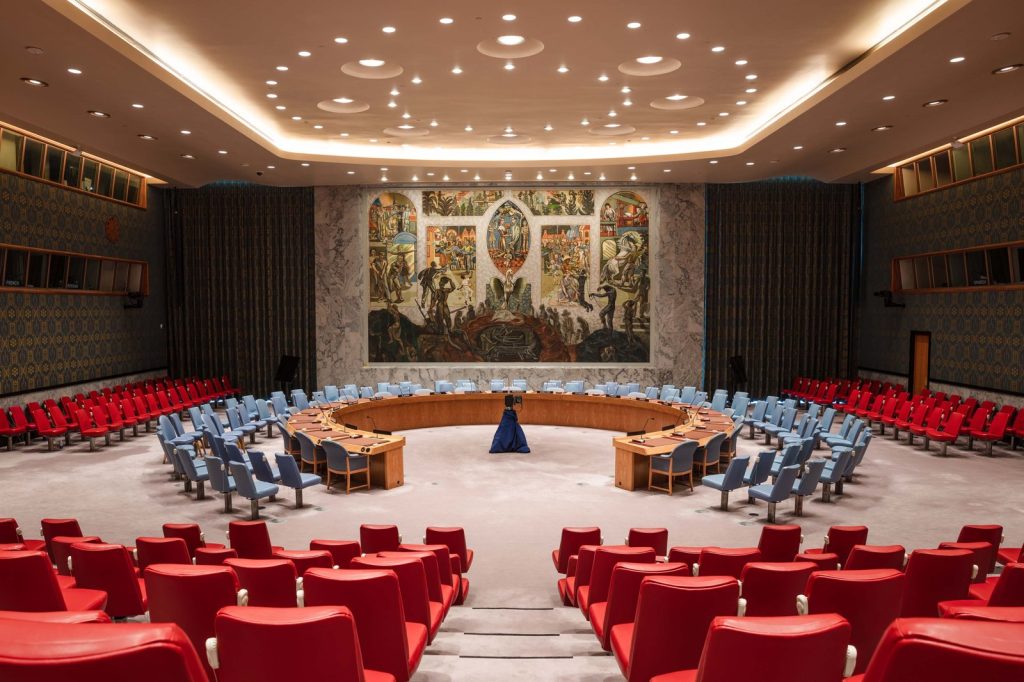
The Security Council met in emergency session on April 14, 2024, hours after Iran fired roughly 300 drones and missiles at Israel. Secretary-General Antonio Guterres opened with a warning: the region faces “a real danger of a devastating full-scale conflict.”
Israel’s military said Iran and allied groups sent about 170 drones, 120 ballistic missiles and 30 cruise missiles on April 13. Israel, the United States and the United Kingdom reportedly shot down 99 percent of them. Some got through. A military facility took damage, Nevatim air force base was hit but kept operating, and about 12 people went to hospital, among them a young child with serious injuries.
It was the first time Iran had attacked Israeli territory directly.
Why Iran says it struck
Tehran tied the attack to an April 1 Israeli strike on an Iranian facility in Damascus that killed senior IRGC commanders. Ambassador Amir Saeid Iravani told the Council the operation was “entirely in the exercise of Iran’s inherent right to self-defense,” “necessary and proportionate,” and aimed only at military targets. Iran’s mission added that the “matter can be deemed concluded,” while warning that any further Israeli action would bring a response “considerably more severe.”
Israel asked for the meeting. Its ambassador, Gilad Erdan, said “Israel reserves the right to retaliate” and pressed the Council to condemn Iran. Israel also asked for the IRGC to be named a terrorist organization.
Washington’s position
Deputy Ambassador Robert Wood called it “the unprecedented attack” and said “Iran’s reckless actions” put several countries at risk. The United States, he said, would “explore additional measures to hold Iran accountable.” President Joe Biden said he would bring G7 leaders together for a joint diplomatic response, and Security Council Report noted that U.S. defense officials were cautioning their Israeli counterparts against escalating. Israel was still weighing its options.
Canada, France, Germany and the United Kingdom joined the United States in denouncing the strike. Syria’s ambassador, Koussay Aldahhak, took the opposite line, calling the events “the natural and inevitable outcome” of Israeli violations backed by the US.
A call to pull back
Guterres asked for “maximum restraint” and warned against “any action that could lead to major military confrontations on multiple fronts.” He tied the moment to the wider crisis: a humanitarian ceasefire in Gaza, the release of all hostages, an end to violence in the West Bank, calm along the Blue Line and safe navigation in the Red Sea. “Neither the region nor the world can afford more war,” he said.
For families across Asia and the Middle East who depend on stable energy supplies and shipping, that was the message they were waiting to hear from New York.
Sources
- 'Step back from the brink' to avert full-scale Middle East conflict (UN News)
- Emergency Meeting on the Iranian Airborne Attack Against Israel (Security Council Report)




