
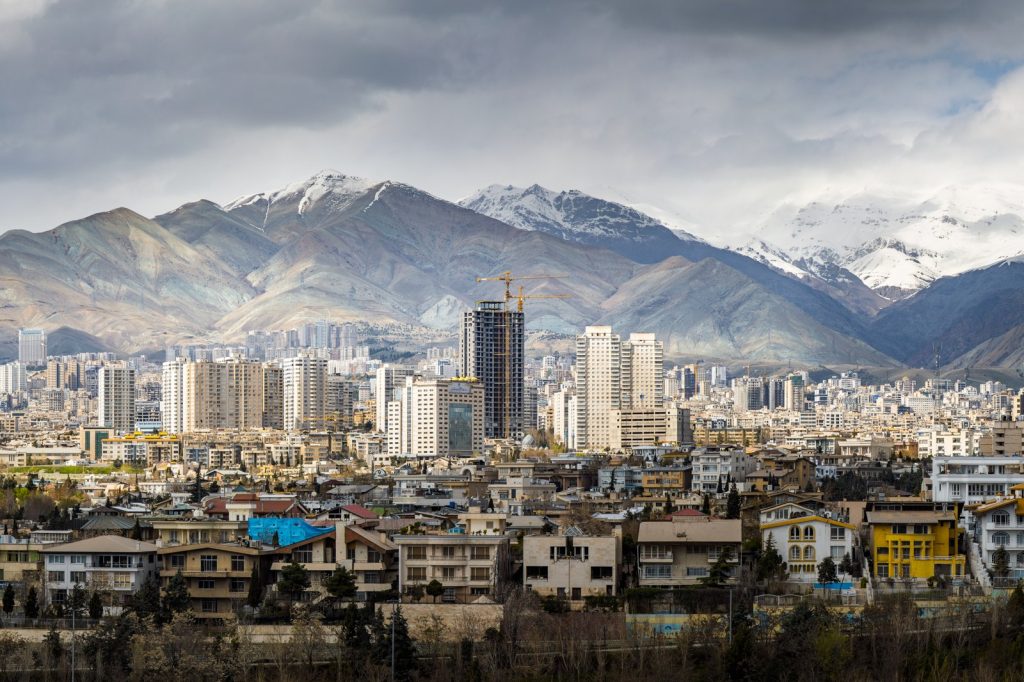
TEHRAN — The fragile ceasefire between the United States and Iran, brokered by Qatar and Oman, collapsed in April after President Donald Trump declared it “over,” citing Iranian violations that included continued support for Houthi rebels in Yemen and missile tests. The breakdown has left communities across the Persian Gulf region bracing for a renewed cycle of instability that many had hoped was behind them. For families in coastal cities, the collapse of the truce means a return to the uncertainty that marked the early months of 2025.
The ceasefire, reached in March of that year, had halted a series of attacks on oil tankers in the Persian Gulf — attacks that had disrupted shipping lanes and sent insurance premiums soaring. For people whose livelihoods depend on the flow of goods through the Strait of Hormuz, the end of that pause is a direct concern.
The roots of the current crisis run deep. U.S.-Iran tensions have been high since the 1979 Iranian Revolution and the subsequent hostage crisis, a rupture that has shaped decades of policy and mistrust. More recently, the 2015 Joint Comprehensive Plan of Action, or JCPOA, offered a path forward, limiting Iran’s nuclear program in exchange for sanctions relief.
That agreement, however, was short-lived in its full form. In 2018, President Trump withdrew the United States from the JCPOA and reimposed sanctions on Tehran, a move that severely damaged the Iranian economy and pushed the regime’s leadership into a corner.
The pressure escalated further in 2020, when a U.S. drone strike killed Iranian General Qasem Soleimani, a towering figure in the country’s military establishment. For communities across the Middle East and Asia, these events were not distant headlines — they were tremors felt in the price of fuel, the cost of imported goods, and the stability of regional labor markets. By March 2025, the situation had deteriorated to the point that Qatar and Oman stepped in to mediate.
Their efforts produced a ceasefire that halted a series of attacks on oil tankers in the Persian Gulf — attacks that had threatened to choke one of the world’s most vital energy arteries. For a brief period, there was hope that the worst was over. That hope was dashed on April 22, 2025, when President Trump declared the ceasefire “over.” His statement cited alleged Iranian violations, including continued support for Houthi rebels in Yemen and missile tests.
For families across the region, the announcement was a stark reminder of how quickly fragile peace can unravel.
What the collapse means for the region
For countries that rely heavily on energy imports from the Gulf, the renewed tensions carry immediate economic implications. A disruption in the flow of oil through the Persian Gulf can send prices climbing at the pump, affecting transportation costs and the price of goods in markets. For families already grappling with the cost of living, this is not an abstract concern.
The role of Iran’s support for Houthi rebels in Yemen has been a persistent point of contention. The Trump administration has long argued that Tehran’s backing of the Houthis destabilizes the Arabian Peninsula and threatens U.S. allies, including Saudi Arabia and the United Arab Emirates.
The ceasefire’s collapse, triggered in part by this issue, suggests that the conflict in Yemen will remain a flashpoint. Missile tests by Iran have also been a recurring source of tension. For communities in the Gulf, the tests are a reminder that the threat of escalation is never far away.
The collapse of the ceasefire means that the risk of further confrontations — whether at sea, in the air, or through proxies — remains high.
A history of broken agreements
The trajectory of U.S.-Iran relations over the past decade has been one of repeated cycles of negotiation and rupture. The JCPOA, signed in 2015, was hailed as a landmark achievement in nonproliferation. For a time, it appeared to offer a stable framework for managing Iran’s nuclear ambitions.
The Trump administration’s withdrawal from the deal in 2018, however, reset the clock. Reimposed sanctions crippled Iran’s economy, but they also pushed the regime to accelerate its nuclear activities beyond the limits set by the agreement.
For communities in Asia, the ripple effects were tangible: higher energy costs, disrupted supply chains, and a general sense of unease about the stability of the region. The killing of General Soleimani in 2020 brought the two countries to the brink of open conflict. For a brief period, it seemed as though a full-scale war was possible.
That did not materialize, but the underlying tensions never dissipated.
What comes next
The situation remains unresolved. The ceasefire is dead, and no new diplomatic initiative has taken its place. For families across Asia, the question is whether the cycle of tension and confrontation will continue, or whether a new path can be found.
The role of Qatar and Oman as mediators in the earlier ceasefire suggests that there are channels for dialogue, even in the most difficult circumstances. Whether those channels will be used again remains to be seen.
For now, communities across the region are left to watch and wait. The stakes are high — not just for the governments involved, but for the millions of people whose daily lives are shaped by the ebb and flow of global energy markets and regional stability.




