
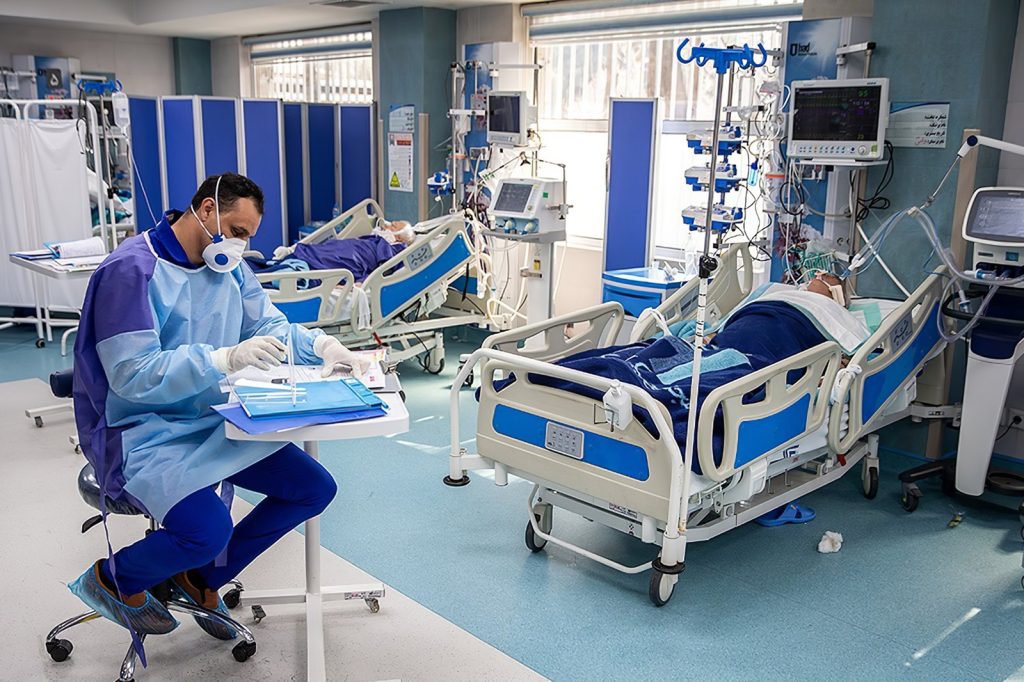
The economic pressure campaign against Iran, now entering its fifth decade, carries consequences that reach far beyond the halls of power in Tehran and Washington. For patients in Iranian hospitals and families struggling to afford basic goods, the sanctions regime has become a daily ordeal that no policy briefing can fully capture.
While the Trump administration’s revived “maximum pressure” strategy aims to cut off revenue fueling Iran’s nuclear program and its support for proxy forces across the Middle East, ordinary citizens are bearing the weight of an economic blockade that has deepened over successive administrations.
Decades of Sanctions and the Strategic Calculus
The United States first imposed sanctions on Iran in November 1979, when Executive Order 12170 froze Iranian assets following the Iran hostage crisis, during which 52 American diplomats and citizens were held for 444 days. That initial action set a precedent. In the years that followed, Congress enacted the Iran-Iraq Arms Nonproliferation Act of 1992 and the Iran Sanctions Act of 1996, originally known as the Iran-Libya Sanctions Act.
The Comprehensive Iran Sanctions, Accountability, and Divestment Act (CISADA) of 2010 specifically targeted Iran’s energy sector and financial system, tightening the noose around the Islamic Republic’s economy. A brief diplomatic opening came in July 2015, when the Joint Comprehensive Plan of Action (JCPOA) lifted many nuclear-related sanctions in exchange for verifiable limits on Iran’s nuclear program.
That détente proved short-lived. In May 2018, President Trump withdrew the United States from the deal and reimposed sanctions, with a particular focus on Iran’s oil exports. The results were dramatic: Iranian crude shipments fell from approximately 2.5 million barrels per day in 2018 to about 0.4 million barrels per day by 2020.
The current revival of that same “maximum pressure” approach seeks to drive those exports to zero, denying Tehran the revenue it uses to fund nuclear activities and proxy groups throughout the region. Iran’s location amplifies the stakes.
The country sits in a strategic corner of West Asia, bordered by Iraq, Turkey, and the Persian Gulf. Its oil reserves and its position astride the Strait of Hormuz give it significant economic leverage. The Strait has been a flashpoint during periods of heightened tension: Iran threatened to close it in 2011, again in 2018, and once more in 2019.
Any disruption there would affect oil shipments worldwide, making the sanctions regime not just a bilateral dispute but a matter of global energy security.
Historical Depth and Regional Context
Iran’s modern struggles are set against a backdrop of ancient history. The region was first unified under the Medes in the seventh century BC. Cyrus the Great founded the Achaemenid Empire in the sixth century BC, and later dynasties such as the Parthian and Sasanian empires oversaw periods of cultural and political power.
Ancient Iran saw early developments in writing, agriculture, and urban governance. The Islamic conquest in the seventh century AD transformed the region, and Iranian scholars later contributed to the Islamic Golden Age.
The Safavid dynasty in the sixteenth century established Twelver Shia Islam as the state religion and re-unified the country. In the twentieth century, the Pahlavi dynasty modernized the state after the Anglo-Soviet invasion of 1941. The 1979 Iranian Revolution overthrew the monarchy and established the Islamic Republic, a theocratic system that has governed ever since. This long history as a regional power shapes Iran’s self-perception and its assertiveness.
For decades, the United States and other nations have imposed economic sanctions targeting Iran’s nuclear program, its missile development, and its support for armed groups in the Middle East. The current sanctions regime touches global energy markets and regional security in ways that extend well beyond the Persian Gulf.
The Human Cost: Medicine and Inflation
Behind the strategic calculations and diplomatic breakthroughs, the human side of sanctions remains a story of ordinary people caught between geopolitical forces. For families in Iran, economic pressure has been severe. Inflation has soared, and basic goods have become increasingly unaffordable.
The Iranian rial has lost much of its value, making imported medicines prohibitively expensive. Although humanitarian goods such as medical supplies and pharmaceuticals are technically exempt from sanctions, the restrictions have still restricted access.
The complex financial system, combined with banks’ reluctance to process transactions that might run afoul of U.S. regulations, creates a de facto barrier. The toll on patients is particularly stark. For families with sick relatives, this is not an abstract policy debate but a daily reality that carries a weight few in Washington fully appreciate. As the maximum pressure strategy continues, the human cost remains a counterpoint to the strategic aims Washington seeks to achieve.




