
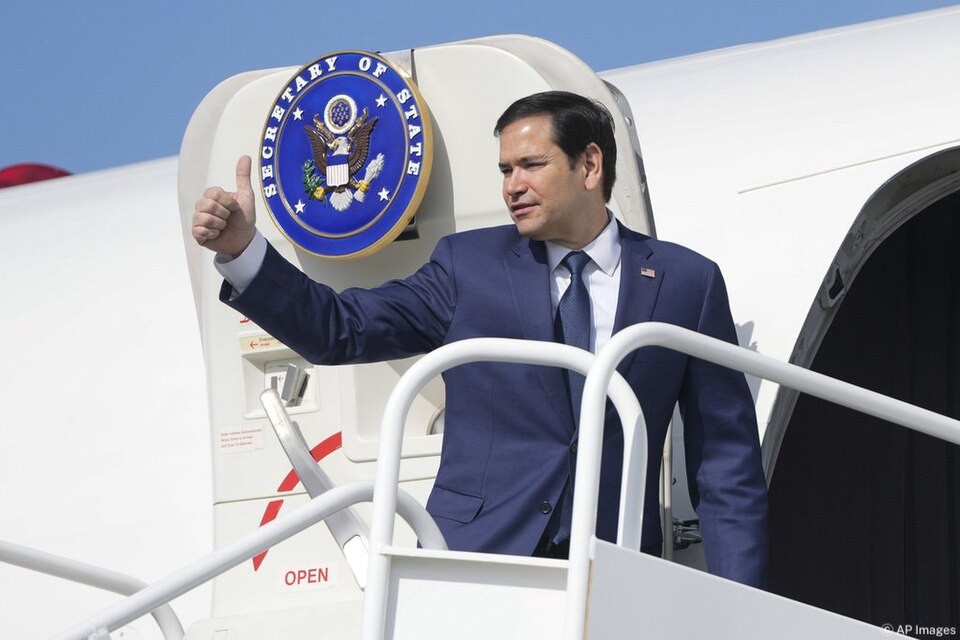
The Trump administration has handed Secretary of State Marco Rubio unprecedented control over U.S. policy toward Venezuela, combining a rare consolidation of diplomatic and national security authority with a mandate to streamline a portfolio that had long been divided across multiple federal agencies. Rubio, who took office on January 20, 2025, after a Senate confirmation vote of 54-45 held on January 15, now serves as both secretary of state and acting national security advisor — a dual role not seen since the 1970s.
That consolidation signals that one official will coordinate both the diplomatic strategy and the security framework of the United States, with Venezuela as a central test case.
A Career Forged in Florida and Latin American Policy
Rubio, born May 28, 1971, in Miami, is of Cuban descent. His political career began in the 1990s as a city commissioner for West Miami, followed by a move to the Florida House of Representatives, where he eventually became speaker in 2006.
After leaving the state legislature due to term limits, he won a seat in the U.S. Senate in 2010, representing Florida from 2011 through early 2025. He gained national attention during a 2016 presidential campaign, which he ended after losing the Florida primary to Donald Trump. He subsequently returned to the Senate and became a senior senator for Florida in 2019. Throughout his Senate tenure, Rubio earned a reputation for a hawkish stance on Latin American authoritarianism.
He was a leading voice on Latin American policy and a vocal supporter of Juan Guaidó, the opposition figure the United States recognized as Venezuela’s legitimate interim president. Rubio also advocated for strong sanctions against the government of Nicolás Maduro.
In 2019, he co-sponsored the Venezuela Humanitarian Assistance and Defense of Democracy Act, which authorized $400 million in aid aimed at humanitarian relief and democratic institution-building inside Venezuela. Beyond the hemisphere, he took a hard line against the Chinese government, a stance that led China to sanction him and ban him from entering the country. Rubio holds a law degree from the University of Miami, earned in 1996.
Consolidated Venezuela Policy at the State Department
On March 24, 2025, an order centralized Venezuela policy inside the State Department, giving Rubio direct control over a file that had been split between multiple agencies. The new authority allows him to coordinate the $400 million in aid funding streams and sanctions enforcement without inter-agency friction. The 54-45 Senate confirmation vote was along party lines, reflecting the partisan divide over the administration’s foreign policy approach.
Rubio’s confirmation as secretary of state placed a Cuban-American with deep personal and political ties to the anti-Castro and anti-Maduro movements in charge of U.S. diplomacy. The centralized Venezuela policy structure under Rubio signals a sustained commitment to sanctions enforcement and opposition support.
The administration has not softened its stance toward Caracas, and Rubio’s track record suggests no policy pivot is imminent.
Dual Role as Top Diplomat and Acting National Security Advisor
Rubio’s current appointment marks a rare consolidation of power. Serving concurrently as secretary of state and acting national security advisor, he now oversees both the diplomatic strategy and the security framework of the United States.
That dual role has not been held since the 1970s. For observers, it means a single official coordinates these two critical functions, a structure that could reduce bureaucratic delays on issues ranging from China to Venezuela. Rubio’s background — from city commissioner to Senate veteran to the top diplomatic post — places a figure with established hard-line views on Latin America and a history of bipartisan legislative action on Venezuela in a position to execute policy with minimal internal resistance.




