
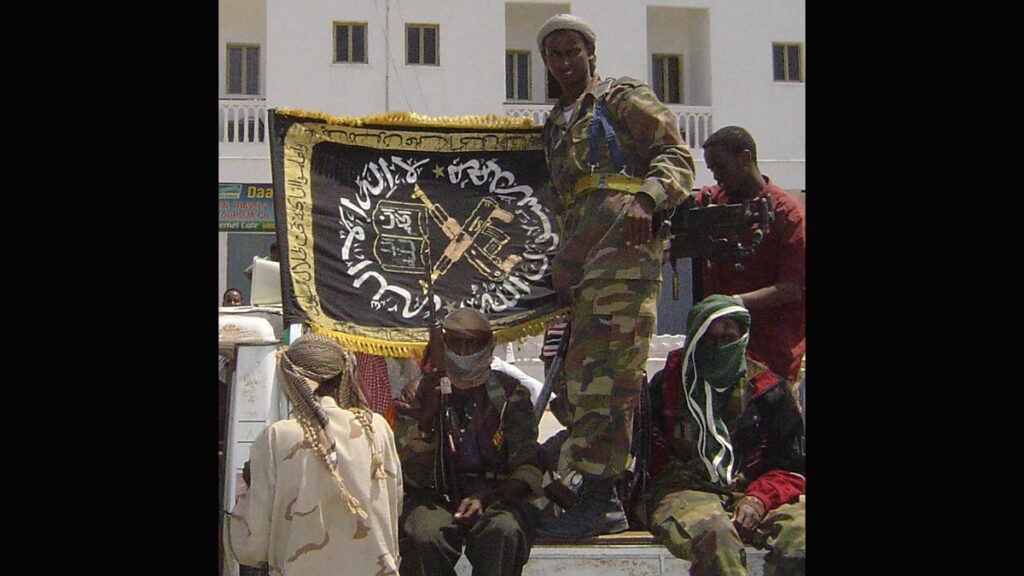
“We want to restore peace and stability to Mogadishu.” Sheikh Sharif Ahmed said it in a radio address in early June 2006, as fighters loyal to the Islamic Courts claimed victory over the warlords who had run the Somali capital for 15 years. Twenty years on, the argument over what that victory built, and what it broke, has not settled.
How the Courts took the city
Somalia had no effective government after Mohamed Siad Barre fell in 1991. In Mogadishu, warlords ruled by force and grew rich off ports, roads and airfields, and every attempt at national authority failed. The Courts began as a way to dispense clan justice. The Guardian reported that they had grown popular in recent years less for hardline views than for bringing some order.
The bloodshed in 2006 was heavy. More than 350 people died in the capital that year before the Courts won, most of them civilians hit by mortars or anti-aircraft fire. Arab News counted 52 dead and hundreds displaced in March, the bloodiest round. The other side was a secular warlord alliance, ministers included, set up in February as a bulwark against the Courts.
Washington was watching. The US was understood to have paid some warlords out of its Djibouti counter-terrorism base, in exchange for handing over suspected al-Qaida figures or tips on their movements. It would neither confirm nor deny that. Ahmed named Washington, Israel and Ethiopia as the paymasters. After the Courts won, one Horn of Africa analyst called it “a staggering defeat for the US strategy of counter-terrorism by proxy.”
A coalition, not a monolith
American alarm had a reason. Suspected jihadis sat in the Courts’ hierarchy, and that stoked fears in Washington of a creeping “Talibanisation”. Inside the movement, though, the factions pulled in different directions. Hassan Dahir Aweys, who chaired the legislative council, was described as a Salafist who wanted an Islamic state ruled by Somalis. Aden Hashi Ayro, who led the armed youth wing known as Al Shabaab, wanted to tie the struggle to a wider jihad. Aweys had even criticised Ayro’s brutality, such as digging up an Italian colonial-era cemetery in 2005, warning it would hurt the Courts’ reputation.
Residents saw the improvements first. Mapping Militants, a Stanford project, says the Courts cleared roadblocks and rubbish from the streets, delivered security and returned property seized by US-backed warlords. That earned them support from civilians living under their control.
Three months, then Ethiopian troops
Their rule lasted about three months. On December 20, 2006, UN-backed Ethiopian troops, forces of the transitional government and rival warlords launched an offensive. Six days after that the leadership quit the city, and on December 27, 2006 it formally resigned.
With the Courts gone, Al Shabaab broke away and operated on its own. Its first known suicide car bombing, on March 26, 2007, targeted Ethiopian soldiers in Mogadishu and killed about 73 people. Frequent attacks that spring killed dozens, and April 2007 alone saw over 1,000 civilians die. By February 2008 the United States had put Al Shabaab on its list of foreign terrorist organizations, and the group is still carrying out deadly assaults, among them an attack on a base in Wargaadhi on April 24, 2025 that killed over forty people.
Sources
- Islamic militia ends Somali warlords' rule (The Guardian)
- Al Shabaab profile (Mapping Militants Project, Stanford)
- Somali Islamic Courts Chairman Fingers US, Others of Covert Actions (Arab News)




