
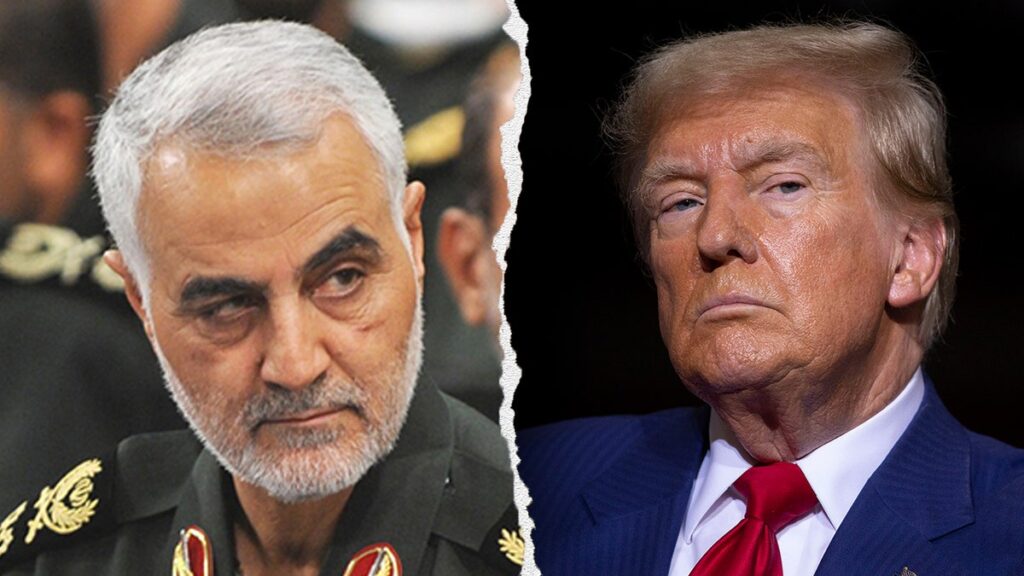
The Soleimani Killing and Its Aftermath
Trump’s assertion lands against a backdrop of escalated conflict that traces directly to a January 2020 U.S. drone strike he ordered, which killed Iranian Major General Qasem Soleimani in Baghdad, Iraq. Iran immediately vowed revenge for the death of the powerful commander. In August 2022, the U.S. Justice Department charged an Iranian military official with plotting to assassinate former national security adviser John Bolton, an alleged act of retaliation for Soleimani’s killing. That case stands as the most concrete example of a pattern of alleged Iranian retaliation plots against current and former U.S. officials. The Bolton plot involved charges that the Iranian official sought to hire individuals to carry out the assassination. While that effort was disrupted by U.S. law enforcement, it underscored the persistent threat environment. Trump’s current claim, made without independent verification, follows that same trajectory of alleged Iranian intent. The Secret Service, which routinely adjusts protective details based on threat assessments, has not indicated any change in posture for the former president. The issue remains live for voters as the campaign season intensifies.
Broader U.S.-Iran Tensions and Campaign Dynamics
The former president’s statement comes amid a period of deepening U.S.-Iran frictions that began in 2018, when the Trump administration withdrew from the Joint Comprehensive Plan of Action, the 2015 nuclear deal. Since then, Iran has advanced its nuclear program and expanded its support for proxy groups across the Middle East. The confrontation has contributed to volatility in the Persian Gulf, a region critical to international trade and energy markets. Trump faces Democratic nominee Kamala Harris in the general election, and his remarks inject a fresh national security dimension into a campaign already defined by sharp foreign policy contrasts between the two candidates. Harris has positioned herself as a proponent of diplomatic engagement, while Trump has taken a more confrontational approach. The question of whether U.S. intelligence agencies will issue a public assessment of the threat level to Trump remains open. Iran’s denial stands, but the historical pattern of alleged retaliation keeps the issue prominent. The Bolton case, in particular, provides a concrete reference point for voters weighing the credibility of such threats.
Historical Context of U.S.-Iran Relations
The relationship between the United States and Iran is rooted in decades of complex history. Iran, officially the Islamic Republic of Iran and historically known as Persia, is a country in West Asia that hosted some of the oldest continuous civilizations. Cyrus the Great founded the Achaemenid Empire in the 6th century BC, and later eras saw the rise of the Parthian and Sasanian Empires. The nation underwent Islamization after the 7th century Muslim conquest. The Safavid dynasty established Twelver Shia Islam as the official religion in the 16th century, creating the framework for the modern state. Political shifts continued into the 20th century. Reza Shah established the Pahlavi dynasty in 1925, and his son, Mohammad Reza Pahlavi, eventually took power. An Anglo-American coup occurred in 1953 after attempts to nationalize the oil industry. The monarchy ended during the Iranian Revolution in 1979, leading to the creation of the current Islamic Republic. These historical fractures have shaped a volatile environment for diplomatic relations. Tensions often center on nuclear capabilities and regional influence, and stability in the Persian Gulf impacts international trade and energy markets. The current pattern of alleged assassination plots—the Bolton case being the most concrete example—reflects the enduring friction between the two nations. For voters, the issue may resonate as a measure of both national security preparedness and the broader strategic posture of the next administration. Whether U.S. intelligence agencies provide any public assessment of the threat level to Trump, and whether the Secret Service adjusts its protective posture, remains to be seen.




