
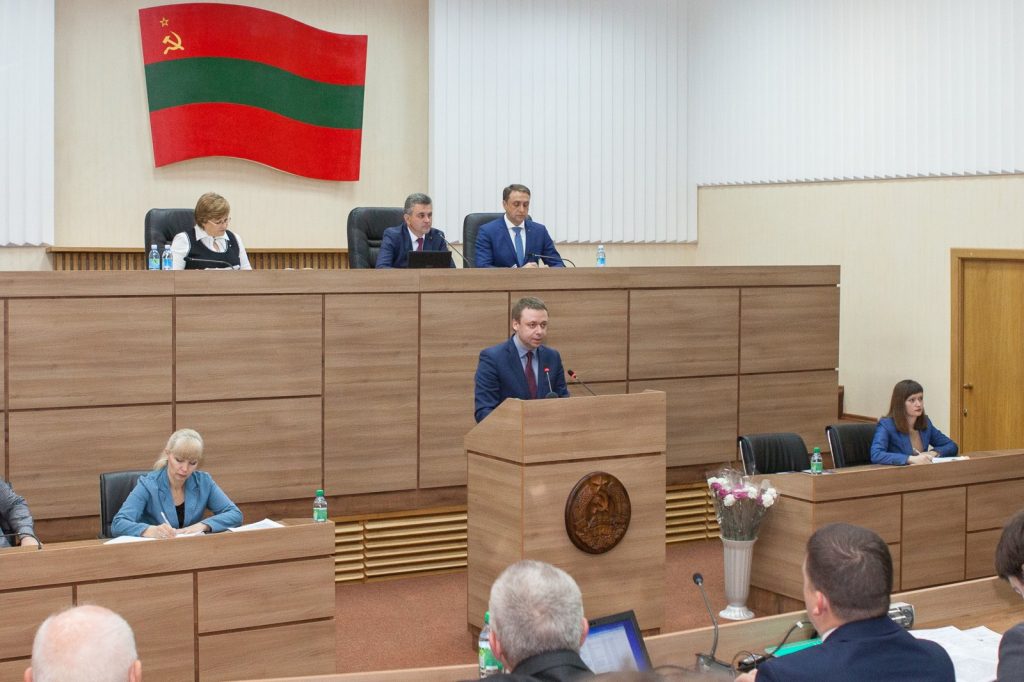
Only about one voter in four bothered to take part. On November 30, 2025, the unrecognised region of Transnistria elected a new Supreme Council, and the official turnout came out at 26%. That is a record low for the region and far below the vote of 2015, when nearly half of all voters took part.
The council has 33 seats. Each one is filled from its own district by simple majority. This time 45 candidates stood. Twelve districts offered voters two names; in 21 there was only one. The election law sets no minimum turnout, so a thin vote changes nothing. The ballot does carry an “against all” box, and if a lone candidate loses to it, that district votes again.
Who ran, who won
Most of the candidates belonged to Obnovlenie, the party tied to the Sheriff holding company, which dominates the local economy and, in the view of analysts quoted by the Moldovan outlet NewsMaker, the politics as well. Before the vote Obnovlenie held 29 of the 33 seats, and the four other deputies were seen as loyal to Sheriff anyway. The Transnistrian Communist Party, the only other organised force, also backs closeness with Russia. Nobody on the ballot argued for ties with Moldova.
Incumbents who ran again all kept their seats. In 11 districts the sitting deputy stepped aside and a newcomer won. Anatoly Dirun, a former deputy now living in Chisinau, waved off the idea that this meant change. None of the 11, he said, could be called an opposition figure. “Administrative replacement,” he called it, like a coach swapping players in a football team.
The campaign itself was narrowed before voting began. The analyst Diana Lebed, writing for the Resurgam research group, described candidates removed by the election commission or the courts. Activist Oleksandr Bondarenko was struck off days before the vote on a charge of promising material benefits to voters. Mykola Malyshev, a critic of corruption and the security services, was barred by a law passed after his earlier rejections, which bans anyone turned down twice from standing.
A quiet protest
Dirun read the turnout as a verdict. Voters, he said, were punishing the authorities “with their feet”. In 2020 the “against all” option drew about a fifth of the vote, and more than 30% in some districts. When NewsMaker published its report, the local election commission had not yet released the figure for this round.
Moldova, which treats the region as its own territory, did not recognise the vote. Chisinau called it an exercise held in a temporarily occupied area without independent observers or international standards. Voters in Transnistria were still due to choose a president on December 13, 2026, because Vadim Krasnoselsky is serving his second consecutive term and cannot run again.
Sources
- Corporation instead of democracy. Results of parliamentary elections in Transnistria
- Приднестровье: выборы прошли, «Шериф» остался
- В Приднестровье состоятся выборы депутатов всех уровней (Interfax)




