
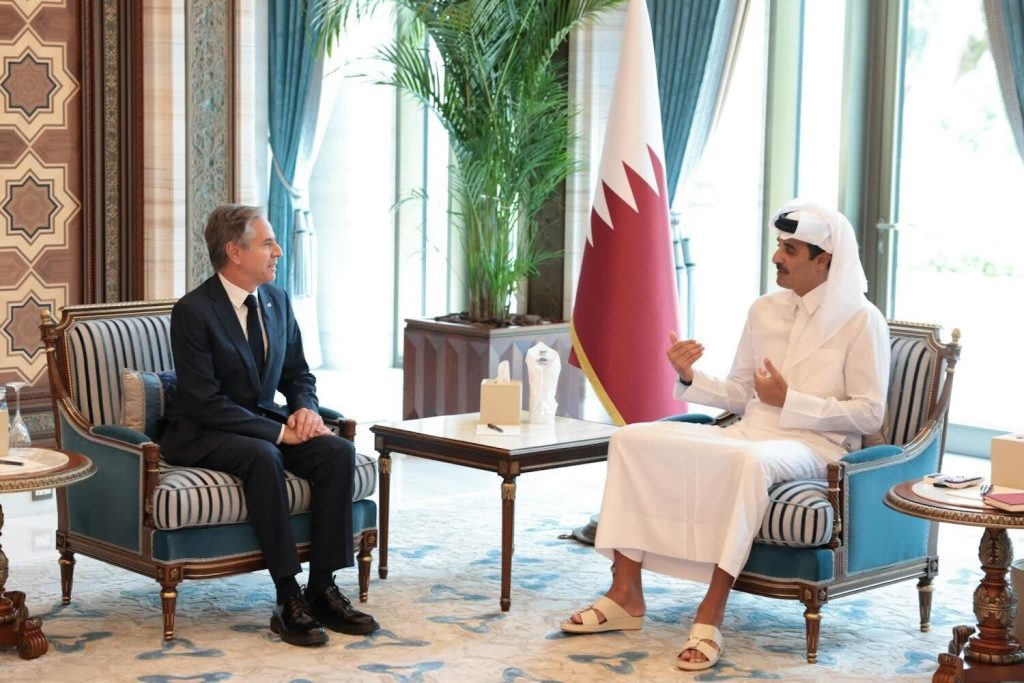
For a ruler who inherited a nation already rich in natural gas and strategic connections when his father abdicated in June 2013, Tamim bin Hamad Al Thani has spent his reign deliberately shaping a distinct foreign-policy identity. That identity, built on a willingness to engage with nearly any party, has turned the small Gulf emirate into an indispensable go-between for conflicts that other powers find too dangerous or intractable to touch.
The Mediator’s Resume
Born on June 3, 1980, Tamim studied at the Royal Military Academy Sandhurst in the United Kingdom, a training ground for many Middle Eastern royals. After taking power, he positioned Qatar as a mediator in some of the world’s most difficult regional disputes.
His resume includes involvement in the Afghan peace process and the 2023 Israel-Hamas ceasefire. That ceasefire, brokered with Qatari help, has held, though nobody considers it permanent. Then came an even bigger test.
In March 2025, Tamim personally brokered a ceasefire between the United States and Iran. The deal remains fragile, and the Afghan peace process is stalled.
The March 2025 U.S.-Iran ceasefire stands as perhaps the highest-profile achievement of Tamim’s willingness to maintain open channels with all sides.
The American Base in the Backyard
Qatar has hosted the Al Udeid Air Base since 2003. It is the largest U.S. military base in the Middle East, serving as a major hub for American operations across the region. Tamim walks a fine line: he hosts American forces while also talking to Iran.
That dual track allows Qatar to act as a go-between in ceasefire negotiations, but it also creates constant tension. None of this diplomacy would be possible without the money.
Qatar is a major exporter of liquefied natural gas, with reserves of 25 trillion cubic meters. Tamim’s personal net worth is estimated at $2 billion. The energy wealth has transformed the country from a sleepy Gulf state into a high-income economy where the capital, Doha, now holds the vast majority of the population, most of whom are foreign workers.
This rapid, resource-driven growth has propelled Qatar onto the global stage, but it also leaves the country vulnerable to shifts in energy markets and regional rivalries. The modern state of Qatar emerged from a patchwork of Bedouin settlements on a small, dry peninsula jutting into the Persian Gulf.
In 1868, the House of Thani signed an agreement with Britain that recognized Qatar’s separate status from its neighbors. After decades as a British protectorate and a brief period under Ottoman suzerainty, the country gained full independence in 1971. The ruling Al Thani family has held power ever since, governing as a hereditary monarchy where the emir concentrates nearly all executive, legislative, and judicial authority.
Outsized Influence, Fragile Ceasefires
In the twenty-first century, Qatar positioned itself as a middle power with outsized influence. It hosts the Al Udeid Air Base while simultaneously funding the Al Jazeera media network and maintaining ties with groups the United States opposes. This balancing act drew scrutiny during the Arab Spring, when Qatar backed rebel factions, and it later led to a diplomatic blockade by neighboring Gulf states.
The emirate’s survival has come to depend on a mixture of energy revenue, strategic alliances, and a willingness to mediate conflicts that other powers avoid. The big question is whether Tamim can maintain his balancing act.
The U.S.-Iran ceasefire he brokered in March 2025 is fragile. The Afghan peace process is stalled. The 2023 Israel-Hamas ceasefire has held, but nobody thinks it’s permanent.
Tamim keeps the Al Udeid base open, keeps the gas flowing, and keeps talking to everyone. Qatar’s significance for global stability lies in its role as a tiny state with an outsize ability to insert itself into the world’s most dangerous disputes.
Its gas reserves make it an indispensable supplier to global markets, especially as European nations seek alternatives to Russian energy. Its close military relationship with the United States coexists with its open channels to Iran and militant groups. How the current emir manages these competing pressures will affect not only the Gulf region but also the stability of energy supplies and the prospects for peace in the Middle East.




