
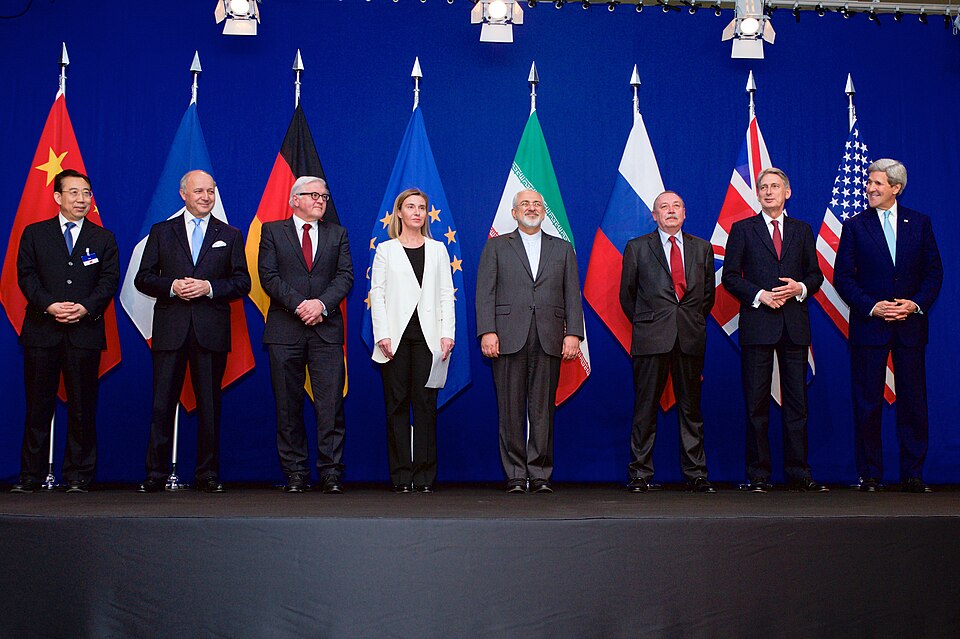
VIENNA, July 26 — The corridors of Vienna’s Palais Coburg, where the original Joint Comprehensive Plan of Action was inked in 2015, remain quiet this July. A decade after the historic accord, the diplomatic echo chamber still hums with the ghosts of broken promises and escalating centrifuges. Against this backdrop, the JCPOA’s shadow stretches long—from the Persian Gulf to the negotiating tables of Muscat—where indirect talks between Washington and Tehran have sputtered for months without breakthrough.
The plan itself was a landmark: struck in Vienna on July 14, 2015, between Iran and the P5+1 (United States, United Kingdom, France, Germany, Russia, China) plus the European Union. It capped Iran’s uranium enrichment at 3.67%, limited its enriched uranium stockpile to a fraction of its pre-deal size, and re-engineered the Arak heavy-water reactor to render it proliferation-resistant.
In exchange, multilateral sanctions on oil exports, banking, and trade were lifted, and the deal was enshrined in UN Security Council Resolution 2231. But the fragile equilibrium collapsed when the United States withdrew on May 8, 2018, under President Donald Trump. Citing Iran’s ballistic missile program and support for proxy groups, Washington reimposed sanctions in two waves—August and November 2018—choking off Iran’s oil revenue and isolating its financial sector.
Tehran responded in kind. By July 2019, Iran had breached enrichment limits.
By January 2021, enrichment levels had climbed to twenty percent. By April 2021, they reached sixty percent—dangerously close to weapons-grade, though still short of the ninety percent threshold required for a nuclear device. The International Atomic Energy Agency verified each step.
By 2023, Iran’s enriched uranium stockpile had swollen to an enormous volume. The IAEA confirmed enrichment levels up to sixty percent—highly concerning, even if not weaponized. The wider picture was clear: the JCPOA’s constraints had dissolved.
Talks to restore the deal began in April 2021 in Vienna, but talks stalled in 2022 over disputes about the Islamic Revolutionary Guard Corps’ designation and the scope of sanctions relief. As of early 2025, indirect negotiations continued in Oman, yet no agreement was in sight.
The Fractured Diplomacy
China and Russia, signatories to the original accord, have since positioned themselves as mediators while quietly deepening ties with Tehran. Beijing’s oil purchases and Moscow’s nuclear cooperation with Iran have diluted the leverage of Western sanctions. In the corridors of Brussels and Washington, diplomats voice frustration.
“The deal is not dead,” said one senior EU official, “but it is on life support.” Meanwhile, Iran’s enrichment program has accelerated. Enrichment levels now exceed the original JCPOA limits by a wide margin.
The Arak reactor, once redesigned to prevent plutonium production, has reportedly seen modifications that raise proliferation concerns. The IAEA has documented these changes, but access to key sites remains restricted.
Washington’s Stance
The current US administration has maintained a firm line. Secretary of State Marco Rubio has reiterated that sanctions will remain in place until Iran returns to full compliance. “We are not negotiating a new deal,” Rubio stated in June.
“We are discussing the restoration of the old one.” The administration has also warned China and Russia against using sanctions relief as leverage to extract concessions on unrelated issues. Vice President JD Vance has echoed this tone, emphasizing deterrence against Iran’s regional activities.
“Iran’s nuclear advances and its support for militant proxies cannot be treated as separate issues,” Vance said in a recent speech. “They reinforce each other.”
The Regional Stakes
Across the Middle East, the JCPOA’s collapse has fueled a dangerous arms race. Saudi Arabia and the UAE have pursued civilian nuclear programs with Western support, citing Iran’s enrichment as a regional threat. Israel has conducted covert operations to sabotage Iran’s nuclear infrastructure, including attacks on enrichment facilities and the assassination of key scientists.
The cycle of covert action and retaliation shows no sign of abating. In Lebanon, Hezbollah—backed by Iran—has amassed an arsenal of precision-guided missiles, raising alarms in Jerusalem and Riyadh.
In Yemen, Houthi rebels, also supported by Tehran, continue to target Saudi infrastructure with drones and ballistic missiles. The wider picture is one of escalating proxy conflict, where nuclear ambition and regional aggression are increasingly intertwined.
What to Watch Next
The coming months will test whether diplomacy can outpace enrichment. Oman’s role as a discreet mediator remains pivotal, but expectations are low. Iran’s presidential election in 2025 returned a hardline government, further complicating any compromise. Meanwhile, the IAEA’s next quarterly report could trigger a new round of sanctions or even a referral to the UN Security Council




