
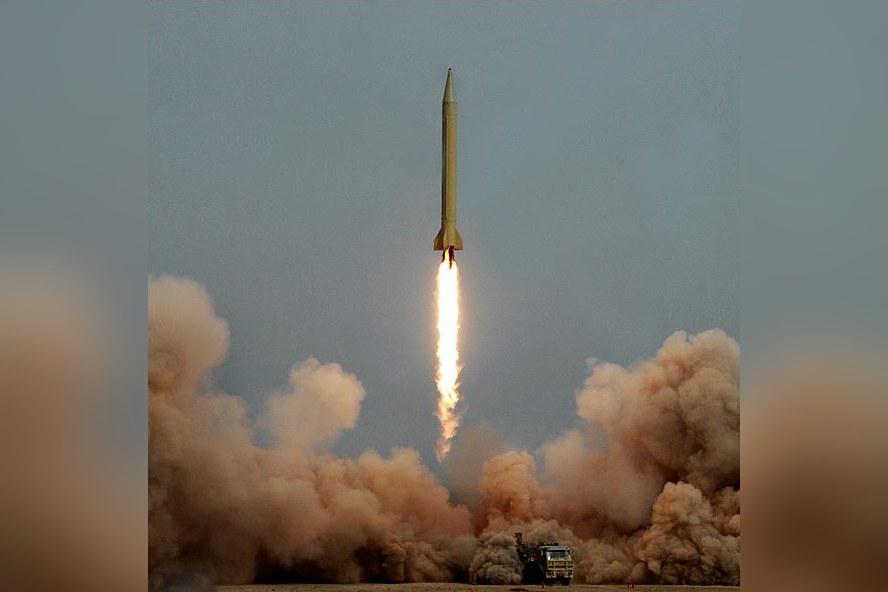
WASHINGTON, July 26 — The Islamic Revolutionary Guard Corps remains the backbone of Iran’s military power, a force the U.S. has designated a terrorist organization since 2019. Established in 1979, the IRGC controls the elite Quds Force for foreign operations and operates alongside Iran’s regular military, the Artesh. Its missile arsenal, including the Shahab‑3 with a range up to 2,000 kilometers, the Emad, and the hypersonic Fattah, can reach Israel and Saudi Arabia.
In plain terms, the IRGC is a state‑within‑a‑state that runs both Iran’s most advanced weapons and a network of proxy militias across the Middle East. That network includes Hezbollah in Lebanon, formed in 1985 and equipped with an estimated 100,000 rockets; Kata’ib Hezbollah in Iraq; the Houthis in Yemen; and groups like Hamas and Palestinian Islamic Jihad.
These proxies have attacked U.S. forces in Iraq and Syria, and the Houthis have been targeting Red Sea shipping since November 2023.
The IRGC’s Missile and Drone Capabilities
Iran has thousands of missiles and drones, including the Shahed‑136 loitering munition — a weapon that gained notoriety in Ukraine. The practical upshot for U.S. planners is that Iran can strike targets across the Middle East without deploying its own conventional military. Its air defense, built around Russian S‑300 systems and indigenous platforms, provides a layered shield, though one that experts say is no match for American air power.
The U.S. military advantage is overwhelming in any direct conflict, but such a war would be extremely costly. Iran’s main card is its ability to retaliate through proxies and asymmetric threats — attacks on oil infrastructure, shipping lanes, and American bases — rather than a head‑to‑head fight.
U.S. Military Posture and Recent Strikes
The United States maintains troops in Iraq and Syria, plus naval assets in the region that include aircraft carriers. Those forces are a tripwire and a deterrent, but they are also vulnerable targets. In February 2024, the U.S. conducted airstrikes on more than 85 targets in Iraq and Syria, destroying IRGC and militia command posts, drones, and weapons caches.
That operation was a direct response to attacks on U.S. personnel, and it underscored Washington’s willingness to hit back hard when its forces are threatened. Here’s what that means for the current standoff: The IRGC and its proxies have repeatedly probed American defenses, but the U.S. has also shown it can project precision firepower across two countries simultaneously.
The result is a tense, calibrated cycle of strike and counter‑strike that could escalate quickly if either side miscalculates. Looking ahead, the risk of a direct U.S.–Iran conflict remains low but not zero. The IRGC’s missile and drone arsenal gives it long‑range reach, while the U.S. military can destroy those systems faster than Iran can replace them — at least in a short fight.
The real danger lies in the proxy network: a single rocket hitting a high‑value target, or a drone disabling a tanker in the Red Sea, could trigger a spiral neither side fully controls. For now, the region waits.




