
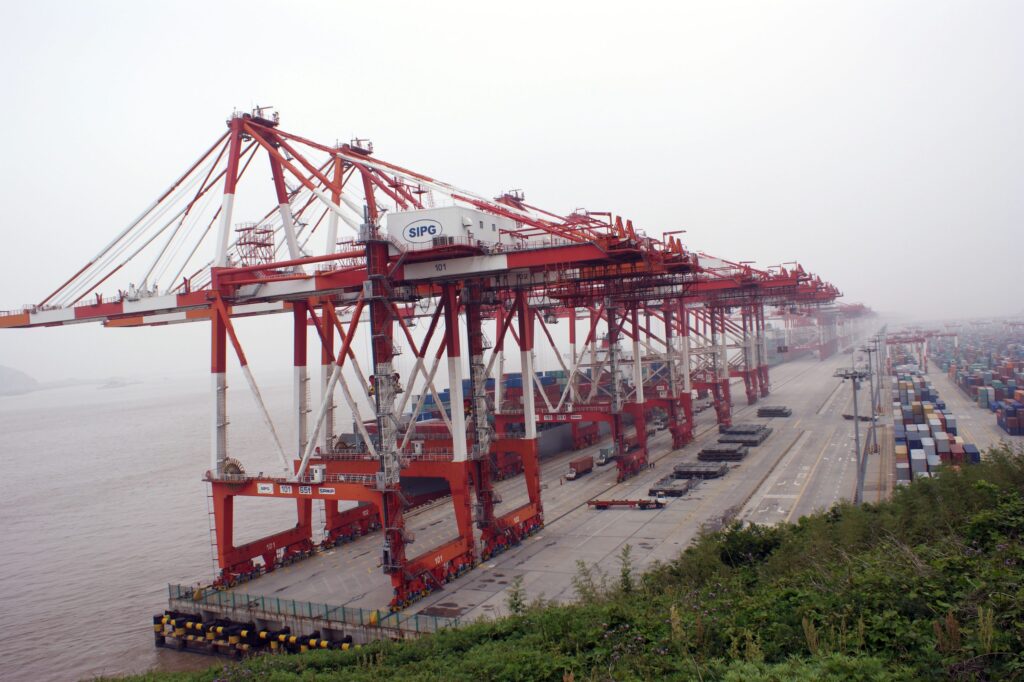
An estimated $3.4 trillion in trade crossed the South China Sea in 2016, according to the CSIS ChinaPower project. That was roughly 21 percent of global trade, and well below the $5.3 trillion figure that had been repeated since 2010. The Conference Board still uses the $3.4 trillion number for the commerce carried by merchant ships through these waters each year.
The sea carries what ChinaPower calls “an estimated one-third of global shipping.” Sixty percent of maritime trade passes through Asia.
Who depends on it
The exposure differs by country. Nearly 40 percent of China’s total trade went through these waters in 2016, and almost 42 percent of Japan’s maritime trade did. For the United States the share was just over 14 percent.
Energy is the sharpest dependency. China is the world’s top crude oil importer, and ChinaPower found that almost 80 percent of its oil imports passed through the South China Sea via the Strait of Malacca in 2016. A later CSIS study on the chokepoints, covering 2024, put the goods passing through eight major straits at about $6.4 trillion. The Malacca and Taiwan Straits each handled over $2.4 trillion. In the first half of 2025, an estimated 29 percent of global seaborne oil trade went through Malacca, which CSIS called the busiest oil chokepoint in the world, ahead of the Strait of Hormuz.
Japan’s imports through Malacca were 64 percent energy products. For South Korea the figure was over 78 percent “oil, gas, and related minerals.”
Where the friction is
The Conference Board points to the China-Philippines standoff around the West Philippine Sea, the Philippines’ claimed Exclusive Economic Zone. A collision in October 2023 between Chinese Coast Guard and Philippine vessels showed the “risk of miscalculation leading to direct conflict,” it said. The U.S.-Philippines Mutual Defense Treaty, upgraded in May 2023, now explicitly covers “armed attack…anywhere in the South China Sea.” Japan and Australia have deepened their own defense ties with Manila.
What disruption costs
Rerouting is expensive. CSIS used the Red Sea as its example: when Houthi attacks pushed ships around the Cape of Good Hope, the voyage “nearly doubled” from 19 days to 34 days, with higher fuel, insurance and freight bills.
War risk premiums can jump quickly too. ChinaPower recalled that after the Gulf of Aden was designated a war risk zone because of piracy in 2008, premiums rose from $20,000 to $150,000 per voyage by 2010. It estimated monthly war risk coverage for all Malacca traffic at roughly $167 million in 2011.
Sources
- How much trade transits the South China Sea? (CSIS ChinaPower)
- Potential conflict in the South China Sea (The Conference Board)
- Troubled Straits: Analyzing Trade Chokepoints in the South China Sea (CSIS)




