
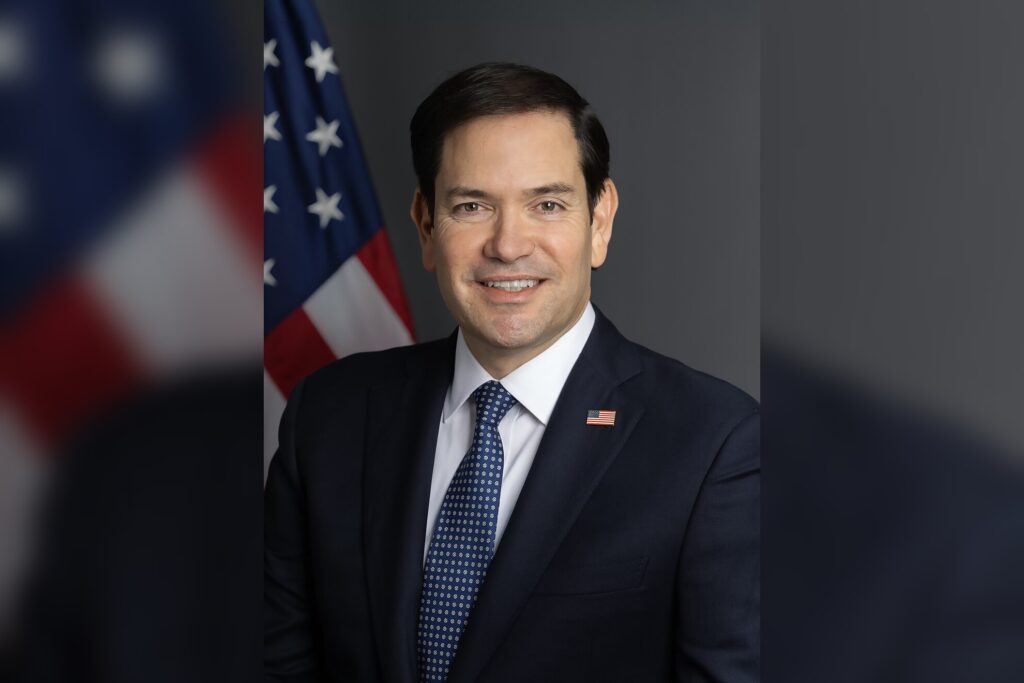
A clear approach to ending the war in Ukraine is crystallizing within the Trump administration, with Secretary of State Marco Rubio emerging as a key architect of a strategy that relies on economic pressure rather than military escalation. Rubio is advocating the use of tariffs on Russian oil to force Moscow into a negotiated settlement, a proposal that distinguishes his thinking from the sanctions-heavy policies of previous administrations and places him at the center of an internal policy debate.
Rubio, who served as a U.S. Senator from Florida from 2011 until his confirmation as Secretary of State on January 20, 2025, has argued that strong economic coercion is the most effective lever to compel a diplomatic resolution to the conflict that has stretched into a second year. His role in shaping U.S. foreign policy has grown considerably since he took office; on May 1, 2025, President Donald Trump named Rubio acting national security advisor, replacing Mike Waltz while allowing Rubio to keep his State Department post.
That rare dual-role arrangement had not been seen since Henry Kissinger held both positions simultaneously from 1973 to 1975.
Rubio’s path from Miami to the State Department
Rubio was born and raised in Miami, attending the University of Florida and later law school at the University of Miami. His political career began at the local level as a city commissioner for West Miami in the 1990s. In 2000, he won a seat in the Florida House of Representatives, rising quickly to become majority leader and then Speaker of the Florida House for a two-year term starting in late 2006. Term limits forced him out of the state legislature in 2008.
Rubio was elected to the U.S. Senate in a three-way race in 2010. He launched a presidential bid in 2015 but suspended his campaign after losing the Florida Republican primary to Donald Trump in March 2016.
Despite earlier criticism of Trump, Rubio endorsed him before the general election and largely supported his first term. He won reelection to the Senate in 2016 and again in 2022. During the first Trump administration, Rubio gained influence on U.S. policy toward Latin America, to the point that observers described him as a de facto secretary of state for the region.
He also became known as one of Congress’s strongest critics of China and the Chinese Communist Party, earning sanctions from Beijing in 2020. President-elect Trump announced in November 2024 that he would nominate Rubio to be secretary of state; the Senate confirmed him unanimously, and he took office on January 21, 2025.
Rubio’s proposal to use tariffs on Russian oil marks a notable shift from the sanctions-first approach of past administrations, and his dual role now puts him at the center of the administration’s foreign policy machinery.
Economic and national security calculus
National Security Advisor Mike Waltz, a former U.S. Army Green Beret and Congressman from Florida who was also appointed on January 20, 2025, has focused on the financial side of the equation. He has emphasized the need for a rapid end to the conflict, driven in part by a desire to reduce the costs of U.S. aid to Ukraine. Waltz’s background as a special forces officer and legislator informs his view that the war’s continuation carries a heavy price tag for American taxpayers.
President Donald Trump, who took office on January 20, 2025, has publicly declared his ambition to end the war within 100 days, although no formal deadline has been set. His history with Russian President Vladimir Putin is complex; Trump has expressed admiration for Putin in the past, yet his first term from 2017 to 2021 saw the imposition of sanctions on Russia, including measures against Russian energy companies in 2018 following the poisoning of Sergei Skripal.
The specific mechanism of tariffs on Russian oil, as advocated by Rubio, is a notable departure from that sanctions-first approach. The design of this tariff structure involves other senior economic officials, including Treasury Secretary Scott Bessent and Commerce Secretary Howard Lutnick. The wider picture, however, is that any settlement cannot be imposed unilaterally.
The administration is consulting with Ukraine’s President Volodymyr Zelenskyy, who has consistently urged continued support from the West. The outcome of this internal debate carries weight for the pace and shape of U.S. involvement in the conflict, as the administration balances the president’s stated desire for a swift resolution against the realities of a grinding war that has already claimed tens of thousands of lives and destabilized global energy markets.
{“@context”: “https://schema.org”, “@type”: “NewsArticle”, “headline”: “Marco Rubio Leads Trump Push for Ukraine War End via Economic Pressure”, “description”: “WASHINGTON, July 10 — A clear approach to ending the war in Ukraine is crystallizing within the Trump administration, with Secretary of State Marco Rubio…”, “datePublished”: “2026-07-10T09:30:00+00:00”, “author”: {“@type”: “Person”, “name”: “Arjun Mehta”}, “publisher”: {“@type”: “Organization”, “name”: “InfoPulse Today”, “url”: “https://newsfeed.2bme.xyz/”}}




