
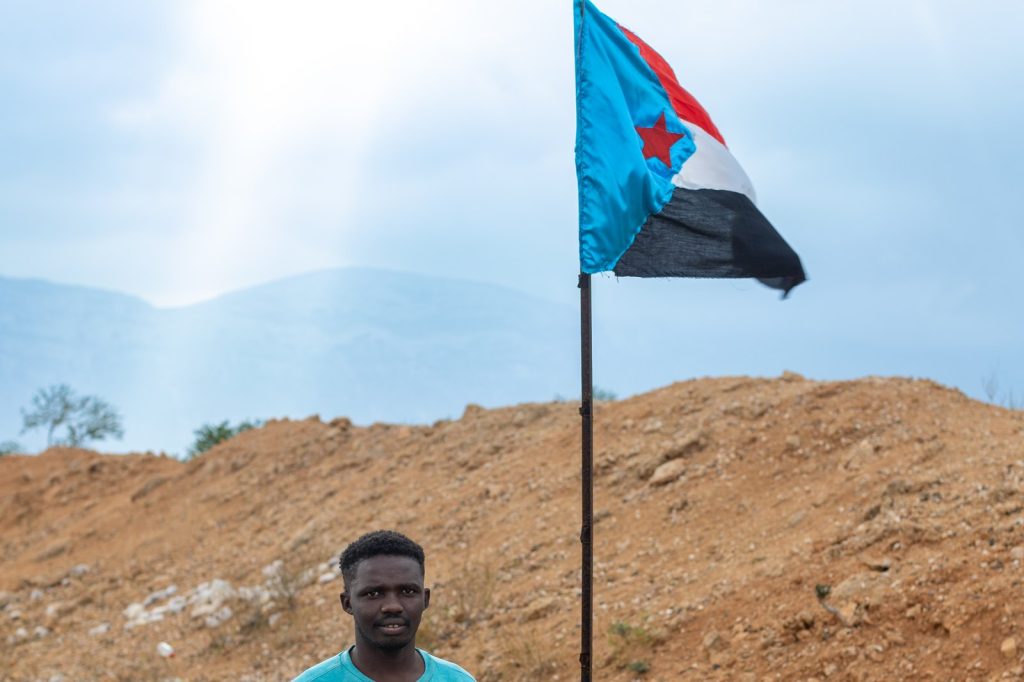
Yemen’s southern separatists want a vote on independence, and they say it will come within two years. The Southern Transitional Council (STC) said on Friday that it aims to hold a referendum on independence from the north, Reuters reported. The announcement followed the council’s seizure of large parts of the country the previous month, a move that set off a major feud between Gulf powers.
The STC’s leader, Aidarous al-Zubaidi, described a two-year transitional period that would lead to a public vote. He called on the international community to sponsor talks between southern and northern parties, focused on a political roadmap and on mechanisms to guarantee the rights of people in the south, News.Az reported.
Fighting in Hadramout
The statement came during fresh fighting in Hadramout between Saudi-led coalition forces and STC fighters. Forces loyal to Governor Salem al-Khanbashi took the region’s largest military base from the STC, according to Al Jazeera as cited by News.Az.
The National described the same Friday clashes differently in detail. The governor, backed by the head of Yemen’s Presidential Leadership Council, launched an operation to retake STC-held positions. The STC said air strikes hit areas in the south. The governor said his forces took the largest military camp in the governorate. The National could not independently verify any of the claims.
The STC had earlier taken control of Hadhramaut and Mahra from other pro-government forces, which gave it a hold over all of the southern governorates. It said it acted because other pro-government factions had failed to mount a serious campaign against the Iran-backed Houthis in their northern strongholds, Sanaa included. Saudi Arabia condemned the takeover.
Talks and a divided coalition
The STC is backed by the United Arab Emirates and had been part of Yemen’s internationally recognised government for years. That government is supported by Saudi Arabia and has led the fight against the Houthi movement. Saudi Arabia has headed the anti-Houthi alliance since 2015, while the UAE played a key part in halting the Houthi advance, pushing the rebels out of the south and fighting extremist groups such as Al Qaeda and ISIS.
On Saturday, Saudi Arabia said it was ready to host talks in Riyadh on the southern issue. It welcomed a request from Rashad Al Alimi, chief of the Presidential Leadership Council, and called on all southern factions to attend. The aim, Riyadh said, is to reach “just solutions” that meet southerners’ aspirations. No invitation list or date has been announced. Al Alimi said he hoped the talks would include “all southern components, forces and figures without exception, including the Southern Transitional Council.”
The UAE foreign ministry said it was following developments closely and expressed “deep concern over the ongoing escalation”. It added that “de-escalation and constructive dialogue remain the most effective path.” The UAE Ministry of Defence also confirmed the end of its counter-terrorism presence in Yemen. Qatar thanked Saudi Arabia for hosting the talks and stressed that all southern factions should take part, and the Arab League’s Jamal Rushdi said the southern issue has “just” aspects that need to be handled through dialogue.
A long-running split
Southern forces trained by the UAE helped drive Houthi fighters out of the south between 2015 and 2018. The STC later emerged as a political umbrella for many of those forces. Yemen’s 1990 unification joined two states whose differences were never fully settled: the north came out of a 1962 uprising, and the south was shaped by Britain’s 1967 withdrawal from Aden.
Sources
- Yemen's STC aims to hold an independence referendum in two years
- Yemen’s STC plans independence referendum within two years | News.az
- UAE urges dialogue as Saudi Arabia declares readiness to host Yemeni talks | The National




