
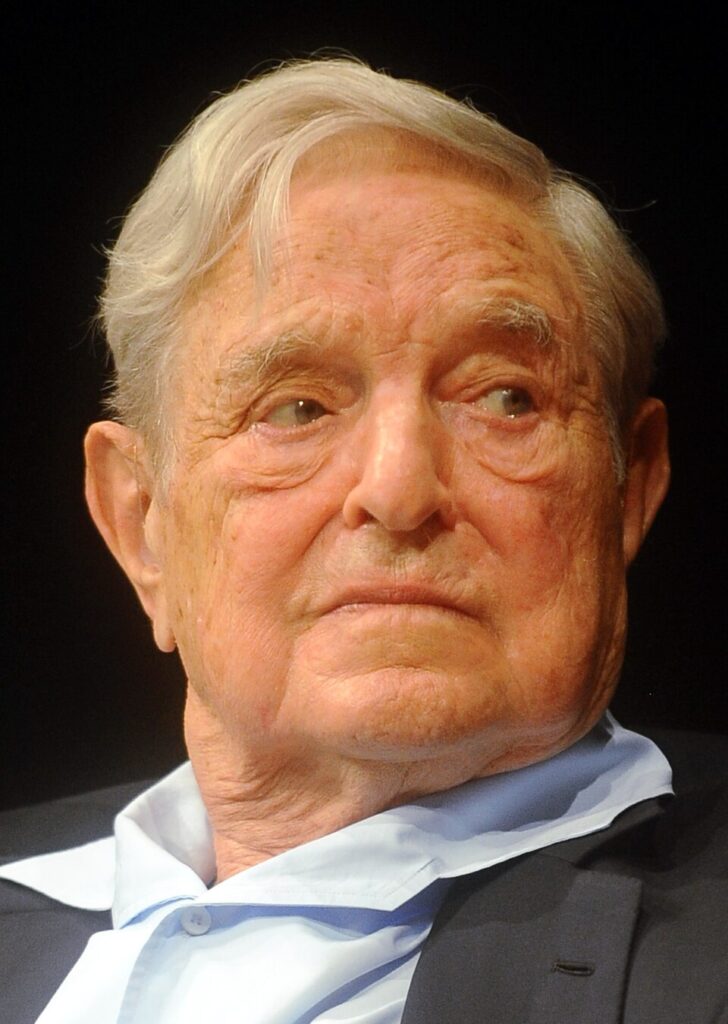
The Open Society Foundations has put $300 million behind a new push to protect democratic rights and economic security in the United States, to be spent over five years. The foundation, founded by George Soros, announced the money on Wednesday.
It did so while the Trump administration was publicly going after the Soros family, accusing it of backing violence and fostering division. Asked about those attacks, Laleh Ispahani, the foundation’s US managing director, was blunt. “We are continuing our work unabated. We will not be intimidated into silence,” she said.
Those attacks belong to a wider campaign that began in 2025, when Trump and his allies set out to shape the behavior of nonprofits and their funders through executive orders, frozen funding and threatened investigations. Allies in Congress have asked the Internal Revenue Service and the Department of Justice to look into groups they accuse of backing domestic terrorism, illegal immigration or climate programs they oppose. In December, then-Attorney General Pam Bondi ordered law enforcement to investigate nonprofits that support antifa, which Trump has designated a domestic terrorist organization. A Justice Department spokesperson said the department does not comment on investigations when asked whether Open Society was under one.
What the money is for
Ispahani said the foundation has spent the past year funding groups that defend the rule of law and resist policies meant to keep some Americans out of public life. The new strategy ties together two things she said are usually treated apart: people’s economic well-being and the protection of civil rights.
The foundation plans to look for state-level policies that shield vulnerable groups and could be copied elsewhere, along with policies that build a fair economy for working people. “You can’t address the racial wealth gap without tackling core, working class economic issues like living wages, affordable child care and housing,” she said.
Of the $300 million, $20 million is already committed for this year. It will go to organizations working on strategic litigation, defense of the nonprofit sector and tracking of government corruption.
This is the first new program focused only on the US that the foundation has approved since Alex Soros, one of George Soros’ sons, took charge. He has overseen a restructuring of the foundations that has lasted years and brought major layoffs. “Guaranteed rights and freedoms are just as critical as broad economic prosperity and are the strongest defense we have against a closed society,” Alex Soros, the chair, said in a statement.
The earlier US democracy strategy put in at least $220 million. It built a multiracial, multifaith, pro-democracy alliance and included five-year grants to community groups led by people of color and women.
Other funders
For years, few large foundations saw democracy in the US as their business. Kristin Anne Goss, a professor at Duke University’s Sanford School of Public Policy, found that this began to change near the end of Barack Obama’s second term and through Trump’s first. Among the very largest foundations, democracy’s share of overall giving rose significantly between 2013 and 2020.
David Wolcheck of the nonprofit Candid, using a different data set, found that support for democracy-related work tripled between 2016 and 2020, then fell by a third the next year. His research ranks the Ford Foundation as the biggest private or community funder of democracy in the US. The MacArthur Foundation pledged $100 million over last year and this one for voting and civil rights, and the McKnight Foundation approved another $20 million from its endowment for 2026.
Goss cautioned that measuring results is hard. “A lot of the things that they’re working on, especially around democracy, it’s really hard to measure impact,” she said.




