
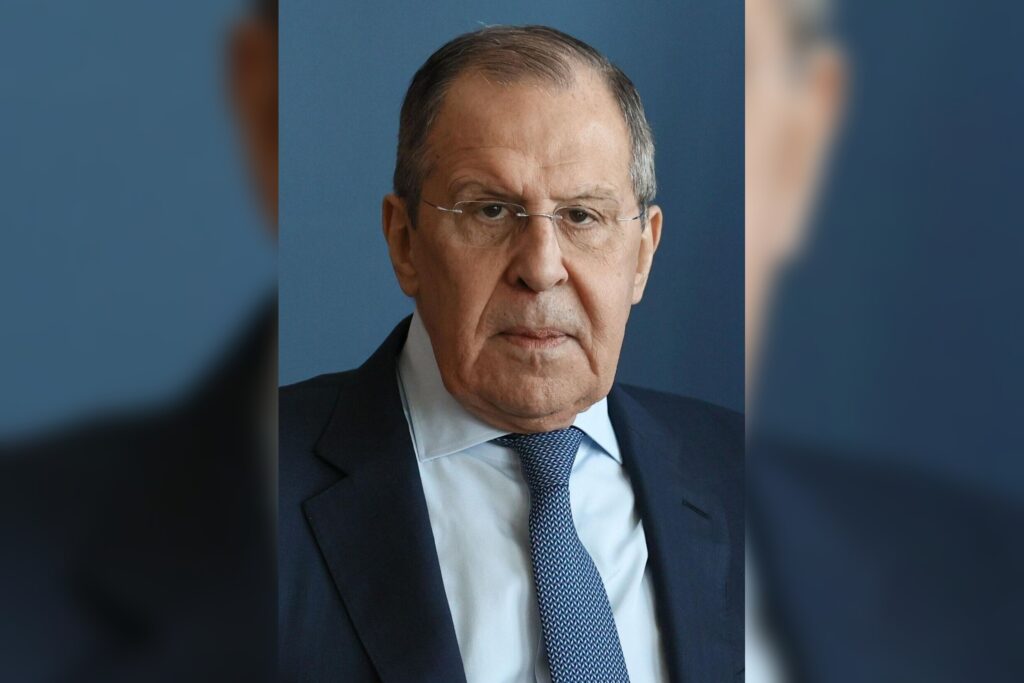
MOSCOW, July 10 — Against the backdrop of the Kremlin’s deepening confrontation with the West, Sergei Lavrov stands as one of the most enduring figures in modern Russian statecraft. Now in his 21st year as Russia’s Minister of Foreign Affairs, he has outlasted every other post-Soviet diplomat in that role, having taken the post on March 9, 2004.
For those who track the corridors of power in Moscow, his longevity is itself a statement — a signal of continuity in a system that has grown increasingly assertive on the world stage. Born in Moscow on March 21, 1950, Lavrov’s path to diplomacy began at the Moscow State Institute of International Relations, known by its Russian acronym MGIMO, from which he graduated in 1972.
That institution has long been the training ground for the Soviet and later Russian foreign policy elite, and Lavrov’s career trajectory reflects its influence. Before taking the helm of the Foreign Ministry, he served as Russia’s ambassador to the United Nations from 1994 to 2004, a decade that saw the Yeltsin era give way to Vladimir Putin’s first presidential terms. In the halls of the UN, Lavrov earned a reputation for assertively defending Russian interests — a style he has carried with him ever since.
What is at stake in Lavrov’s diplomacy, particularly since the full-scale invasion of Ukraine in February 2022, is nothing less than the post-Cold War security order in Europe. The wider picture, as European capitals see it, is a Russian foreign minister who has consistently defended Russia’s actions in Ukraine, including the annexation of four Ukrainian regions in September 2022 — a move that most of the international community has refused to recognise.
Lavrov has framed these actions as necessary responses to NATO expansion, a narrative he has pressed in every international forum available to him. On October 5, 2022, Lavrov escalated the rhetorical stakes by stating that NATO’s involvement in Ukraine would constitute a “direct threat” to Russia. That statement, delivered at a moment when Western weapons shipments to Kyiv were intensifying, sent a chill through European foreign ministries already grappling with the risk of escalation between nuclear-armed powers.
Then, on March 25, 2023, he publicly supported President Putin’s plan to station tactical nuclear weapons in Belarus — a move that fundamentally altered the security calculus in Eastern Europe. For the first time since the end of the Cold War, Moscow was preparing to deploy such weapons outside Russian borders, and Lavrov was the voice justifying that decision. The diplomatic consequences have been severe.
Since 2022, Lavrov has been sanctioned by the United States, the European Union, and a range of other countries. These measures — asset freezes, travel bans, and restrictions on financial transactions — have effectively curtailed his ability to move freely and engage with Western counterparts.
Yet within Russia, he remains a fixture of the state apparatus, unrepentant in his defence of Kremlin policy. His assertive diplomatic style, forged in the corridors of the UN and refined over two decades at the Foreign Ministry, has made him the public face of Russian defiance. For European observers, Lavrov’s trajectory is a reminder of how much has changed since the early 2000s, when Russia and the West still maintained regular diplomatic engagement.
Back then, Lavrov attended NATO-Russia Council meetings and participated in G8 summits. Today, those channels are largely severed.
Against this backdrop, his continued presence at the helm of Russian diplomacy signals that Moscow sees no return to the old relationship — at least not on terms the West would accept. Looking ahead, the question European diplomats are asking is whether Lavrov’s tenure will be defined entirely by the Ukraine war, or whether there is room for any diplomatic off-ramp. His statements on nuclear deterrence and on Belarus have locked Russia into a posture that leaves little space for compromise.
With the conflict grinding on, and with Lavrov still at the podium, the wider picture is one of a diplomat who has become inseparable from the war he defends — and who shows no sign of altering course.




