
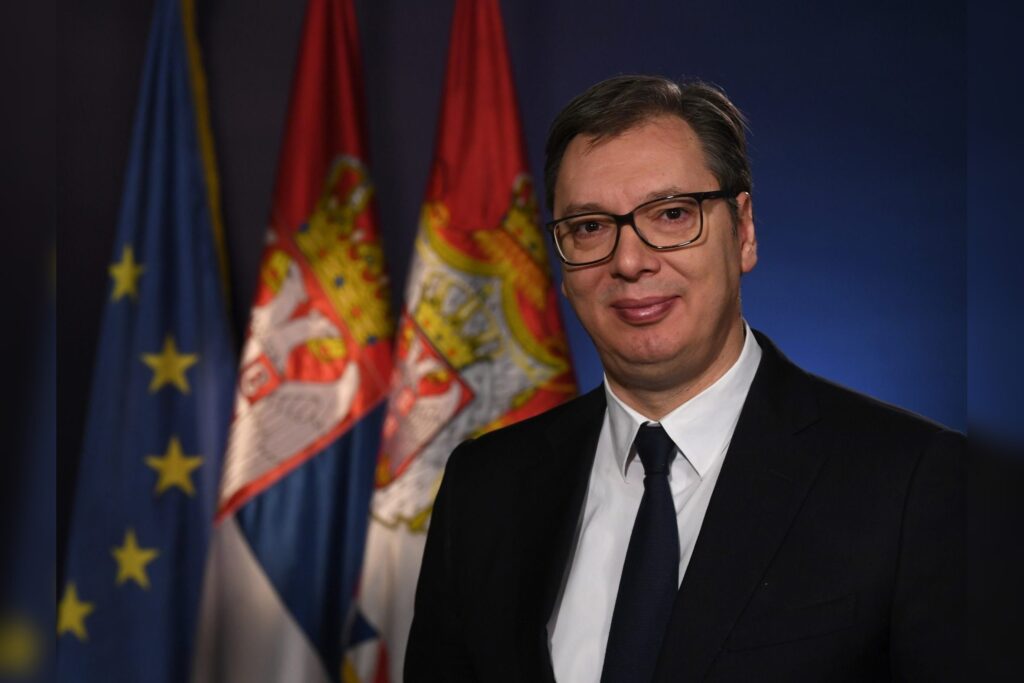
Many in the crowd had been bused in from across Serbia and stood in sweltering heat in Belgrade on Saturday when President Aleksandar Vucic told them his time in office was nearly up. “I will be president for only a couple more weeks, and then I will resign,” he said, CNN reported. Early presidential and parliamentary elections will follow.
His second and final mandate was due to expire in mid-2027, and the parliamentary vote was also originally set for 2027. Vucic gave no date for his resignation or for dissolving parliament, which has to happen before early parliamentary elections can be held. He said he would help his Serbian Progressive Party (SNS) win both contests, and proposed a name for its list: “United Serbia”.
Eighteen months of protest
Vucic has led Serbia for 12 years as president or prime minister. The announcement came after 18 months of anti-government demonstrations, led by students, that began when an awning collapsed at a railway station in Novi Sad in November 2024 and killed 16 people. Protesters, opposition parties and rights groups say the disaster pointed to wider mismanagement of construction projects and corruption.
CNN described the rallies as the biggest since the overthrow of Slobodan Milosevic in 2000. Days before Vucic spoke, students in Novi Sad marked the victims and called for snap elections. Another student rally was set for Sunday in Kraljevo, in south-central Serbia.
Savo Manojlovic, who heads the student opposition movement Move-Change, said Vucic was trying “to preempt his inevitable fall, because of protests and because of the student movement, which has more support than he does.”
What he said to the crowd
Vucic told supporters that students and protesters want to destroy the country and accused them of working with unnamed foreign powers. The protesters deny this. “For the thousand and first time, we are offering you our hand,” he said. “We forgive everything you have done, but we are not naive, and we will not forget what has been done to the country in the last year.”
He pledged that the party would end corruption, raise pensions, increase payments to the poor and improve state-run health services. Opposition figures accuse Vucic and his allies of violence against opponents, corruption, ties to organised crime and curbs on media freedom. Vucic and his allies deny the allegations.
Will he really leave?
Serbia’s presidency is largely ceremonial, though Vucic has held considerable sway over his party and the government. He has already floated becoming prime minister again, and several top allies recently said publicly that he should. In a February interview with Reuters he said he was unsure what he would do after his term ended. “I would like to be less engaged in politics or not at all, but taking care of my legacy might require some sort of engagement; we’ll see,” he said.
Radivoje Grujic, an analyst based in Warsaw, was blunter. “This is not at all the end of Vucic,” he said. “He already has a plan, one that definitely does not mean he’s going to go into political retirement.” Analysts expect Vucic to try to install an ally as president.




