
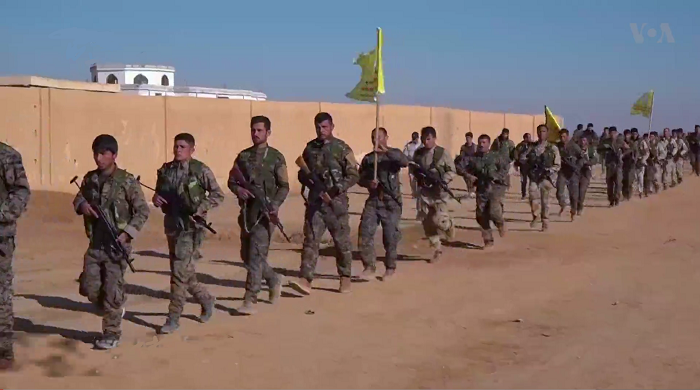
By Sunday morning, Aleppo’s governor could say the city was “empty of SDF fighters.” Azzam al-Gharib told Al Jazeera that government forces had coordinated the departure overnight, and the last Kurdish-led fighters left on buses.
It ended days of street fighting in Sheikh Maqsoud and Ashrafieh, the Kurdish-majority neighborhoods that the Syrian Democratic Forces had held since the war began in 2011. Al Jazeera’s correspondent said the remaining fighters were driven to Raqqa, the main northeastern city under SDF control. State media told the Associated Press that about 360 fighters made the trip.
Five days of fighting
The clashes broke out on Tuesday. The trigger was a March 2025 agreement to fold the SDF into the national army, which went unimplemented. When the year-end deadline passed, the SDF refused to leave the neighborhoods.
The toll is reported differently by each outlet. Al Jazeera counted at least 30 dead and more than 150,000 displaced. The AP cited Kurdish officials who reported at least 12 civilian deaths in Kurdish areas, and government sources who reported at least 10 civilian deaths in government-held parts of the city, with more than 140,000 people displaced. Syrian state television said an explosive drone struck the Aleppo Governorate building on Saturday afternoon. The SDF denied responsibility and rejected claims it targeted civilian sites.
Each side accused the other of hitting civilian areas, hospitals and ambulance crews. Syria’s information minister said Kurdish fighters used civilian buildings during combat. The Kurdish administration said government forces targeted Khaled Fajr Hospital.
The AP called it the worst fighting since Bashar al-Assad fell in December 2024.
The deal
SDF commander Mazloum Abdi announced the ceasefire, which he said came “through international mediation.” In his words, “We have reached an understanding that leads to a ceasefire and securing the evacuation of the dead, the wounded, the stranded civilians and the fighters from the Ashrafieh and Sheikh Maqsoud neighbourhoods to northern and eastern Syria.”
Washington played a central part. Al Jazeera’s Ayman Oghanna said the United States “is in a unique position, because it enjoys good relations with the SDF and the government.” The U.S. has worked with the Kurdish-led force against ISIS for over a decade, and it keeps close ties with interim leader Ahmed al-Sharaa, who has met President Donald Trump at the White House. U.S. Special Envoy Tom Barrack went to Damascus to meet al-Sharaa and warned that “Violence risks undermining the progress achieved since the fall of the Assad regime.”
Once the buses left, government forces searched Sheikh Maqsoud for prisoners detained after Assad’s fall, among them civilian activists and opposition fighters arrested at SDF checkpoints.
What stays unresolved
The SDF is estimated at 50,000 to 90,000 fighters and holds nearly a quarter of Syrian territory, mostly in the northeast. Aron Lund, a fellow at Century International, saw little reason for optimism: “Neither side is willing to compromise on fundamentals, so we’re going to see more clashes eventually.”
A resident, Mohammad Dala, said what he wants is for “the government controls all the country.”
Sources
- Last SDF fighters leave Syria's Aleppo after days of deadly clashes
- Kurdish fighters evacuated from Aleppo after days of violent clashes




