
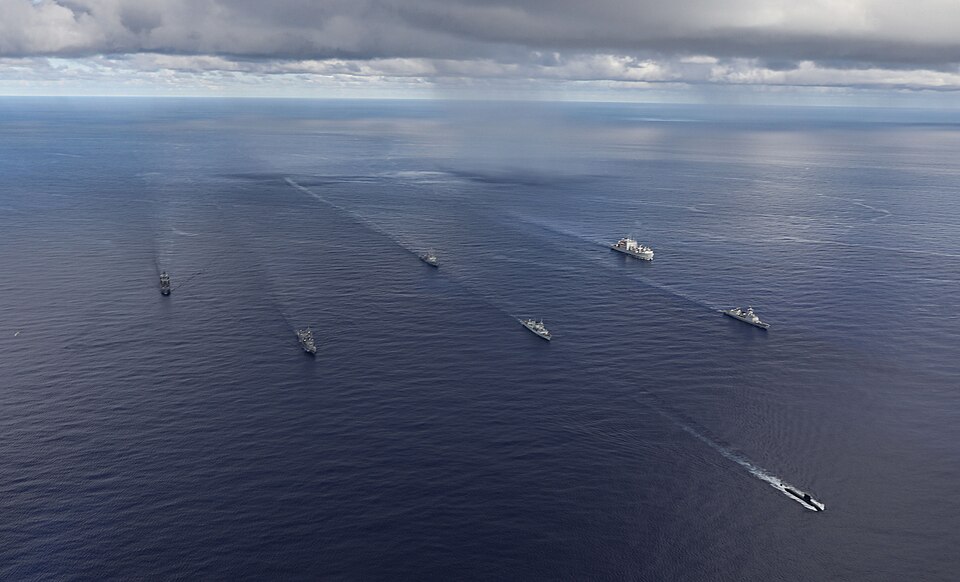
LONDON, July 21 — Against this backdrop of mounting tension in the maritime domain, the UK government is preparing a calibrated and multi-layered response after a Russian warship conducted a live-fire drill that British officials regard as a deliberate provocation. In the corridors of Whitehall, the sequence of expected measures is already taking shape.
The Foreign, Commonwealth and Development Office is expected to summon the Russian ambassador to London, Andrei Kelin, to lodge a formal protest. Simultaneously, the British ambassador in Moscow may be instructed to deliver a demarche — a pointed diplomatic démarche that signals official displeasure. The UK is also likely to coordinate with NATO partners to issue a joint statement condemning the incident, reinforcing the collective front that underpins the alliance’s deterrence posture.
Military and legal dimensions
On the military side, the UK will increase its naval and aerial patrols in the region. Sources indicate that the deployment of the HMS *Prince of Wales* carrier strike group may be extended, a move designed to demonstrate readiness and project power in response to a belligerent action. The Ministry of Defence is also expected to publish additional details about the Russian warship — including its name and class — after analyzing imagery and signals intelligence. What is at stake here is both deterrence and transparency: naming the vessel pins responsibility for the escalation on a specific platform.
Legally, the UK could refer the matter to the International Court of Justice or the International Tribunal for the Law of the Sea if it concludes that Russia violated the ‘due regard’ obligation under the United Nations Convention on the Law of the Sea. That route, however, is rarely taken — the legal machinery is slow, and governments tend to reserve such referrals for the most clear-cut cases.
The wider picture
The incident comes early in the tenure of the UK’s new Labour government, which won a landslide election in July 2024 and has pledged to maintain a robust defence posture. The live-fire drill could influence upcoming discussions in the House of Commons on defence spending, which is already slated to reach 2.5% of GDP by 2030. The wider picture is one of strained bilateral relations: the exercise may lead to enhanced bilateral security talks between the UK and Russia, albeit under conditions that are already deeply troubled.
What to watch next: the timing and format of any joint NATO statement, the length of the *Prince of Wales* deployment extension, and whether the legal route is activated. For now, London is signalling that it will not let the provocation pass without a measured but firm response.




