
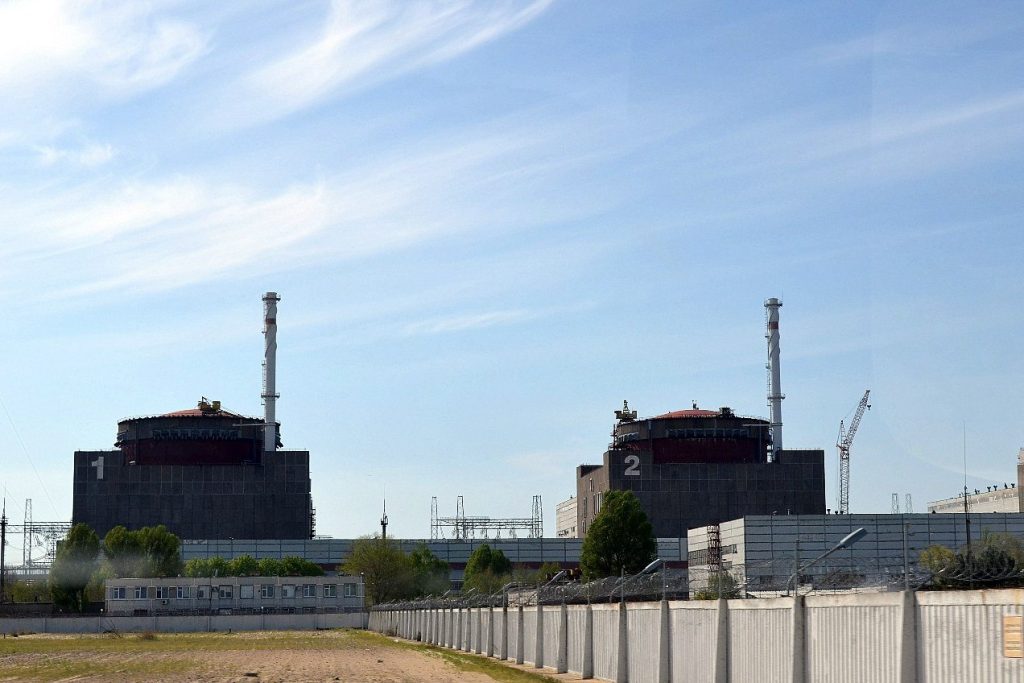
Six reactors, 5700 MWe of net capacity, and no safe way to keep them cool without a river that no longer exists. That is the position of the Zaporizhzhia nuclear plant, the largest in Europe, which has sat under Russian occupation since March 2022.
Europe’s biggest plant, shut down but not safe
The World Nuclear Association dates the plant’s rise to the end of 1995, when the sixth unit joined the grid. All six VVER V-320 reactors had been connected between 1984 and 1995, each rated at 950 MWe gross. Today none of them generates power. All six sit in cold shutdown.
Shutdown does not mean idle. Reactor cores and spent fuel pools still need a steady supply of water, and for families living across Ukraine and its neighbours, that detail is what separates a worrying headline from a real threat.
The dam that fed the plant
The Kakhovka dam once supplied the plant’s long-term cooling water. It was destroyed in June 2023. Since then the plant has leaned on groundwater wells. By August 2023, a first well near the sprinkler ponds was delivering about 20 cubic meters of water an hour, with 10-12 more planned around the ponds. The International Atomic Energy Agency (IAEA) said at the time that the site had “sufficient cooling water for many months,” while its chief, Rafael Mariano Grossi, called the overall situation “precarious.”
The pond itself keeps shrinking. According to IAEA figures reported by Ukrainska Pravda in September 2025, its level has fallen by about 3.2 metres since June 2023, including nearly 60 centimetres in the previous three months. Plant staff under Russian administration run mobile pumps to push water into a supply channel about 14.1 metres high, and 12 sprinkler ponds fed by the new wells were found adequately filled on recent IAEA inspections.
A newly built dam is meant to hold the channel at around 14 meters, roughly 2 meters above the point where pumps would fail. In late August 2025 the IAEA asked to inspect it and had not been allowed in because of security concerns. “Our access to this dam is essential to assess the cooling water situation which is crucial given the fragile nuclear safety situation at the ZNPP,” Grossi said.
One power line
Water is only half the problem. As of the IAEA report dated August 29, 2025, the plant had been relying on a single external power line for four months. The agency has named off-site power and dependable cooling water as “two of the most challenging areas for nuclear safety and security” at the site, and noted earlier Russian strikes on transmission lines and on the External Crisis Centre.
A grid that leans on nuclear
Zaporizhzhia is one piece of a larger system. Ukraine runs 15 operable reactors: two at Khmelnitski, four at Rivne, three at South Ukraine and six at Zaporizhzhia. In 2023 they produced 52.0 TWh, or 49%, of the country’s 105 TWh of generation, which the World Nuclear Association summarises as “about half” of its electricity.
The war touched another famous site early on. Russian forces occupied the Chornobyl plant after the February 2022 offensive began. Four RBMK reactors there were permanently shut down between 1991 and 2000, and Unit 4 was the one destroyed in the 1986 accident.
Sources
- Nuclear Power in Ukraine
- IAEA team seeks access to new dam at Zaporizhzhia plant
- Water level in Zaporizhzhia Nuclear Power Plant cooling pond drops
- Zaporizhzhia Nuclear Plant Begins Groundwater Extraction




