
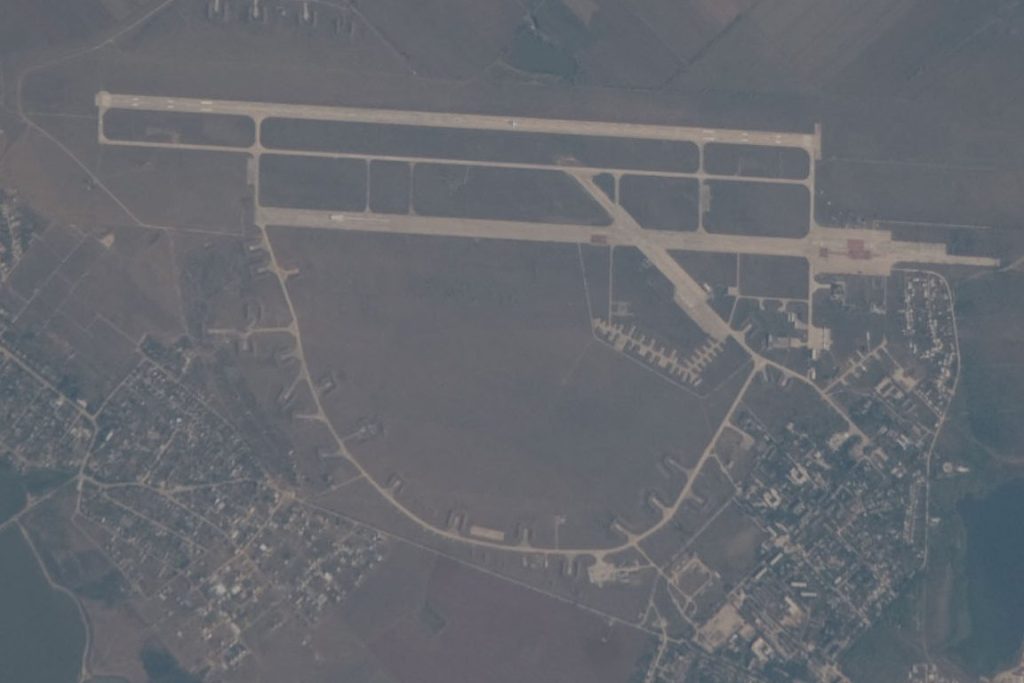
MOSCOW, July 25 — A pattern of fires, explosions, and apparent sabotage has been eating away at Russian military installations since the start of the Ukraine war. The most destructive single incident was the August 9, 2022, explosion at the Saky air base in occupied Crimea. The mechanics here are straightforward: low-cost, deniable operations against high-value assets.
Follow the money: each destroyed Su-30 or Su-24 represents millions of dollars in hardware lost, not counting the operational disruption. The Russian Defense Ministry initially blamed a detonation of aviation munitions.
But satellite imagery from Maxar Technologies showed at least eight fighter aircraft destroyed, including Su-30 and Su-24 types. Ukrainian officials hinted at a covert operation but did not provide details. The catch is that Moscow’s spin often collapses under the weight of open-source evidence.
On closer reading, the pattern suggests a coordinated effort by Ukrainian intelligence to degrade Russian air power using low-cost drones and sabotage—a business-case approach to asymmetric warfare. The chronology is telling.
On July 31, 2022, a fire broke out at the Chkalovsky air base near Moscow, which hosts VIP transport and some military units. Russian authorities downplayed the incident. On September 27, 2022, a fire occurred at the Borisoglebsk air base in Voronezh Oblast; officials stated it was a grass fire that did not affect military assets.
Denial and downplaying are the standard script. The December 5, 2022, attack on Engels and Dyagilevo air bases marked a turning point—the first known use of Ukrainian drones to strike deep inside Russia. Russia reported three dead and two bombers damaged at Engels.
The Dyagilevo base, which trains Tu-22M3 crews, also saw damage to a fuel tanker. On February 21, 2023, a Ukrainian drone reportedly hit the Ekaterinburg air base in the Urals, though Russia claimed no damage.
In April 2023, a fire damaged an engine plant in Rybinsk that produces aircraft components—not an air base itself, but part of the supply chain. On August 19, 2023, explosions were heard at the Soltsy-2 air base in Novgorod Oblast, damaging a Tu-22M3. The base was attacked again on December 5, 2023, by a Ukrainian drone that struck a military airfield in Kursk.
The repeated incidents suggest a coordinated effort by Ukrainian intelligence. Russia has responded by deploying additional air defenses around key bases and setting up barricades, but vulnerabilities remain.
The most recent fire at Engels fits this pattern, though it is not yet confirmed as a deliberate attack. A comprehensive list of incidents can be found in open-source tracking projects such as the Oryx database, which has become a go-to resource for analysts tracking the economic toll of these strikes. Each success forces Russia to divert resources to protect its airfields—a defensive expenditure that eats into a strained military budget.
Watch for satellite imagery of Engels in the coming days. If the pattern holds, further evidence will likely surface, and the cycle of denial, downplaying, and eventual partial confirmation will repeat. The business of warfare, on closer reading, has become a contest of cost-per-kill, and Ukraine appears to be running a leaner operation.




