The 90 billion-euro ($94 billion) loan never left Brussels.
Neither did the fresh round of sanctions. Hungary vetoed both before European leaders could mark the fourth anniversary of Russia’s full invasion of Ukraine.
That anniversary fell on Feb. 24. Courthouse News reported that EU leaders had planned to arrive in Kyiv with those gifts. Instead, Hungarian Prime Minister Viktor Orbán blocked them, tying his veto to a dispute over Russian crude moving through the Soviet-era Druzhba pipeline. Kyiv says Russian drone strikes damaged the line. Budapest says Ukraine refused to repair it.
In a video address from Kyiv to the European Parliament, Ukrainian President Volodymyr Zelenskyy said President Vladimir Putin had not broken his country. “He has not broken the Ukrainian people. He has not won this war.” Zelenskyy asked for a fast-track EU membership date of 2027 and warned that, without one, Putin would “find a way to block Ukraine for decades by dividing Europe.” On the pipeline issue, he said: “It can’t be so that Russia destroys, Ukraine renovates, and during renovation Russia attacks again. For what? To lose people?”
EU foreign policy chief Kaja Kallas said Monday that neither the loan nor the sanctions package would pass, despite leaders signing off on both at a December summit. The $8.2 billion International Monetary Fund program for Ukraine depends on that loan; analysts warn Kyiv may face a budget gap as early as April.
European Commission President Ursula von der Leyen and European Council President António Costa flew to Kyiv. Von der Leyen said of the blocked loan: “They have given their word. This word cannot be broken.” Costa called the Hungarian veto a violation of EU law. Meeting reporters, he said, “No one is able to stop or to block a decision from the European Council.” He had written to Orbán demanding compliance.
Diplomacy moves, then stalls
In recent months the Trump administration has driven the talks. Envoys Steve Witkoff and Jared Kushner put Russian and Ukrainian officials in one room, first in Abu Dhabi and then in Geneva, the first direct meetings since Turkey’s Istanbul talks in 2022. Zelenskyy said the U.S. peace proposal had improved, but “no positive movement” had emerged on occupied land.
On Tuesday he joined French President Emmanuel Macron, British Prime Minister Keir Starmer and German Chancellor Friedrich Merz for a Coalition of the Willing meeting. They called for a “full, unconditional ceasefire” but announced no new concrete commitments. G7 leaders endorsed the Trump peace effort, saying “only Ukraine and Russia, working together in good faith negotiations, can reach a peace agreement.”
Moscow’s war aims are unchanged, Russian Foreign Minister Sergei Lavrov said earlier, and “not open to opportunistic compromise.” The Kremlin still demands that Kyiv cede occupied territory, the roughly 30% of Donetsk it still holds, and accept a formal NATO ban. Ukraine has rejected those terms. Costa, speaking in Kyiv on Tuesday, said, “Russia cannot be permitted to make gains at the negotiating table where it has failed on the battlefield.”
A war transformed
The tank assault that pushed toward Kyiv covered 27% of the country at its peak in March 2022. Ukrainian counterattacks recovered ground, yet Russia still holds roughly 20% of Ukrainian territory, an expanse roughly the size of Pennsylvania, per the Council on Foreign Relations. Russia Matters, a Harvard-affiliated monitor, recorded Russian gains of 182 square miles in the latest four weeks, slightly above last year’s monthly average of 171.
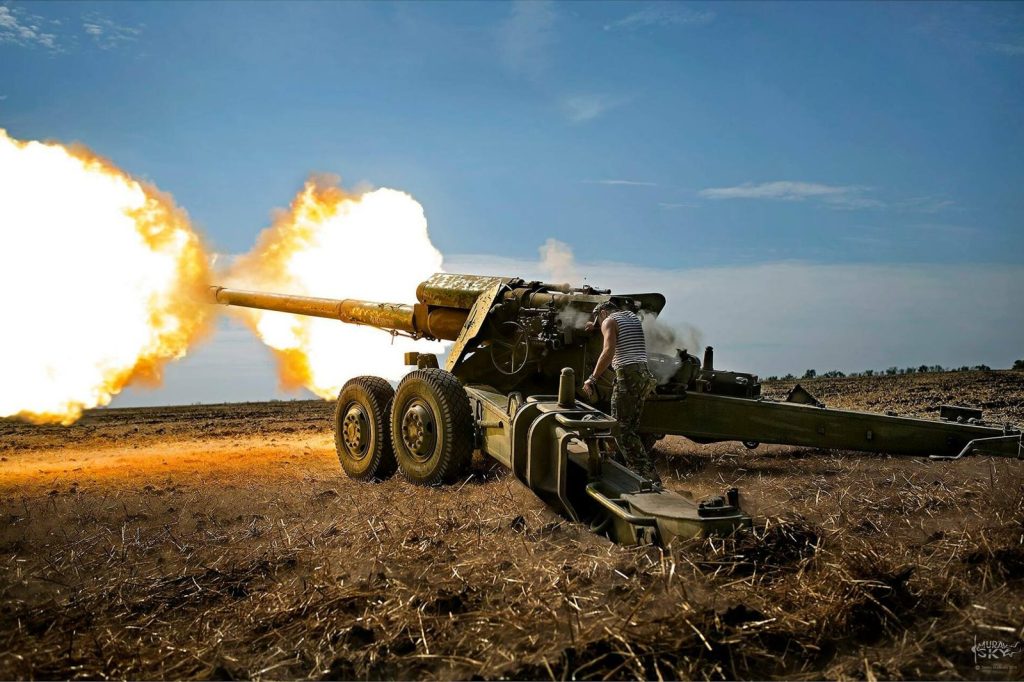
Drones now cause most battlefield casualties, Western military officials say. The front runs more than 600 miles. The Coalition of the Willing said Russia suffered almost half a million casualties in 2025 alone, for minimal territorial gains.
Civilian deaths rose 31% in 2025, with the U.N. recording 2,514, the highest annual figure since the invasion. Infrastructure damage tops $195 billion. Nearly 5.9 million Ukrainians have registered as refugees abroad, and 3.7 million remain internally displaced. Ukraine has lost 500,000 to 600,000 troops, including killed, wounded and missing, according to the Centre for European Reform.
Britain’s Armed Forces Minister Al Carns described the conflict as “the most defining” in decades. Carns told reporters Monday, “I would never have guessed in my lifetime I would see North Korean troops fighting on the border of Europe.” Macron called it “a triple failure for Russia: military, economic and strategic.” The World Bank puts reconstruction at $588 billion.