
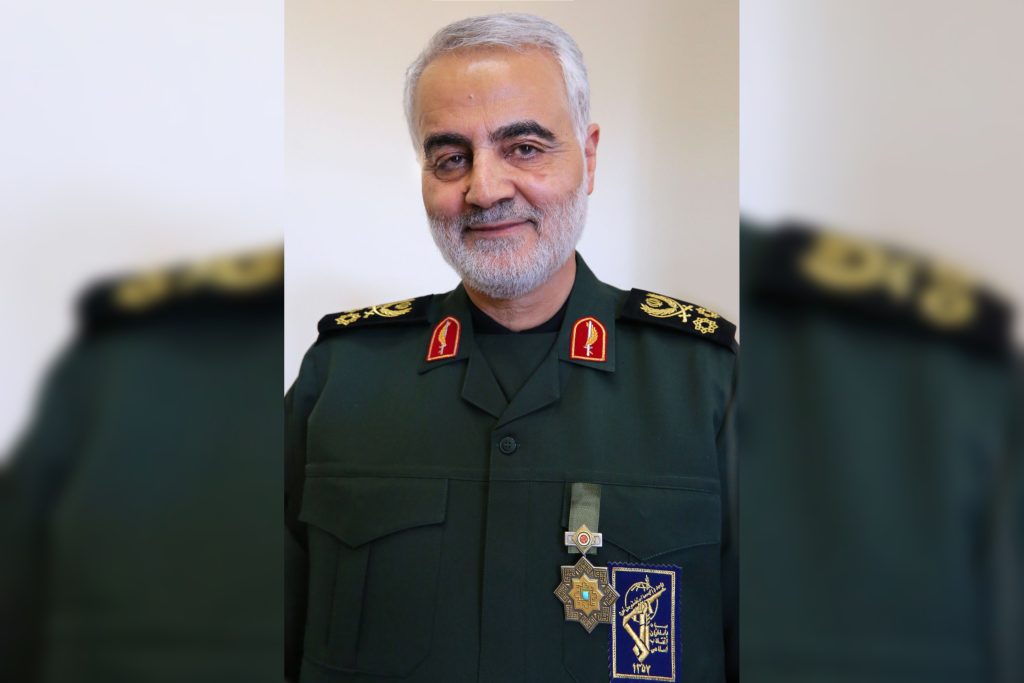
WASHINGTON, July 15 — The drone that killed Qasem Soleimani over the tarmac of Baghdad International Airport on January 3, 2020, didn’t just end one man’s life. It froze a frame of modern warfare that the Pentagon is still studying, and that Iran’s military planners are still trying to counter. For the tech world, it was a watershed moment: a confirmed, targeted kill of a state military commander by an unmanned aerial system, ordered in real time by the U.S. president.
The practical upshot for anyone watching defense technology is this: the age of the commander-as-target had fully arrived. Soleimani was a major general in the Islamic Revolutionary Guard Corps and commander of its Quds Force from 1998 until that strike.
Born March 11, 1957, in Qom, Iran, he was the architect of a sprawling network of proxy forces across the Middle East. Think of it like a franchise operation, except the franchises were armed militias and the parent company was the Iranian state. He personally oversaw support for Syrian President Bashar al-Assad during the Syrian civil war, which began in 2011 and is still grinding on.
He backed Hezbollah in Lebanon. He cultivated Shia militias in Iraq.
Each of those relationships required coordination, funding, weapons shipments, and battlefield advice — all of which ran through Soleimani’s Quds Force.
The drone strike and its fallout
President Donald Trump ordered the strike. The Pentagon confirmed Soleimani was killed near the airport in Baghdad. The operation was a demonstration of persistent surveillance and rapid decision-making — a drone loitered, identified its target, and struck on command.
For the U.S. military, it validated years of investment in drone technology and intelligence fusion. For Iran, it was a catastrophic loss of a commander who was both a strategist and a symbol.
Iran retaliated five days later, on January 8, 2020, with a missile strike on Al Asad Airbase in Iraq. More than 100 U.S. troops were injured in that attack. The missiles were ballistic, not drone-launched, and they demonstrated that Iran could reach American forces in the region with precision weapons.
The practical upshot for defense analysts: the threshold for state-on-state drone warfare had been crossed, and the response was a conventional missile barrage. That exchange — drone strike followed by missile strike — is now a case study in escalation dynamics taught at war colleges.
Soleimani’s legacy in current strategy
Soleimani remains a symbol of Iranian resistance. His image is still carried in protests and official ceremonies in Iran. But his legacy isn’t just emotional — it’s operational.
The command structure he built didn’t dissolve with his death. The Quds Force continues to operate, and the militias he cultivated are still active in Iraq and Syria.
In 2024, the U.S. conducted strikes against Iranian-linked targets in the region. Those strikes were shaped, in part, by the intelligence networks and proxy relationships Soleimani had spent two decades constructing. The U.S. military now faces a network, not a single commander.
Here’s what it means in plain terms: the drone strike removed a central node, but the network adapted. Iran’s response to the 2024 U.S. strikes drew on the same playbook Soleimani had written — asymmetric retaliation through proxies, missile launches, and political pressure on U.S. allies in the region.
The technology that killed him — drones, satellite imagery, signals intelligence — is now standard equipment for both sides. Iran has its own drone programs, and the IRGC operates unmanned systems for surveillance and attack.
The tech angle that keeps evolving
For readers who follow artificial intelligence and autonomous systems, the Soleimani strike is a reference point for a deeper question: what happens when the targeting decision is made by an algorithm instead of a president? That’s not the world we’re in yet. The Soleimani strike was a human decision, based on human intelligence analysis, executed by a remotely piloted aircraft.
But the infrastructure that made it possible — the data fusion, the pattern-of-life analysis, the geolocation tools — is increasingly automated. The U.S. military is investing in AI-assisted targeting systems that can process surveillance feeds faster than any human analyst.
Iran is watching. The IRGC has invested in electronic warfare and counter-drone systems. The missile strike on Al Asad Airbase showed that Iran can respond with its own precision weapons.
The practical upshot for the next few years: the U.S. will keep refining its drone and AI targeting capabilities, and Iran will keep adapting its defenses and retaliation options. Soleimani’s death didn’t end the conflict — it accelerated the technological arms race in the Middle East.
What to watch next: how the Pentagon integrates lessons from the Soleimani strike into its next-generation drone programs, and whether Iran’s drone and missile programs achieve the kind of real-time targeting that the U.S. demonstrated in 2020. The commander is gone. The network, and the technology, remain.




