
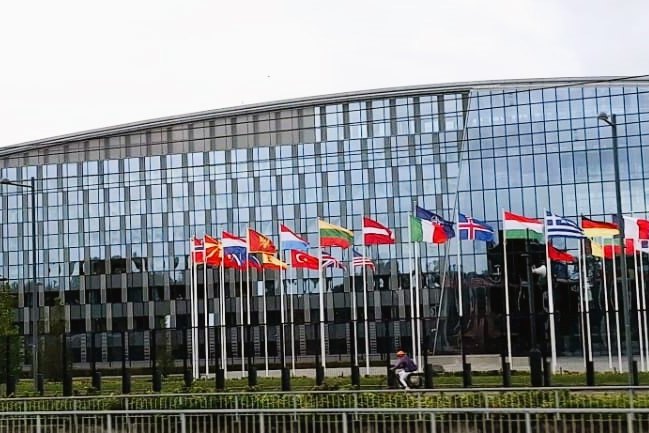
The North Atlantic Treaty Organization, founded in 1949 by 12 nations to counter Soviet expansion, has grown to 32 members and remains the cornerstone of transatlantic defense. An intergovernmental military alliance committed to collective defense, NATO has adapted through the Cold War, the dissolution of the Warsaw Pact, and multiple out-of-area operations in the Balkans, Afghanistan, Libya, and training missions in Iraq, as well as counterpiracy efforts.
Its Article 5 clause, which pledges each member to consider an attack on one as an attack on all, has been invoked only once, following the September 11, 2001 attacks on the United States.
Historical Foundations and Military Architecture
From its inception, the alliance has relied on a unified command structure and substantial American contributions. The United States has maintained a continuous presence of approximately 100,000 troops in Europe since the Cold War, with current numbers near 80,000.
NATO’s Supreme Allied Commander Europe has always been a U.S. general, reflecting Washington’s leading role. The U.S. also extends a nuclear deterrent over Europe through sharing agreements, with an estimated 100 B61 nuclear bombs stationed in Belgium, Germany, Italy, the Netherlands, and Turkey. The alliance’s combined active-duty military personnel exceeds 3.5 million; the United States contributes roughly 1.3 million, while European members collectively provide about 1.9 million.
Despite these numbers, the U.S. accounts for approximately 70 percent of NATO’s total defense spending, with European allies contributing about 30 percent as of 2024. In 2023, NATO members agreed to raise defense spending targets to at least 2 percent of GDP for all members.
As of 2024, only 11 of 32 member states meet that goal. The alliance’s eastern flank has become a focal point after Russia’s full-scale invasion of Ukraine in February 2022, which prompted Finland and Sweden to seek membership. Amid these tensions, former President Donald Trump repeatedly threatened to withdraw the United States from NATO.
Those threats have led European allies to accelerate contingency planning for a possible American departure.
Current Challenges and European Responses
A U.S. withdrawal would leave Europe responsible for defending its eastern border against Russia without the American troops, nuclear umbrella, or command structure that have undergirded NATO for decades. European leaders, including French President Emmanuel Macron and German Chancellor Olaf Scholz, have publicly discussed the need for a stronger European defense pillar.
The European Union’s Permanent Structured Cooperation (PESCO) framework, established in 2017, involves 25 EU member states in joint defense projects. These initiatives reflect a growing recognition that Europe must prepare for a scenario in which the United States no longer guarantees its security. The alliance’s history of adaptation — from Cold War deterrence to post-Cold War interventions and now to a renewed focus on territorial defense — underscores the weight of the current moment.
The prospect of the alliance’s leading power stepping back would represent a fundamental shift in the security architecture that has shaped the Atlantic community for more than 75 years.




