
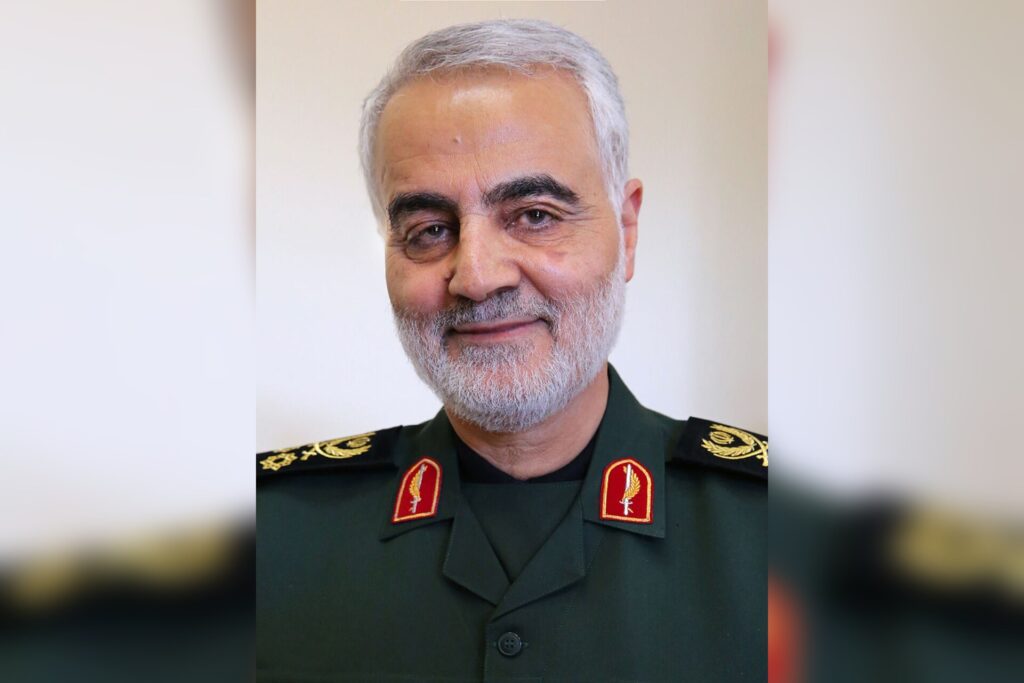
BAGHDAD, July 19 — Six and a half years after the targeted drone strike that killed him, the shadow of Qasem Soleimani still looms over the Middle East. The commander of Iran’s Quds Force, an extraterritorial arm of the Islamic Revolutionary Guard Corps (IRGC), was killed on 3 January 2020 in Baghdad in an operation ordered by President Donald Trump. Soleimani had led the Quds Force since 1998.
Soleimani’s path to power began far from the corridors of Tehran. Born on 11 March 1957 in the village of Qanat-e Malek, in Kerman Province, he belonged to the Soleimani tribe, an ethnic Lur family.
He left school at 13 to work construction and help repay his father’s debts. By 1975 he was a contractor for the Kerman Water Organization. He became proficient in karate and worked as a fitness coach.
His revolutionary fire was lit by attending the sermons of Hojjat Kamyab, a protégé of future Supreme Leader Ali Khamenei. After the 1979 Iranian Revolution, Soleimani joined the IRGC.
His military training was minimal, but he advanced rapidly. He helped prevent a Kurdish uprising in northwestern Iran and gained experience advising the Peshmerga against Saddam Hussein. During the Iran–Iraq War (1980–1988), he led a company of men from Kerman and earned a reputation for bravery.
He rose to command the 41st Tharallah Division while still in his 20s, participating in major operations such as Tariq-ol-Qods, where he was seriously injured, and Fath-ol-Mobin. He also led irregular warfare missions into Iraq through the Ramadan Headquarters and built ties with Kurdish Iraqi leaders and the Shia Badr Organization. On 17 July 1985, he openly opposed an IRGC leadership plan.
A target of the West
For attacks orchestrated or attempted against Americans and other targets abroad, Soleimani was personally sanctioned by the United Nations and the European Union. The United States designated him a terrorist in 2005. In his later years, analysts considered him the right-hand man of Supreme Leader Ali Khamenei and the second-most powerful person in Iran.
The assassination triggered swift retaliation. Iranian government officials publicly mourned Soleimani’s death and launched missiles against U.S. military bases in Iraq, wounding American troops.
Iranian outlets subsequently portrayed him as a national hero. For communities across the region and for American service members deployed in Iraq, the airstrike and its aftermath reshaped security realities overnight.
What remains
As the region continues to adjust to a post-Soleimani landscape, his legacy endures. The Quds Force has adapted, but the strategies he pioneered — asymmetric warfare, proxy networks, and deep entrenchment in Iraq, Syria, and Lebanon — remain the foundation of Iran’s projection of power. With the current U.S. administration under President Trump still in office, the threads of that January 2020 decision continue to run through current policy in the Middle East.
For now, the absence of Soleimani has changed the equation, but the forces he set in motion persist.




