
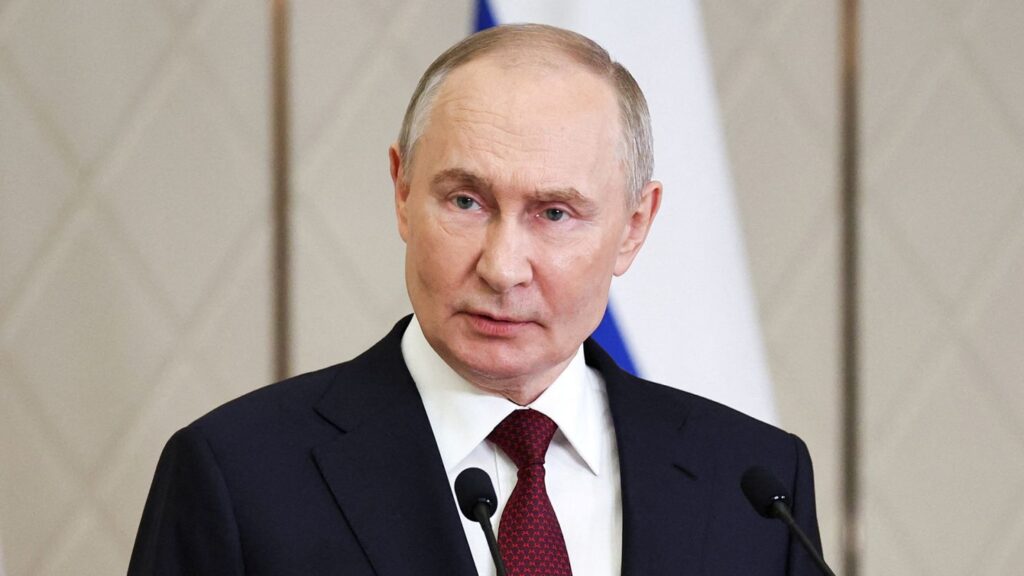
MOSCOW, July 15 — The shift is underway in the Arctic, and Vladimir Putin is betting big on it. For more than a decade, the Russian president has treated the frozen north not as a distant frontier but as a strategic priority. Since Russia’s annexation of Crimea in 2014, Moscow has poured resources into Arctic militarization.
Putin has held annual Arctic forums, using them to frame the region as a zone of economic opportunity and national security. The trend underneath is unmistakable: Russia sees the Arctic as both a resource treasure chest and a potential flashpoint with NATO.
The Northern Sea Route, which shortens shipping times between Europe and Asia dramatically, is central to this vision. But here’s what’s changing. The full-scale invasion of Ukraine, which Putin ordered on February 24, 2022, has stretched Russia’s conventional military resources thin.
Tanks, artillery, and troops that might have guarded Arctic outposts have been redeployed to the front lines in Ukraine. The result is a strategic tension: Moscow wants to dominate the Arctic, but its army is bogged down in a grinding war.
Watch this space. The Arctic redeployment—moving units back north after they were pulled for Ukraine—is now a logistical and political challenge for the Kremlin. State polls show Putin’s approval ratings remaining above 70%, but those numbers come from a tightly controlled media environment.
The war has consumed enormous resources, and the Arctic buildup, while still a priority, has had to compete for funding and manpower.
Putin’s Long Arc
Born in Leningrad in 1952, Putin served as a KGB officer before entering politics. He has been president of Russia since 2000, with a brief stint as prime minister from 2008 to 2012. That longevity gives him a unique perspective on the Arctic—he has watched the ice melt and the geopolitical competition heat up over two decades.
The Arctic militarization that began after Crimea in 2014 was not a sudden decision. It was a calculated response to what Moscow saw as NATO encroachment.
Putin has emphasized the region’s economic potential at those annual forums, pointing to oil, gas, and mineral deposits beneath the seabed. But the military buildup has been just as real: radar stations, missile systems, and special forces units have all been moved north.
The Ukraine War’s Arctic Toll
The war in Ukraine has changed the calculus. Russian forces have suffered heavy losses in equipment and personnel, forcing the general staff to pull units from less active theaters—including the Arctic—to plug gaps in Ukraine. That redeployment has left some northern bases with reduced garrisons, even as Moscow insists the region remains a top priority.
What’s next? The Arctic is unlikely to become a major theater of combat anytime soon, but the strategic competition is intensifying.
NATO has expanded its own northern presence, with Finland and Sweden joining the alliance. For Putin, the challenge is maintaining a credible Arctic deterrent while his army is tied down in Ukraine. The shift is real, and it’s not going away.




