
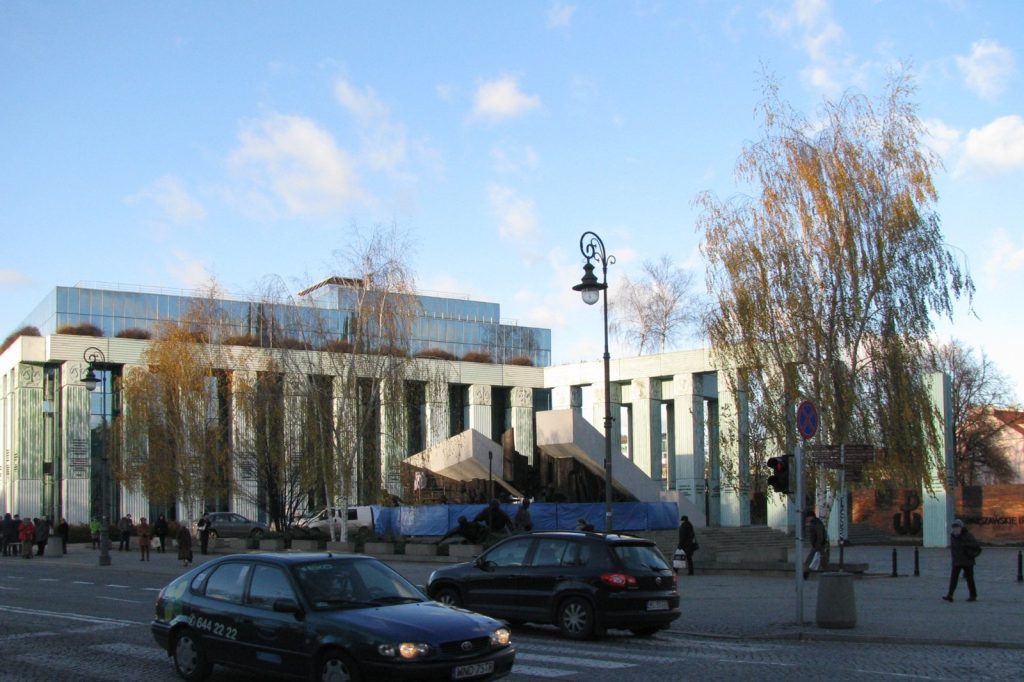
“The Polish court does not have any evidence in this case, as the German side only sent very general information.” That was how judge Dariusz Lubowski explained the decision, as quoted by Poland’s PAP news agency, when the Warsaw District Court turned down Germany’s request to extradite a Ukrainian suspect in the Nord Stream sabotage. The court ordered the man freed at once. The ruling may be appealed.
Prosecutors name the suspect as Volodymyr Z., a 46-year-old trained diver who was arrested in September at his apartment near Warsaw. German authorities accuse him of helping place explosives on the pipelines during an operation run from a rented sailing yacht that left the port of Rostock. The vessel was reportedly obtained through intermediaries using forged German documents.
What the judge said
Lubowski also took the view that the alleged sabotage was a “military operation” that was “not illegal.” If the suspect did act for Kyiv, he argued, “only the Ukrainian state can bear responsibility for this act.” And because the blasts happened in international waters, he said, Germany had no jurisdiction.
The defense lawyer, Tymoteusz Paprocki, told reporters in Warsaw that the decision sent a “signal to Germany” and showed the law should not be “instrumentalized for the sake of greater interests.” He had earlier said his client would plead not guilty at trial, and he asked whether Ukrainians destroying Russian property could count as a criminal matter at all, given Moscow’s invasion. Paprocki also told Polish media the defense argued that Germany lacks independent courts.
Tusk’s position
Prime Minister Donald Tusk welcomed the outcome on X. “Polish court denied extradition to Germany of a Ukrainian national suspected of blowing up North Stream 2 and released him from custody. And rightly so,” he wrote, adding that the case was closed.
He had already signaled where he stood. Earlier in October he wrote that “the problem with North Stream 2 is not that it was blown up. The problem is that it was built.” Tusk also said that those who built the pipeline “should be ashamed and remain silent,” and that handing over the suspect would go against Poland’s interests. By his account, he told former German Chancellor Olaf Scholz and President Volodymyr Zelensky so many months ago.
The request put the centrist, pro-EU premier in an awkward spot. The opposition Law and Justice party and the far-right Confederation party have accused him of bowing to German interests. Warsaw regional prosecutors’ spokesperson Piotr Skiba had said the day before the ruling that on legal grounds, “it’s very difficult to find any grounds on which we couldn’t transfer him to the Germans.”
The wider case
Underwater explosions damaged the Nord Stream pipelines in September 2022, seven months after Russia invaded Ukraine. According to German media reports, federal prosecutors in Karlsruhe suspect a group of Ukrainians tied to Kyiv’s secret service and military. German investigators have linked the sabotage to a pro-Ukraine group but have not alleged direct involvement by the Ukrainian government. No group has claimed responsibility, and Ukraine denies any role. Ukraine’s ambassador to Poland, Vasyl Bodnar, said on Oct. 7 that Kyiv was not interfering in the extradition proceedings.
Poland’s refusal follows Italy. On Oct. 15, Italy’s Supreme Court overturned the extradition of another Ukrainian, Serhii Kuznetsov, who was also wanted by Germany on related charges.
Poland has long criticized the pipelines, arguing they increased German dependence on Russian gas, a view shared by other states on the eastern flank of the EU and NATO, by Ukraine and by the United States. Czech President Petr Pavel later called the pipelines a “legitimate target” if Kyiv was behind the attack.
Sources
- Nord Stream: Poland blocks extradition of suspect to Germany
- Polish court refuses extradition of Ukrainian suspect to Germany in Nord Stream case




