
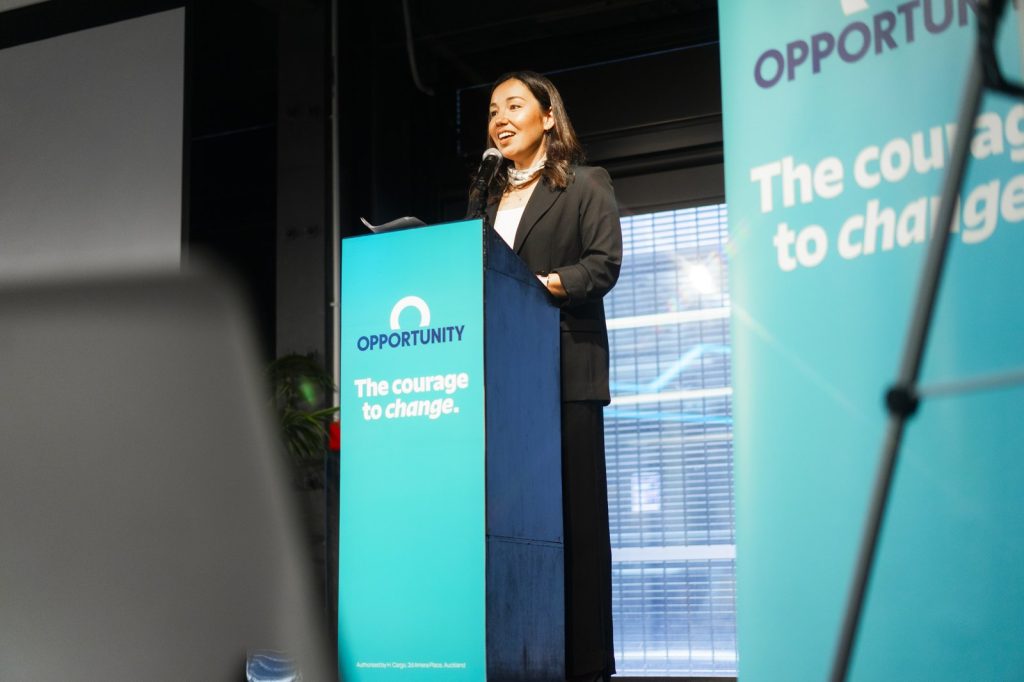
Ten years, five leaders and one name tweak. That is what the Opportunity Party has put in to get within reach of Parliament, and its latest result is 4.6 percent in the 1News Verian poll. The threshold is 5 percent. Leader Qiulae Wong knows how thin the margin is: “make-or-break,” as RNZ put it.
No genuinely new party has entered Parliament since the first MMP election in 1996. The ones that did were mostly offshoots of existing parties. ACT was founded by former Labour and National MPs, New Zealand First splintered off National, and the Greens first entered under the Alliance banner, itself a Labour spinoff. United Future was another Labour splinter, as was the original Māori Party, which in turn gave birth to Mana.
Opportunity has two routes in: poll over 5 percent at the election, or win an electorate seat. The seat route has saved ACT and Te Pāti Māori before.
Replacing New Zealand First
Wong told Morning Report on Tuesday that she sees Opportunity taking over New Zealand First’s role as political “kingmaker.” She was blunt about the incumbent. “I believe they stand for division and they use division to get votes, whereas we want to actually find common ground and bring people together,” she said.
She added that NZ First has “a bit of a nostalgic view of what New Zealand could be and want to take us backwards to the past, whereas Opportunity is very much focused on taking us forward.”
Wong said the country needs a “stable centrist party” and criticised the pattern of two blocs, one left and one right, that has made MMP behave like first-past-the-post. “That’s not the point of MMP,” she said. Her business background shapes the argument. “That lack of stability between successive governments is really what most business people complain about,” she said, and teachers and health and infrastructure workers have told her the same thing about the flip-flopping.
If Opportunity does become kingmaker, she said it would talk first to whichever party wins the most votes. The party would set out bottom lines near the election, including a long-term energy strategy, the state of the oceans, and productivity and innovation. “If we can’t get what we want from that first side, we’ll go to the other and see what they have to offer as well.” Failing that, it would back a minority government from the cross-benches. “We only get one shot at being in Parliament for the first time and we want to do a good job by our voters,” she said.
Tax and a basic income
Wong became leader near the end of 2025, when the party rebranded from “Opportunities” to “Opportunity.” Its platform includes a major tax overhaul with a $20,000 universal basic income, paid for by taxing land ownership more and income less. Founder and economist Gareth Morgan set the original figure at $10,000.
Wong called it “naive” to expect so large a shake-up from a small party to happen “overnight” and proposed a 10-year transition. The land tax targets housing problems, she said, and the income would simplify welfare and let people keep more of what they earn, with more of the burden falling on property, which is currently untaxed.




